 Follow Us on Google News



 Follow Us on Google Discover
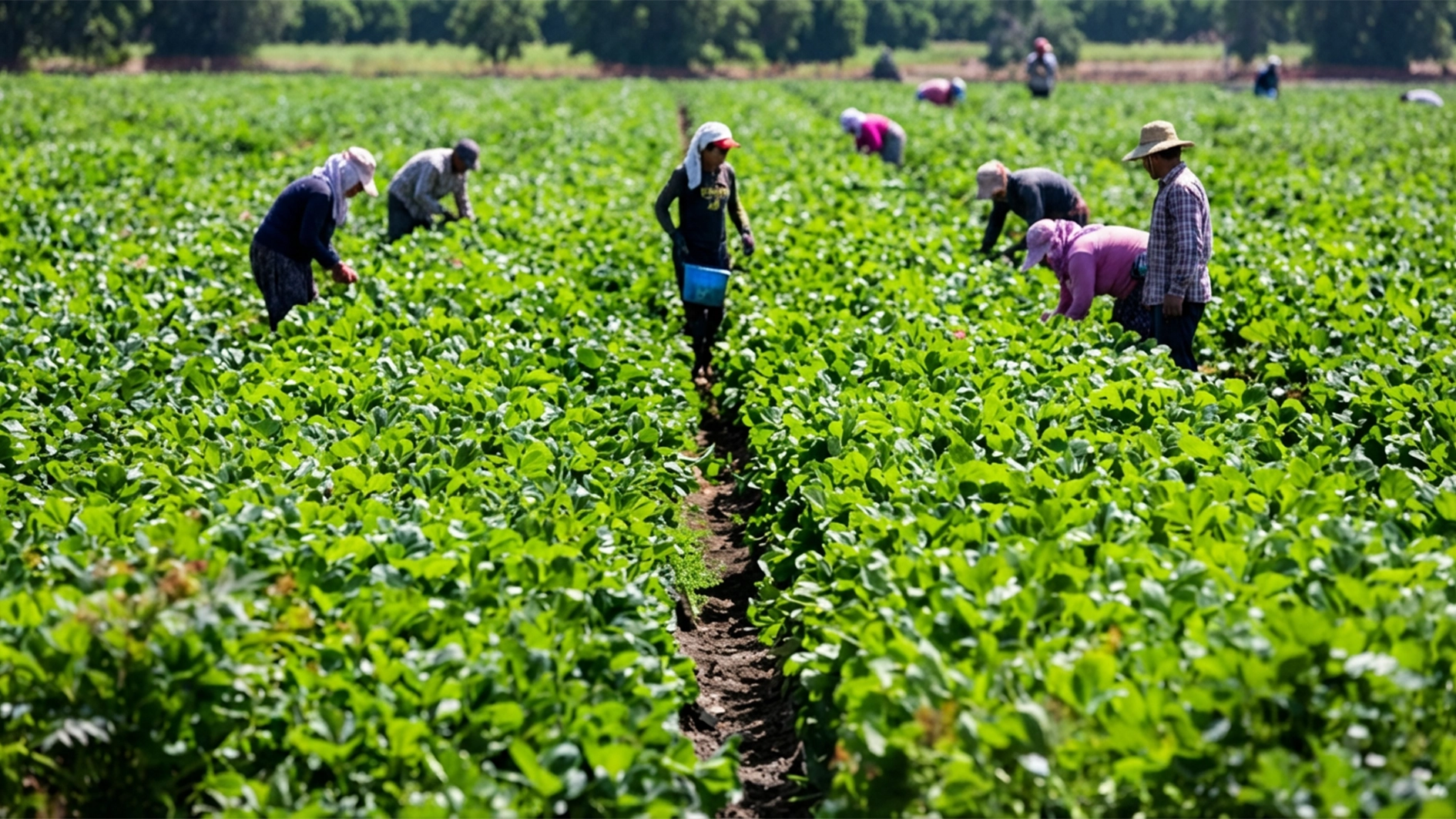
The exhortation by eminent jurist, Chief Afe Babalola (SAN), urging more Nigerians, especially university graduates, to embrace agriculture as a profession, offers a realistic option for millions of citizens to overcome unemployment and tackle the economic hardship they are currently suffering due to some government policies and economic downturn.
With so much hunger in the land and the astronomical increase in the prices of food items, the arrogance that often attends white-collar jobs should make space for honest earnings with dignity. But admonitions alone are insufficient. The government has a role to play by making farming safe and worthy of graduates’ talents; otherwise, it will be a hard sell as long as terrorism, banditry and kidnapping for ransom continue to scare current farmers from their fields. Besides, poor infrastructure, the high cost of agricultural materials, financial constraints, and weak storage systems discourage many Nigerians from going into farming and constitute a hindrance to achieving national food security.
The government should make a more conscious effort, which can be in collaboration with the private sector and even relevant foreign bodies, to encourage more Nigerians, particularly the youths, including young graduates, to see agriculture as a viable means of achieving their life ambitions and to go into it, rather than roaming the city streets for white-collar jobs that are currently difficult to find.
At the 2026 edition of the Afe Babalola University, Ado-Ekiti (ABUAD) agricultural expo recently, the popular jurist who is the Founder and Chancellor of the institution advised more Nigerians to embrace agriculture as a profession, pointing out the potential to greatly help in poverty reduction and achieving self-reliance. At the event, the strong promoter of agriculture announced plans for an Ekiti Farmers’ House, where farmers would have access to modern agricultural equipment. And as part of the promotion, ABUAD has reduced tuition for students studying agriculture and provided seed money for its agriculture graduates. The university also awarded N11.2 million to outstanding farmers at the ceremony.
Babalola’s advocacy came as the Food and Agriculture Organisation (FAO) estimated that nearly 36.3 million Nigerians faced acute food insecurity during the June-August 2026 lean season, including about 2.1 million people in emergency, and approximately 10,300 in catastrophe. Conflict, economic hardship and climate pressures were reported to have combined to weaken the capacity of vulnerable households to secure adequate food. Against this backdrop, Babalola’s exhortation and interventions deserve commendation, particularly because the appeal extends far beyond ABUAD or Ekiti State.
There is an environment that should be established to encourage more people to embrace agriculture and for the profession to thrive in the country. According to World Bank estimates, agriculture accounts for about 24 per cent of Nigeria’s GDP and employs roughly 36 per cent of its labour force. These statistics show that the problem is not only a shortage of people in agriculture but also low productivity, vulnerability and weak commercial organisation that are crippling the sector. The graduates being wooed, therefore, should be able to see a business that is more attractive to ambitious young people. The attractions must include predictable markets, opportunities for expansion, logistics, storage, commodity trading, technology or export. This is one of the areas where government must intervene.

Security is central to Babalola’s agro vision. Securing rural roads and ensuring farmers can safely access their land are indispensable. Graduates who are justifiably afraid of travelling to the farm cannot be expected to cultivate consistently, let alone invest in expansion or employ workers. The World Bank’s recent analysis of agricultural losses in Nigeria revealed that the proportion of plots experiencing partial crop losses increased from about six per cent in 2018/19 to more than 20 per cent in 2023/24. While climate shocks played a big role, the contribution of conflict also increased significantly.
Babalola’s provision of N250, 000 seed money to ABUAD agriculture graduates is commendable because it gives the youths something to begin with. The government at all levels are expected to lead in this regard and be consistent, especially at every planting season. However, ensuring the nation’s graduates embrace agriculture would require much more than individual grants. There is a need for a broader financing architecture that involves credit guarantees, agricultural insurance, cooperatives, and other state-backed incentives. Willing graduates are unlikely to appreciate the humiliation of running from pillar to post, cap in hand, to obtain financing.
Nigeria’s agricultural policy must strive to embrace the entire value chain, even as practical realities demand a rethink of what is meant when agriculture is mentioned. Farming does not end when a crop leaves the field. A farmer may produce food, but another enterprise must store it, another must process it, another must transport it, another must finance it and another must take it to the consumer.
There is, therefore, a need for linkages capable of turning agriculture into an industrial growth sector, like the African Development Bank-backed Special Agro-Industrial Processing Zones initiative. The programme intends to connect agricultural production with processing, markets and industrial activity. In Oyo State, for instance, the planned processing hub is projected to host as many as 40 agro-processing industries and create more than 100,000 direct and indirect jobs.
Nigeria has no shortage of agricultural policies. The National Agricultural Technology and Innovation Policy identifies mechanisation, irrigation, extension services, agricultural finance, youth participation, processing and agribusiness among its priorities. The Federal Government’s new mechanisation policy adds another layer to this policy framework. What remains inadequate is implementation.
The government must, therefore, resist the temptation to celebrate every new agricultural programme as though it were a transformation. The country is better with tangible results. Farmers should know what support is available, when it will arrive and what conditions truly apply, whether it concerns tractors, fertilisers or loans. Universities, too, have a responsibility. Agricultural education should be connected more directly to commercial production, technology, research and enterprise.
The ABUAD’s decision to reduce tuition for agriculture students and provide financial support to graduates is an instructive model. The principle should spread beyond one institution. Also, universities should establish demonstration farms, agricultural technology laboratories, incubation centres and partnerships with processors and agribusinesses. Students should graduate knowing how to calculate production costs, assess markets, manage risk and build viable enterprises. The objective should not be to produce more graduates holding agricultural certificates. It should be to produce graduates capable of creating productive agricultural businesses.
Babalola’s call should be taken seriously, but its responsibility must be shared. Young Nigerians should be encouraged to recognise agriculture as a field of professional opportunity, while the government must create the conditions that make such a choice rational. Secure farms, functioning rural infrastructure, irrigation, mechanisation, affordable finance, storage and processing infrastructure, reliable markets and accountable institutions are the foundations on which the appeal to graduates must rest.
Nigeria does not need young people merely to be persuaded to love farming. It needs an agricultural economy in which young persons can enter the sector with ambition, deploy education and technology, build a profitable enterprise and expect the economy to work reasonably in their favour. The country must move from asking its youth to embrace agriculture to building an agricultural system that is appealing and deserving of their embrace.

