 Follow Us on Google News
 Follow Us on Google Discover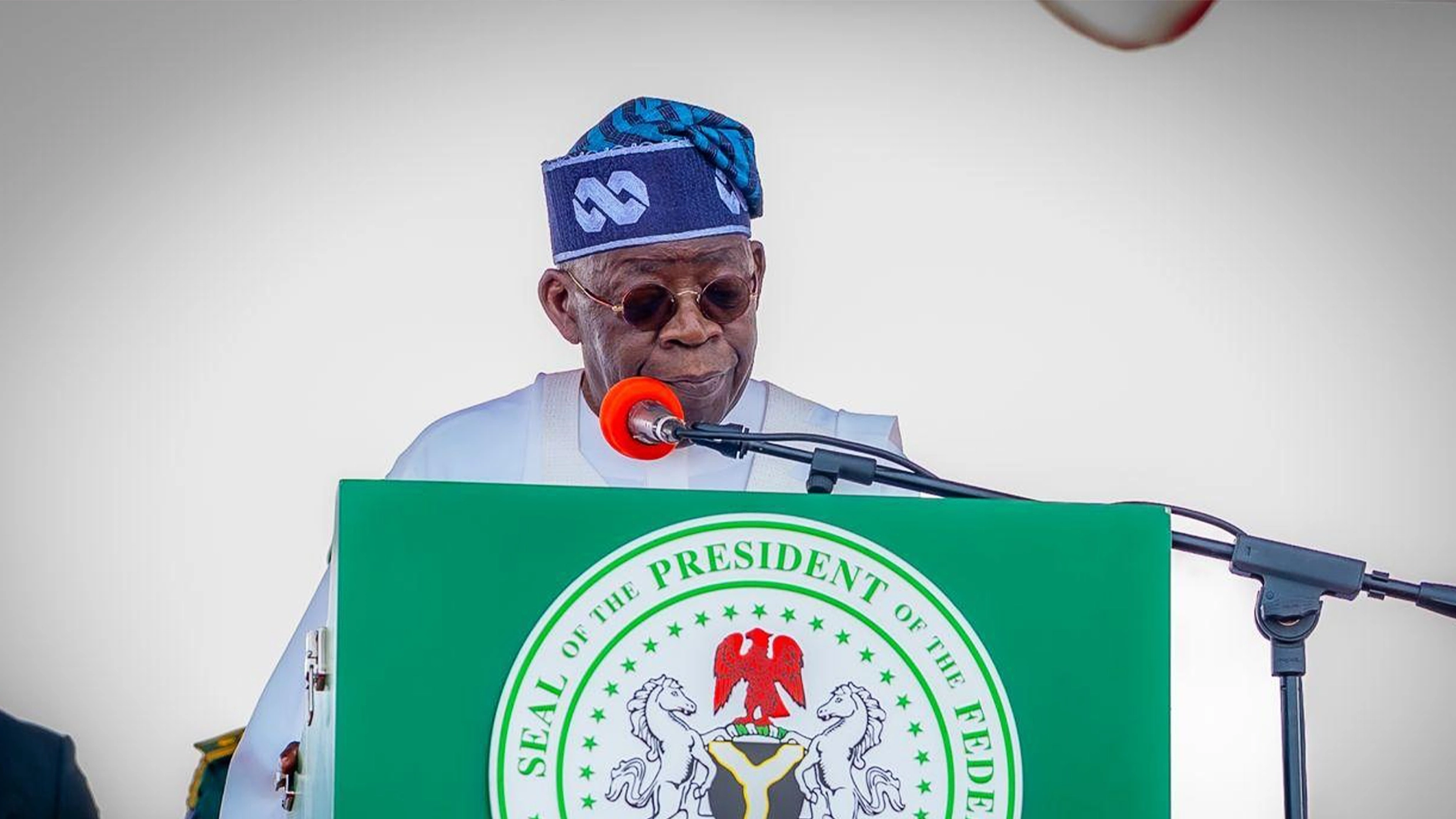
• Condemns use of faith to justify violence
• Atiku faults president over 5,091 reported killings in three months
President Bola Tinubu has charged religious leaders across Nigeria, Africa and beyond to intensify their campaign against terrorism, kidnapping, banditry and the exploitation of religion to justify violence, declaring that no genuine service to God could be advanced through the destruction of innocent lives.
The president also called on religious institutions and networks to deepen peace education, religious literacy, and moral instruction for young people, while leveraging their influence to promote justice, compassion, responsibility, and the peaceful resolution of grievances.
In the meantime, the African Democratic Congress (ADC) presidential candidate, Atiku Abubakar, has criticised President Tinubu’s administration over the country’s worsening security situation, saying the reported killing of 5,091 Nigerians in three months exposes the government’s failure to protect lives.
Tinubu spoke yesterday in Kano in a goodwill message on his behalf by the Secretary to the Government of the Federation (SGF), George Akume, at the Grand Maulud of Sheikh Ahmad Al-Tijani.
Addressing the World Khalifa of the Tijjaniyya Order, Islamic scholars, spiritual leaders, and adherents from Nigeria and other countries, the president said that religious authorities had a critical role to play in confronting violence, extremism, and the manipulation of faith for destructive purposes.

“Your voices must be raised consistently against the murder of innocent people, against terrorism, kidnapping, banditry and the misuse of religion to justify cruelty,” Tinubu said.
He urged religious institutions and networks to strengthen advocacy for peace education, religious literacy, scholarship and the moral formation of young people.
He further charged religious leaders to remind political authorities of their obligations to justice, responsibility and compassion, while impressing on citizens that legitimate grievances could never justify lawlessness or violence.
“Above all, our spiritual fathers must continue to teach that no genuine service to Allah is advanced by destroying the innocent human life that Allah has made sacred,” he said.
According to Tinubu, the appeal had become particularly urgent as societies across the world grapple with armed conflicts, uncertainty, climate, food and energy shocks, violent extremism, terrorism, transnational crime and the increasingly dangerous manipulation of identity and religion.
Citing a report by the United Nations High Commissioner for Refugees (UNHCR), the president noted that 117.8 million people were forcibly displaced globally at the end of 2025, saying the scale of the crisis underscored the need for stronger intervention by spiritual and community leaders.
According to him, religious leaders “guard the frontiers of conscience” and possess the capacity to heal wounds, resolve grievances and break cycles of hatred and bitterness.
Highlighting the transnational reach of the Tijjaniyya community across West Africa, North Africa, and beyond, he said its extensive spiritual networks and moral influence could be deployed in reconciliation efforts, countering violent extremism, guiding young people, and supporting humanitarian initiatives across the Sahel and the wider West African region.
According to him, “the federal government recognises the critical roles of religious and traditional leaders in deepening tolerance, countering misinformation and identity-based division, strengthening grassroots peacebuilding and promoting peaceful coexistence.”
Tinubu reaffirmed Nigeria’s commitment to regional cooperation, counter-terrorism, maritime security, economic integration and dialogue, noting that the country’s strategic position at the intersection of West Africa, the Sahel, the Lake Chad Basin, the Gulf of Guinea and the wider Atlantic region made its stability important beyond its borders.
Noting that “our position means that peace in Nigeria has consequences far beyond Nigeria,” the president added that religious communities with deep transnational connections, including the Tijjaniyya, could become valuable partners in building an architecture of social peace that complements the efforts of governments and regional institutions.
Such collaboration, he noted, should harness the ethical values promoted by religion – truthfulness, compassion, justice, restraint, service and respect for the sanctity of human life – in the interest of society.
The president also reaffirmed the federal government’s commitment to protecting religious freedom, saying Nigeria’s diversity and plurality remained among its greatest strengths.
He assured that the administration would continue to collaborate with religious and traditional institutions to promote peace, mutual respect, national cohesion and peaceful coexistence.
Welcoming the World Khalifa of the Tijjaniyya Order and other delegates who travelled from Algeria, Morocco, Senegal, Egypt and other countries for the Maulud, Tinubu said Nigeria had provided fertile ground for the Tijjaniyya tradition to develop deep roots in scholarship, remembrance, service, moral instruction and peaceful community life.
The president described the Maulud as an opportunity for reflection, spiritual renewal, and recommitment to the teachings of Islam, the love of Prophet Muhammad, and the spiritual legacy of Sheikh Ahmad Al-Tijani, adding that the occasion should reinforce the virtues of humility, mercy, wisdom, service, and providing comfort to others.
Tinubu also paid tribute to the late Sheikh Dahiru Usman Bauchi, saying the most enduring tribute would be the preservation of his legacy of Qur’anic scholarship, moral instruction, devotion to Allah, respect for learning, peaceful coexistence and concern for the well-being of society.
HOWEVER, in a statement yesterday by his Senior Special Assistant on Public Communication, Phrank Shaibu, the former vice president said the reported casualty figure should not be treated as another security statistic. He stressed that each death represented a family plunged into mourning and another failure by the state to provide adequate protection for its citizens.
“Behind every number is a Nigerian whose life was cut short, a family thrown into mourning, children deprived of parents and communities condemned to fear. Five thousand and ninety-one reported killings in just three months should trouble the conscience of any government,” he said.
According to him, “a government that cannot protect its citizens has failed the first test of governance. Nigerians cannot continue to pay with their lives for the failures, waste and misplaced priorities of an administration that has failed in its most basic constitutional duty.
“Today, we have 5,091 reported killings in just three months, 5,091 shattered families, 5,091 indictments of this administration’s security failures, and ultimately, 5,091 reasons this government must go,” he said.
Meanwhile, Atiku linked the worsening security crisis to what he described as fiscal indiscipline, wasteful expenditure and poor implementation of funds appropriated for national security.
He argued that while the federal government continued to make commitments to tackling insecurity, the resources required by the military and other security agencies must be properly allocated and deployed.
“These figures are the human cost of every padded budget, every frivolous expenditure and every failure to fully implement funds appropriated for critical national priorities,” Atiku said.
“You cannot run the public treasury as though it were a private purse, squander scarce resources on questionable priorities and then expect soldiers and other security personnel on the frontlines to perform miracles.”
He further criticised what he described as the government’s continued disregard for budgetary appropriations, saying the diversion of public resources to “wasteful and politically expedient projects” was undermining national security.
According to him, “the continued pattern of treating fiscal appropriation as an inconvenience while public resources are diverted to wasteful and politically expedient projects undermines national security and impedes the capacity of our Armed Forces and other security agencies to respond decisively to threats.”
Nevertheless, Atiku welcomed the recently announced pay increase for military personnel but maintained that improved salaries alone would not be sufficient to address the challenges confronting troops deployed to the frontlines.
“Our soldiers deserve better pay, but morale is about much more than salaries,” he noted. “They require adequate equipment, operational funding, timely allowances, proper welfare for their families and the assurance that the government they defend is as committed to their mission as they are.”
Consequently, he called on the federal government to cut what he described as wasteful and questionable expenditure and improve the implementation of budgetary allocations, particularly those earmarked for defence and security.

