 Follow Us on Google News



 Follow Us on Google Discover
…African Energy Bank targets November launch with $500m initial capital
…Nigeria, Ghana, Angola, Senegal and others court investors for major oil and gas projects
…National oil companies forge new alliance to boost regional trade, refining and energy security
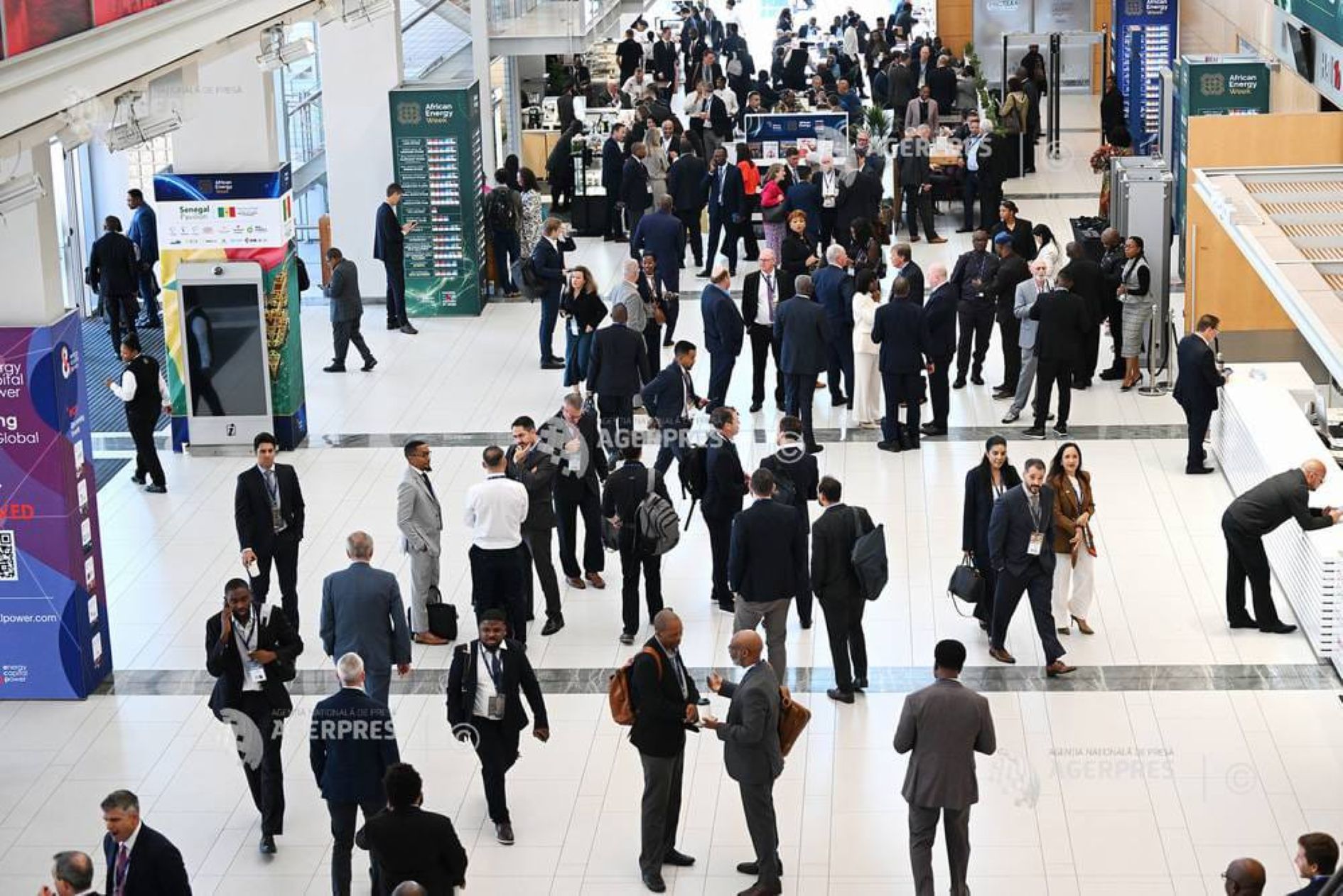
Africa’s efforts to take greater control of financing its energy development received fresh momentum in Cape Town, South Africa, where African Energy Week (AEW) 2026 ended with approximately $10 billion in reported commercial transactions, renewed investment commitments and significant progress towards establishing the continent’s first dedicated energy bank.
The conference, held from October 12 to 16, brought together petroleum-producing nations, international energy companies, financiers and policymakers against a backdrop of mounting pressure on African governments to increase production, attract capital and tackle persistent electricity shortages.
Beyond the multibillion-dollar investment discussions, a central message emerged from the gathering: Africa must increasingly develop the financial institutions, industrial capacity and regional partnerships needed to extract greater economic value from its energy resources.

A major step in that direction came with fresh details concerning the African Energy Bank, the proposed financial institution being developed by the African Petroleum Producers’ Organization (APPO) in partnership with the African Export-Import Bank (Afreximbank).
APPO Secretary-General Farid Ghezali announced that the Abuja-headquartered bank was expected to begin operations in November 2026, with its first financing activities projected for 2027.
The institution has reportedly secured $500 million in initial capital and intends to expand its financial resources through international capital markets, eventually targeting a financing capacity of up to $10 billion.
Its mandate includes supporting petroleum exploration, natural gas infrastructure, pipelines, refineries and other capital-intensive projects facing difficulties securing conventional international financing.
The proposed bank is widely regarded by its promoters as an important response to changing global investment policies that have complicated funding arrangements for fossil-fuel developments, particularly in emerging economies.
For African producers, the institution could also provide an opportunity to retain greater influence over investment decisions affecting the continent’s petroleum resources.
* $10bn TRANSACTIONS HIGHLIGHT INVESTMENT APPETITE*
The financing initiative formed part of a broader commercial agenda at AEW 2026, during which the African Energy Chamber (AEC) reported approximately $10 billion in energy-related deals.
AEC Senior Vice President Verner Ayukegba disclosed the figure during the conference, underscoring the importance of the annual gathering as a platform connecting project developers, governments and prospective investors.
While the detailed composition and completion status of the reported transactions remain to be independently established, the announcement signalled substantial commercial interest in African energy opportunities.
Further evidence of investment demand emerged from the conference’s Deal Room, where 15 projects spanning petroleum exploration, gas processing, power generation and infrastructure development sought more than $16 billion in financing.
The portfolio offered investors opportunities ranging from upstream asset development and acquisition financing to electricity generation and industrial gas infrastructure.
However, the scale of financing being sought also highlighted one of the industry’s persistent challenges: transforming promising resource discoveries and commercial proposals into bankable projects capable of reaching final investment decisions.
NIGERIA TARGETS OFFSHORE GROWTH, GAS EXPANSION
Nigeria featured prominently in the investment discussions as international operators and indigenous companies outlined new production opportunities and ongoing projects.
TotalEnergies disclosed plans to mobilise a deepwater drilling rig before the end of October, while ExxonMobil provided updates on its $1 billion Usan infill development, designed to increase production from the country’s offshore petroleum assets.
Attention also turned to the Ima gas project, being developed by TotalEnergies alongside Nigerian independent producer AMNI.
Having reached a final investment decision in September, the development is expected to deliver approximately 350 million cubic feet of natural gas daily from 2028.
AMNI’s majority participation gives the project particular significance in Nigeria’s continuing efforts to expand indigenous ownership and operational involvement in major petroleum developments.
The investment also carries opportunities for Nigerian service companies, local contractors and communities expected to benefit from employment and procurement activities.
Nevertheless, industry representatives maintained that Nigeria’s ability to sustain the emerging investment momentum would depend heavily on predictable regulations, stable fiscal policies and competitive operating conditions.
GHANA, ANGOLA SEEK GREATER SHARE OF INVESTMENT
Across West Africa, Ghana used the conference to showcase what officials described as renewed progress in the country’s petroleum industry.
Energy Minister John Abdulai Jinapor reported an approximately 30 per cent increase in crude oil production, attributing the improvement to policy measures aimed at stimulating investment and strengthening the performance of existing assets.
The government is simultaneously pursuing greater use of natural gas for domestic electricity generation, particularly as it seeks alternatives to expensive liquid fuels.
Expanded gas supplies from Nigeria remain an important component of that strategy, reflecting the potential for closer regional energy integration.
Angola, another major African petroleum producer, concentrated its presentations on improving access to exploration opportunities and accelerating investment approvals.
Its petroleum regulator outlined plans for a revised licensing framework intended to streamline administrative procedures, shorten approval timelines and make new exploration acreage more attractive to prospective operators.
The country is also seeking to create greater opportunities for indigenous businesses to participate in its petroleum value chain.
SENEGAL, MOZAMBIQUE AND NAMIBIA ADVANCE MAJOR PROJECTS
Several of Africa’s emerging and established energy frontiers also presented projects intended to attract substantial international capital.
Senegal promoted the Yakaar-Teranga offshore natural gas development, which is expected to require approximately $7.5 billion across two phases.
Beyond its export potential, the project is being positioned as a major source of gas for domestic electricity generation, fertiliser manufacturing and broader industrial development.
Mozambique highlighted progress involving its large-scale liquefied natural gas industry, including the proposed $30 billion Rovuma LNG development and the Coral North project.
Both developments form part of the country’s ambition to strengthen its position in international natural gas markets.
In Namibia, TotalEnergies reported progress towards an investment decision on the Venus offshore project, which is being designed for production of approximately 150,000 barrels of oil daily.
The development is among the projects expected to determine whether Namibia can translate its offshore petroleum discoveries into a commercially productive industry.
AFRICAN OIL COMPANIES DEEPEN REGIONAL COOPERATION
Another significant outcome of the Cape Town conference was the adoption of a new framework for cooperation among African national oil companies.
On October 12, participants at the eighth meeting of the APPO National Oil Companies Chief Executives’ Forum signed the Cape Town Declaration, a non-binding agreement promoting closer collaboration in petroleum production, refining, infrastructure development and energy security.
The declaration seeks to encourage stronger regional petroleum trade, technological cooperation and investment partnerships among African producers.
Its provisions also reflect concerns that the continent continues to export substantial volumes of crude petroleum while depending heavily on imported refined products.
By strengthening domestic processing capacity and cross-border energy infrastructure, participating companies hope to improve supply security, reduce external dependence and retain more value within African economies.
Although the declaration does not impose legally binding obligations, it represents another institutional effort to promote collective action in an industry where national priorities and investment strategies have traditionally dominated.
ENERGY POVERTY, CLIMATE CONCERNS REMAIN CENTRAL
Despite the emphasis on investment opportunities, AEW 2026 unfolded amid continuing disagreements over the future of fossil-fuel development and Africa’s position in the global energy transition.
On October 13, environmental campaigners associated with Greenpeace Africa and Extinction Rebellion staged demonstrations opposing expanded oil and gas exploration.
Their protests drew attention to climate change, environmental protection and the long-term consequences of continued investment in fossil-fuel infrastructure.
For the African Energy Chamber, however, access to reliable and affordable energy remains indispensable to economic development.
Its Executive Chairman, NJ Ayuk, has repeatedly argued that the continent must be allowed to develop its petroleum and natural gas resources while addressing the urgent need for electricity, industrialisation and job creation.
The competing perspectives reflect a broader policy challenge confronting African governments: how to attract investment into existing energy resources while pursuing cleaner technologies and managing the economic risks associated with global decarbonisation.
The scale of that challenge remains considerable.
International Energy Agency estimates indicate that approximately 600 million people in sub-Saharan Africa lacked electricity access in 2024, notwithstanding the region’s extensive conventional and renewable energy resources.
Conference participants consequently stressed that expanding investment must be accompanied by improvements in domestic infrastructure, energy affordability, employment opportunities and local industrial participation.
FROM AGREEMENTS TO ECONOMIC RETURNS
With AEW 2026 concluded, attention is shifting from the announcements made in Cape Town to the practical steps required to deliver the projects and financing initiatives discussed.
The proposed commencement of African Energy Bank operations in November will be closely watched, particularly by project developers seeking alternative sources of capital.
Likewise, the reported $10 billion in commercial transactions will face scrutiny over how much progresses into binding agreements, financial commitments and actual project execution.
For African petroleum producers, the Cape Town Declaration presents a separate test of whether aspirations for regional cooperation can produce tangible improvements in refining capacity, energy trade and infrastructure connectivity.
Together, these developments suggest a gradual shift in the continent’s energy conversation from attracting investment alone towards determining how that investment can support lasting economic transformation.
The conference reinforced Cape Town’s role as a major international meeting point for Africa’s petroleum industry, but its longer-term significance will ultimately depend on developments beyond the conference halls.
For governments, investors and host communities, the measure of success will be whether the billions discussed at AEW 2026 translate into functioning infrastructure, more reliable energy supplies, stronger African enterprises and sustainable employment.
In that respect, the defining question arising from Cape Town is no longer simply how much capital Africa can attract, but how much lasting prosperity it can create from the energy wealth it already possesses.
Onome Amawhe is a Nigerian journalist, writer and editorial strategist, and Founder of Africa Executive, an editorial advisory specialising in executive content, corporate storytelling and strategic publishing.

