 Follow Us on Google News



 Follow Us on Google Discover
With a massive recruitment of over 2,200 teachers for the smart, green school initiative, Enugu State appears set for a major educational leap. The move is hurting private school owners as teachers and pupils are leaving in droves, but the major concern is the sustainability of the ‘smart’ attractions, LAWRENCE NJOKU reports.
The notice board of one of the private schools on the New Layout axis of Enugu State recently displayed the list of vacant positions at the facility. The school’s management made the post.
Among the positions to be filled were English Language teachers, as well as those of Mathematics, Integrated Science, Civic Education, Igbo Language and others.
The notice had asked interested applicants to “appear in person” with their application letters.
At another private secondary school along Agbani Road, seven teachers, including those in the junior secondary, failed to return to work after resumption of the ongoing academic session. It was later gathered that they were among the teachers recently recruited into Enugu State Government’s Smart Green Schools.
At one of the faith-based secondary schools in the Achara Layout area of the state, Mrs Catherine Ugwu had shown up to inform the management that her children would no longer continue at the school. Mrs Ugwu’s twins were admitted into Junior Secondary 1 of the school last year.

She confided to The Guardian that the departure of some teachers, which had become a topic of discussion on the Parents-Teachers platform, was responsible for her action, adding that the school had found it difficult to secure suitable replacements at the time of resumption.
Mrs Mercy Ozor, a teacher in a private primary school in Trans-Ekulu, Enugu, alluded to the development when she told The Guardian: “Four of our teachers did not return this session. I heard they got employment with the government. We have managed to recruit two teachers. But I can tell you that you cannot compare them with the ones that have left.
“For the other two vacancies, we have been shuffling ourselves and classes while hoping to get capable hands that could take them. This is only the first term, and some students who were given admission did not show up. Some showed up within the first week and left on learning about the shortage of teaching staff.”
Many private primary and secondary schools in Enugu are currently battling shortage of teaching staff since the resumption of 2026/2027 academic exercise. The development may not be unconnected with the commencement of activities in some of the 260 smart green schools being constructed by the state government.
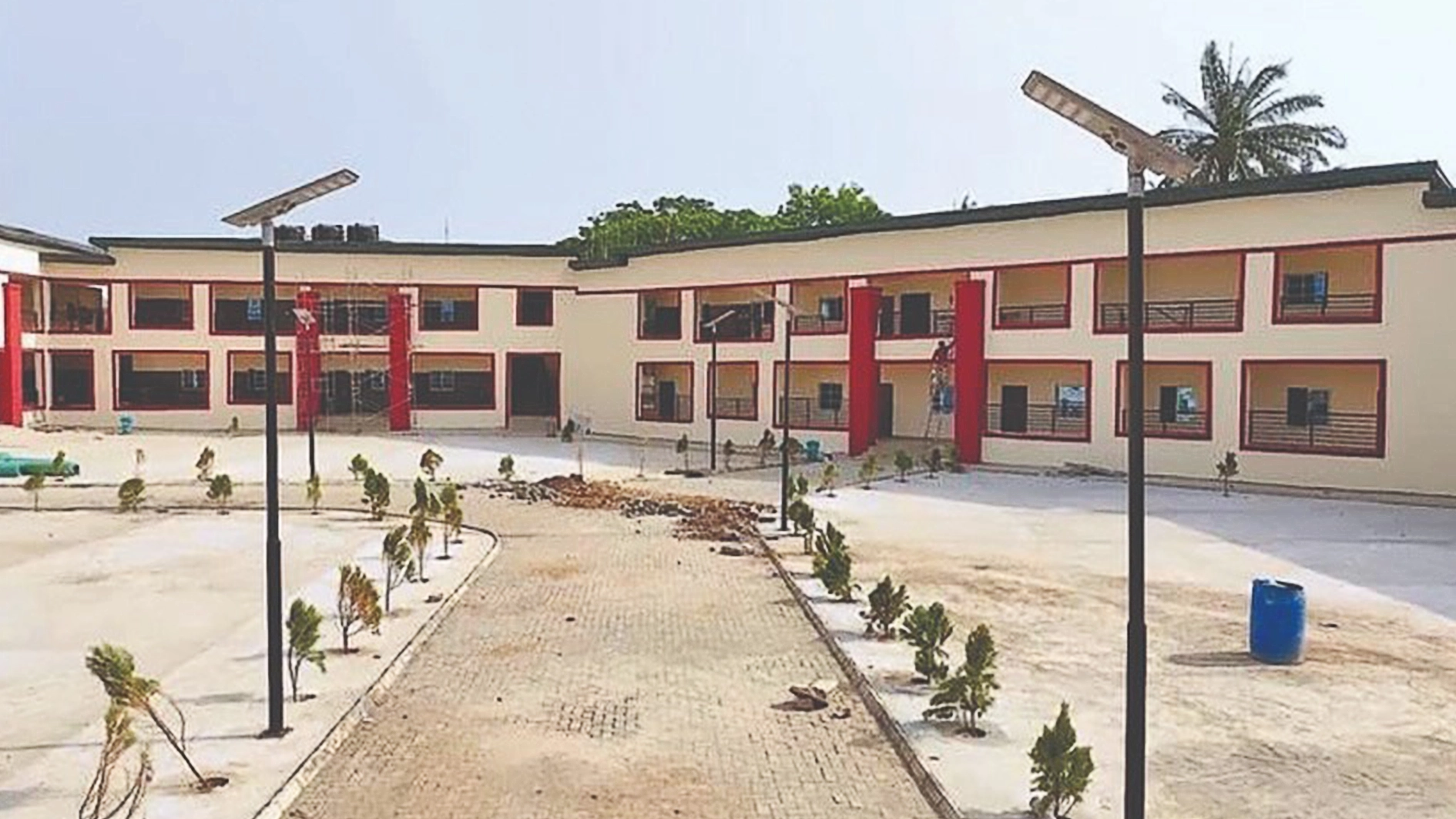 The government kick-started some of the completed smart school initiative in September 2026 with the recruitment of 2,299 teachers, who were posted to various schools after their induction. These teachers, described as the first batch of the teaching staff expected to be employed for the schools, were part of those involved in the computer-based tests written in 2024.
During the assessment tests for the candidates that applied for the teaching vacancies in 2024, the Commissioner for Education, Prof. Ndubueze Mbah, disclosed that the state would employ about 6,580 teachers in the smart schools. He added that no fewer than 26,000 candidates had applied for the smart school jobs.
Explaining that his ministry decided to come up with “a bias-free process of evaluating their subject area competency and basic digital literacy proficiency,” added that two centres were designated for the assessment with a minimum of 6,000 candidates per day.
“It is very important for us to make sure that the teachers who shall be teaching our children have basic numeric and literacy proficiency; that is why we are having general examinations in Mathematics and English Language.
“They are also being tested on basic digital literacy; if you are a teacher who is going to teach in the smart school, you are going to be using a computer, smart board, and a digital hybrid library. It is a high-tech environment. We want to make sure that our teachers have at least basic knowledge of computer,” he stated
The new smart green schools operate the lower and upper basic classes – from the nursery – primary to the junior secondary levels. Those recruited are not just qualified teachers but are also at their best in their core subject areas.
It was gathered that the new system being run in the school approved teachers for core subjects from primary four, unlike the conventional primary school system where a single teacher handles all the subjects from primary one to primary six.
The Guardian gathered that the plan to unveil the smart schools as a means of improving education and restoring confidence in public schools was initiated when Governor Peter Mbah assumed office in May, 2023.
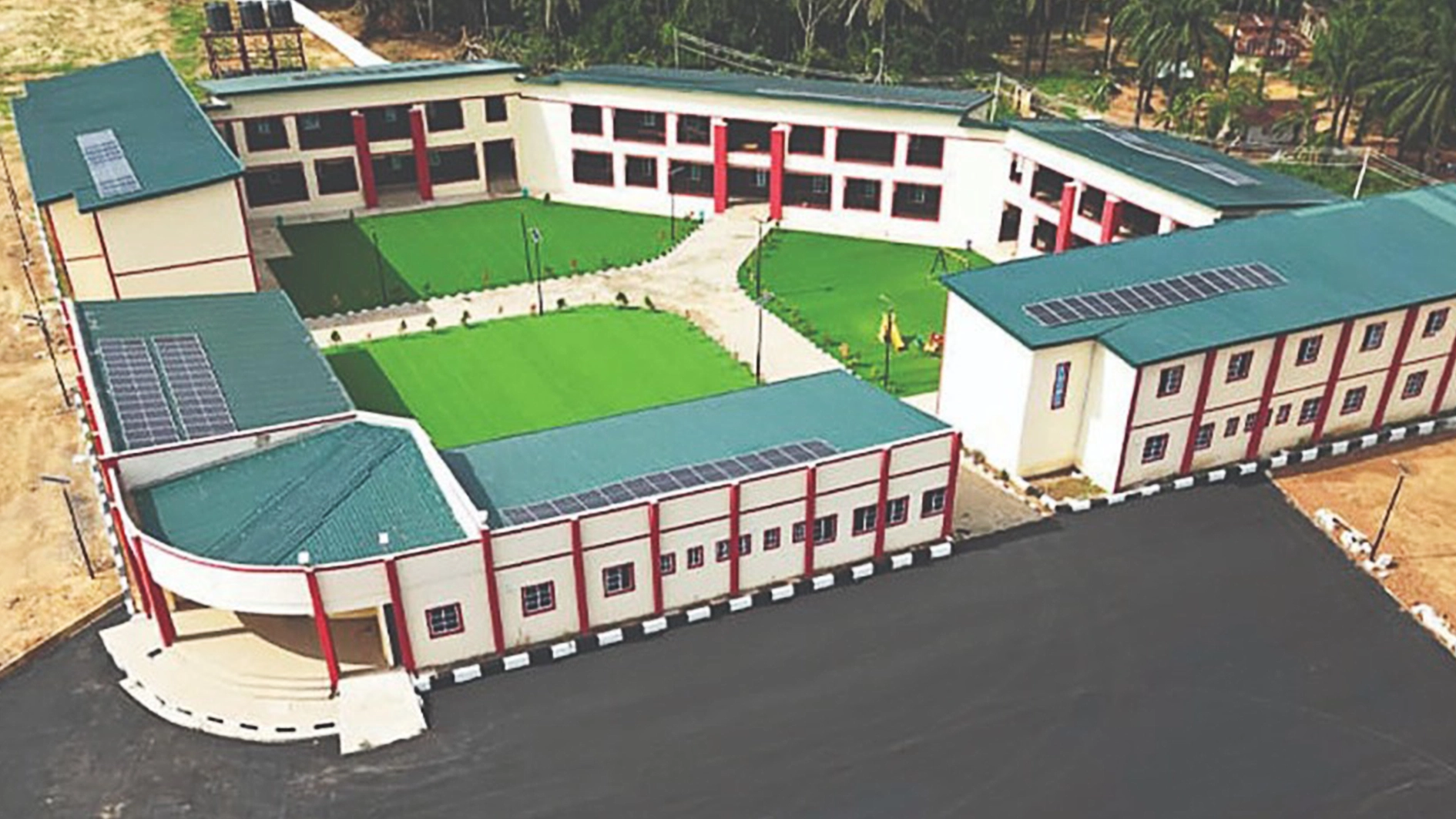
He had promised to establish the school in each of Enugu’s 260 electoral wards, adding that the schools are to be designed around digital learning, science laboratories, modern classrooms, solar power, technology and experiential learning rather than the old modern of memorisation and inadequate infrastructure.
The governor argued then that “If Enugu wants to become a $30 billion economy, it cannot educate its children for an economy that no longer exists. It must prepare them for technology, science, entrepreneurship, manufacturing, agriculture, creative industries and a globally competitive labour market,” he said.
To actualise this, Mbah deliberately set out more than 33 per cent of the state’s budget in both 2024 and 2025, while the 2026 budget allocation was about 32.27 per cent to the education sector. Each of the schools was estimated to cost about N1.2 billion.
So far, some of the schools are now up and running. The state government has not only upgraded and trained the teachers to comply with the modern technological trends in education; it is also monitoring them to ensure that they delivered accordingly. This development is unsettling some private schools that are being challenged by lack of adequate teaching staff, and rising number of students’ withdrawals.
The Enugu public school system has for sometimes now been crumbling over alleged government neglect following the inability of previous administrations to effectively fund and provide for the needs of the sector.
With a high number of school environments becoming unkempt and littered with dilapidated structures, several schools even had pupils learning in found spaces without adequate desks and basic teaching aids.
In some communities, learning was conducted under trees as a result of inadequate or dilapidated classrooms.
The development paved the way for migration of educators to private schools. Pupils followed suite.
Before long, private primary and secondary schools became a hallmark of the state as parents encouraged them.
The state government also did not help matters as it issued licenses to anyone willing to operate such schools no matter the location. This led to the uncontrolled springing up of unapproved, low-cost private schools with many (even till now) operating under uncompleted buildings or residential buildings all in the name of serving as alternatives to failing public schools.
All these appear to be changing as the Mbah-led administration moves to restore confidence in public schools by modernising many schools and closing some privately-owned substandard or unregistered schools.
 Also recently, private school operators raised an alarm over alleged heavy, multiple taxations, including business and environmental charges being placed on them.
They are now also made to undergo yearly license renewal while the ministry’s compliance arm has been activated to ensure regular monitoring of the schools to ensure that they possess adequate learning materials.
To further actualise his plan, the Mbah-led government also closed some public schools that are located close to the smart schools and sent affected learners to the smart schools.
Parents, who have realised the scale of infrastructure in the schools, are massively withdrawing their children from private schools and enrolling them back into the public system.
Some of them insist that the schools are cheaper and provide better opportunities for learning than private schools with higher school fees and without enough room for effective education.
Mrs Chinenye Igwebuike, who was among the first batch of teachers recruited into the smart schools, told The Guardian that she decided to quit a private secondary school where she taught English Language, Literature and Government for five years, because, “I needed a pensionable job.”
She added that there are better opportunities for growth and development for any teacher in the smart schools at the moment because of the facilities in them.
“I competed with several other qualified teachers and was picked after a computer-based interview. We went for induction and several other sessions where we were exposed to modern technological facilities that now define education in the state. These would not have been possible if I were still in a private school,” she said.
Also, the state chairman of the National Association of Proprietors of Private Schools, Nelson Agu, who acknowledged that the introduction of the smart schools had challenged private schools, said they had upgraded their “schools to meet the required standards”
Many are questioning how far that these measures being undertaken by the Mbah administration could fully restore the lost confidence in public schools operated by the government and in the long run discourage the rise of private schools in Enugu.
The question has become necessary following concerns being raised over the location of some of these schools and their proximity to those they are meant to serve. Many residents still don’t believe that Mbah’s formula is feasible and would rather stick with private schools.
It was observed that because of the location of political wards in some communities, those living in peripheral villages within the ward trek several kilometers to their school. This was not the case before now.
There are also concerns about the completion time and equipment availability in some of these schools in several communities with the increasing responsibilities that the state government has undertaken of late, especially the over 800 additional political appointments, a development that has increased its monthly wage bill.
In the penultimate week, the Parents-Teachers Association of the Government Technical College, Enugu, had raised some worries over alleged poor teaching and lack of practical training in some departments in the school, including the inability of students to use computer sets despite their availability and well trained and qualified teachers.
They also expressed worries about termly payment for school uniforms, payment for janitorial services, payment for bed spaces every session, lack of standard e-library, unfulfilled promise of tablets to the children among others.
The way it is, with the scale of recruitment so far made for the smart schools, all eyes are on the state government initiative to rebrand education in the state.

