 Follow Us on Google News



 Follow Us on Google Discover
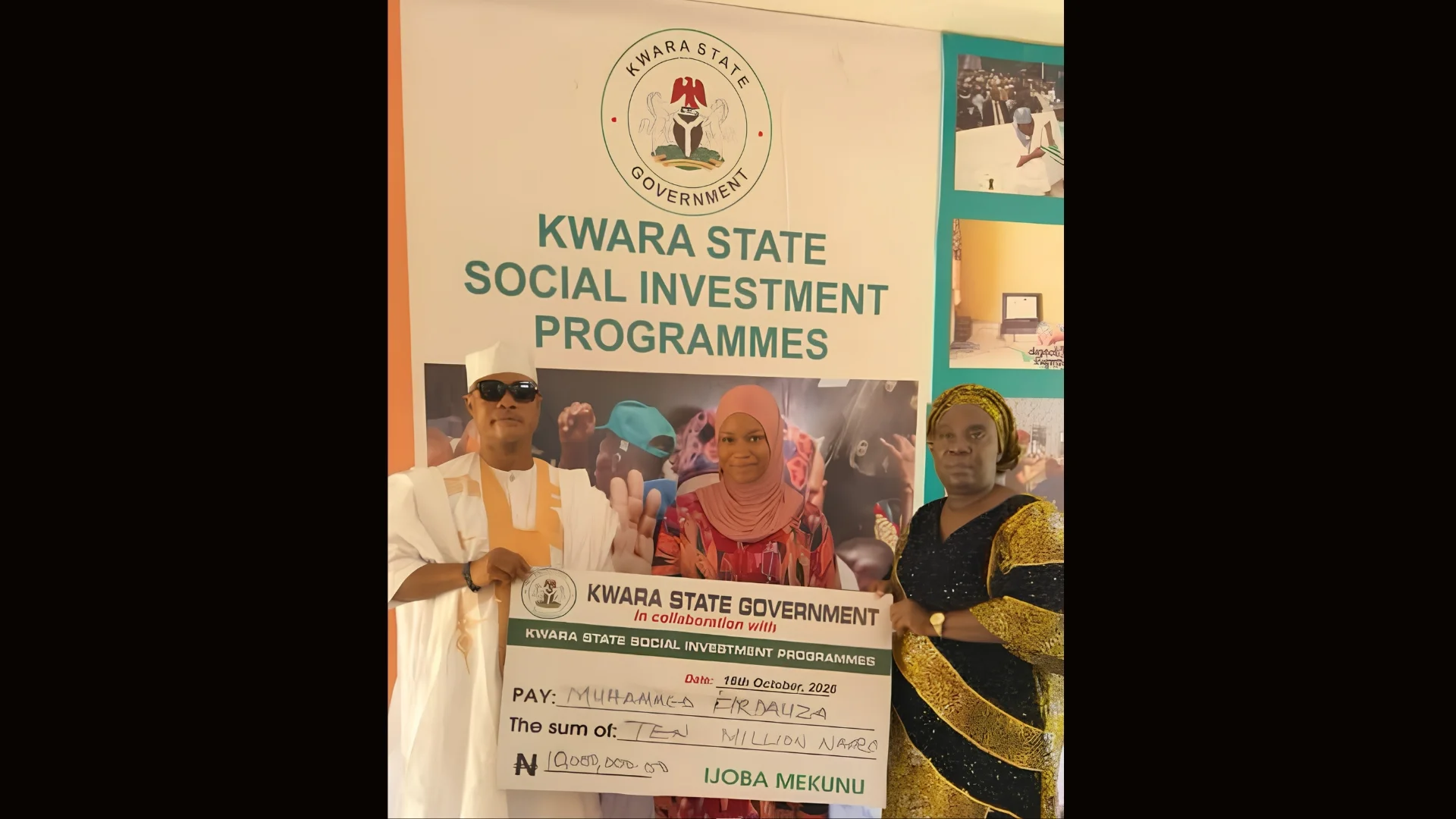
The Kwara State Government has awarded grants totalling ₦89.2 million to 12 young entrepreneurs under its Youth Entrepreneurial Empowerment Scheme, as part of efforts to support small businesses and encourage job creation across the state.
The intervention, coordinated by the Kwara State Social Investment Programme (KWASSIP), is intended to help beneficiaries expand their operations, acquire equipment and increase production capacity.
General Manager of KWASSIP, Dr Wasiu Tejidini, presented cheques to the beneficiaries at the agency’s office in Ilorin on Monday.
According to Tejidini, the grants were approved by Governor AbdulRahman AbdulRazaq following a review of applications and business proposals submitted by the entrepreneurs.
He said the state government considered the intervention necessary to support young people with business ideas and encourage them to pursue opportunities outside conventional salaried employment.
The grants cover businesses operating in different sectors, including food processing, fashion, creative services, jewellery, retail and household products.

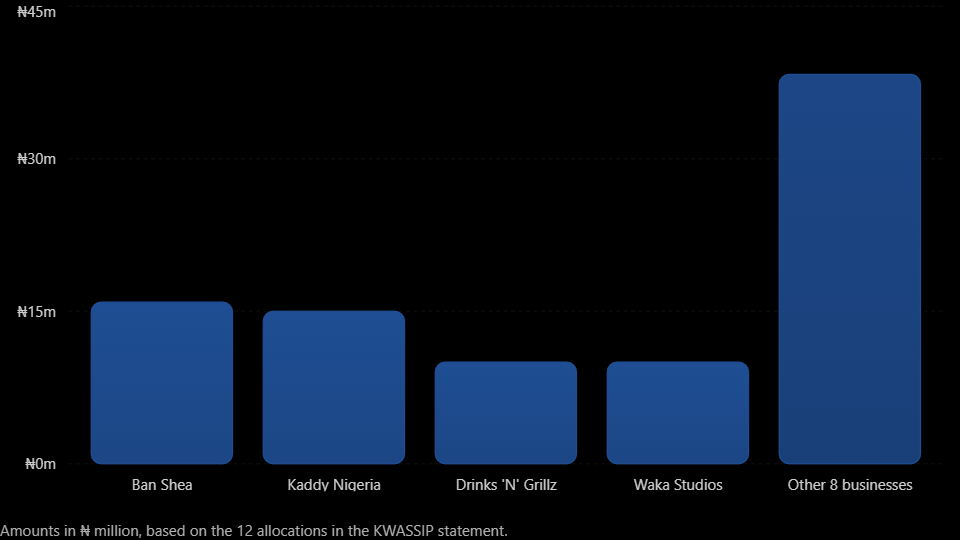
According to the list released by KWASSIP, Nimotallah Mohammed Kpayero of Ban Shea Products received the largest allocation of ₦15.9 million.
Ahmed Kuburat of Kaddy Nigeria received ₦15 million, while Firdauz Muhammed Wuraola of Drinks ‘N’ Grillz and Fatigun Subomi Emmanuel of Waka Studios received ₦10 million each.
Oloyede Ikmat Omoshalewa of Kwara Souvenir Store received ₦5 million, while Anifowose Favour Boluwatife of Esthad Luxe Jewels was awarded ₦3.3 million.
Other beneficiaries who received ₦5 million each were Ibrahim Maryam Modupeola of Kleen Klear; Ajiboye Opeyemi Rasheed of Tailorgang Fashion House; Yusuf Dolapo Azeezat of Day Varieties Enterprise; Akinyode Bosede Temilade of Global LightTrust Integrated Ventures; Badeji Sherifat Modupe of BSM Fashion; and Adeshewa Kolawole of Day-Yank Fashion.
The individual allocations bring the total grant package to ₦89.2 million.
Tejidini urged the entrepreneurs to use the funds for the purposes outlined in their business proposals.
He said the agency would assess the impact of the intervention through its monitoring and evaluation unit.
According to him, the assessment is expected to take place within six months to one year after the disbursement.
The exercise is intended to establish whether the financial support has helped beneficiaries expand their businesses and achieve the objectives contained in their applications.
The KWASSIP general manager said the grants formed part of the state government’s broader efforts to promote entrepreneurship and reduce dependence on government employment.
He encouraged recipients to manage the funds responsibly and ensure that the intervention translated into measurable improvements in their operations.
Tejidini disclosed that the state government had previously supported more than 1,000 young people through its Kwapreneur programme.
The initiative, also administered under KWASSIP, is designed to promote youth entrepreneurship and enterprise development.
He described the latest grants as a continuation of the government’s efforts to provide financial assistance to young people pursuing business opportunities.
According to him, supporting small businesses could help beneficiaries become economically independent while creating opportunities for others.
The KWASSIP general manager also commended Governor AbdulRazaq for the administration’s support for entrepreneurship and investments in other sectors, including infrastructure, healthcare, education and security.
Speaking on behalf of the beneficiaries, Ajiboye Opeyemi Rasheed and Nimotallah Mohammed Kpayero expressed appreciation for the financial assistance.
They said the grants would help them acquire additional equipment, improve production capacity and employ more young people.
Ajiboye, whose Tailorgang Fashion House received ₦5 million, said the intervention would create opportunities for young people, including recent graduates, to acquire practical business skills.
“We really thank the government. This is an opportunity for us to create jobs for people out there, including fresh graduates,” he said.
“They can easily learn from us and get the right business skills to become self-sufficient.”
The beneficiaries said the support would enable them to strengthen their operations and contribute to employment generation.
Access to finance remains an important consideration for entrepreneurs seeking to establish or expand businesses in Nigeria.
Small enterprises frequently require capital to purchase equipment, secure raw materials, improve facilities and meet operating expenses.
For businesses at an early stage of development, limited financial resources can restrict production capacity and opportunities for expansion.
Grant funding can help address some of these constraints because, unlike conventional loans, it generally does not require repayment when recipients comply with the programme’s terms.
However, financial assistance alone does not guarantee business success.
The ability of beneficiaries to expand sustainably also depends on factors such as market demand, operating costs, access to infrastructure and business management.
For enterprises operating in manufacturing, food processing and other production activities, the availability and cost of electricity, transportation and raw materials may significantly influence performance.
Consequently, the effectiveness of public entrepreneurship grants is often assessed not only by the amount distributed but also by the measurable results achieved after disbursement.
With the latest grants awarded, attention will turn to whether the beneficiaries can translate the financial assistance into stronger businesses and additional employment.
KWASSIP’s proposed monitoring exercise could provide an opportunity to assess changes in production, staffing and business activity.
For the 12 entrepreneurs, the intervention provides additional capital to pursue their expansion plans.
For the state government, the longer-term measure of the programme’s effectiveness will be the extent to which the businesses remain viable, create employment and contribute to economic activity in Kwara.
The expected review within six months to one year will therefore be an important stage in assessing the results of the ₦89.2 million intervention.

