 Follow Us on Google News



 Follow Us on Google Discover
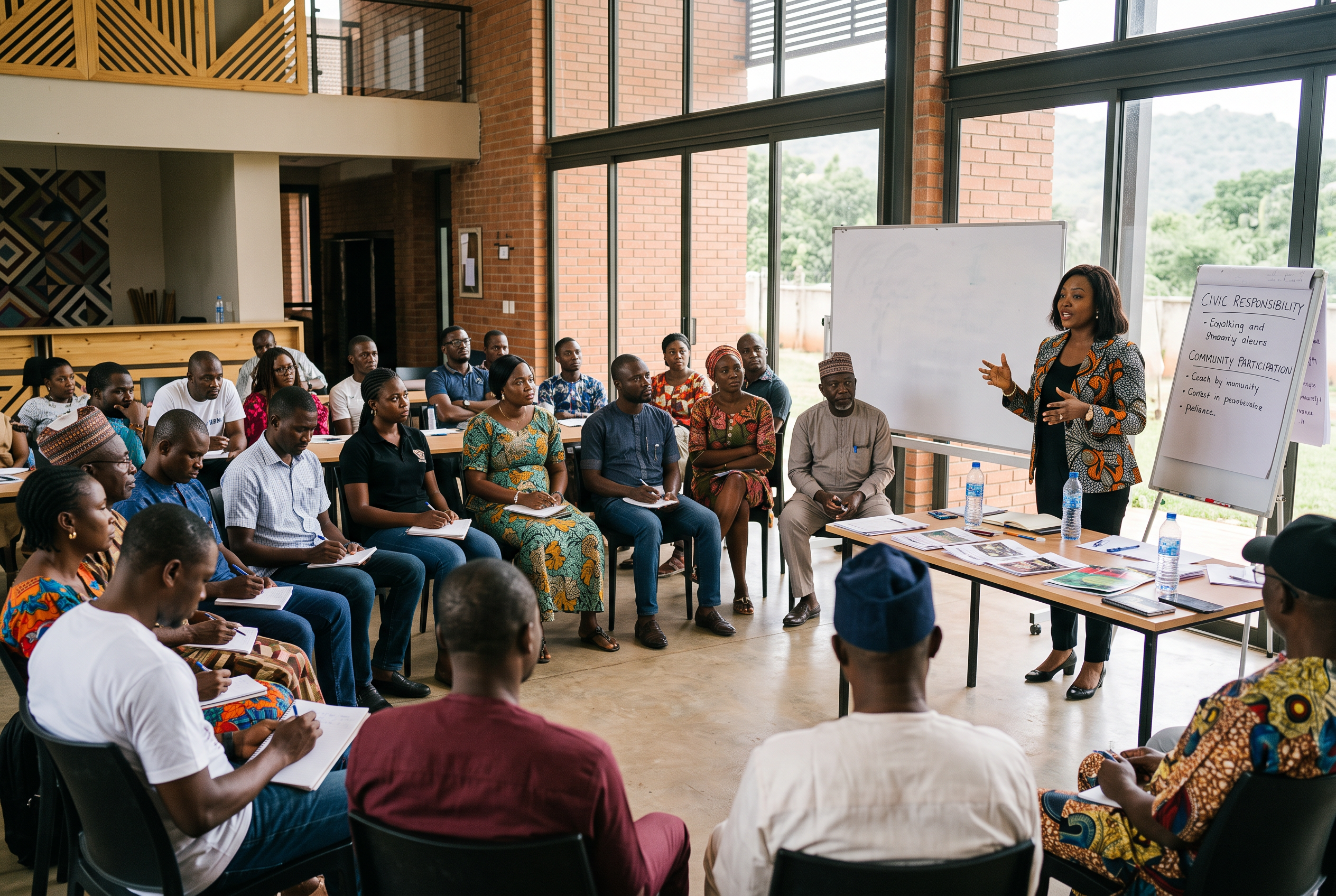
Welcome, and thank you for stopping by. This guide is the conclusion of months of research through constitutional texts, ministry portals and form after form, built on years of experience helping friends, readers and the occasional bewildered relative fill in official paperwork. The question that started it all came from my niece, who was stuck on an online visa form at midnight and texted me: what is the citizen code of Nigeria? The honest answer begins with the body of rules that decides who belongs to this country, and then spreads quickly into dialling codes, passport letters and state abbreviations.
She had typed “+234” into the nationality box. The form rejected it, of course, and she was convinced the website hated Nigerians.
It did not. It simply wanted a different code.
Here is the thing nobody tells you at school. There is no single number stamped on you at birth that answers every form. Instead, Nigeria hands each of us a small bunch of codes, rather like the keys on a landlord’s ring in Surulere: one for the front gate, one for the generator house, one for the padlock on the water tank. Each opens exactly one thing, and none of them is “the” key. One code tells an airline which country issued your passport. Another tells a phone network where to send your call. Another tells the National Identity Management Commission which of the 200 million plus of us you are. And since 1 October 2026, one even tells a dispatch rider which building on a crowded street is yours (yes, finally).
So in this guide I will walk you through the legal meaning of citizenship and the nationality code on your passport, then the everyday codes people mean when they say “our Nigerian code”, then a straight answer to the main question, then the state codes for all 36 states and the Federal Capital Territory (including a twist in the new postcodes that will trip up thousands of form-fillers), and finally the curious question of who counts as the number three citizen of the federation.
Pour yourself something cold. It is less complicated than it sounds.

What Is a Citizenship Code in Nigeria?
Start with the law, because every code we will meet later is only a label stuck on top of it.
Nigerian citizenship lives in Chapter III of the 1999 Constitution, sections 25 to 32. It is a short chapter, maybe four pages in most printed copies, and I would encourage every adult Nigerian to read it once. It answers a question that sounds simple and is not: who, exactly, is a Nigerian?
The Constitution gives three doors in.
The first and widest door is citizenship by birth, under section 25. You are a citizen by birth if you were born in Nigeria after independence and either of your parents or any of your grandparents is a Nigerian citizen, or if you were born outside Nigeria and either of your parents is a citizen. People born before 1 October 1960 qualify through a parent or grandparent belonging to a community indigenous to Nigeria. Notice what is missing from that list. Being born on Nigerian soil, on its own, does not make you Nigerian. A baby born to two Ghanaian parents in a Lagos Island hospital is Ghanaian, however much jollof she eats growing up.
The second door is registration, under section 26. It covers two groups: a woman who is or has been married to a Nigerian citizen, and a person of full age born outside Nigeria any of whose grandparents is a Nigerian citizen. The President must be satisfied that the applicant is of good character, has shown a clear intention to live in Nigeria, and has taken the oath of allegiance.
You may have spotted the problem with the first group. It says “woman”.
A Nigerian man can pass his citizenship to his foreign wife by registration. A Nigerian woman cannot do the same for her foreign husband. Lawmakers have tried to make the wording gender neutral more than once; the Senate approved such a change in March 2022 but the House of Representatives voted it down, and a fresh bill to replace “woman” with “person” passed second reading in the House in March 2025. At the time of writing, section 26(2)(a) still reads as it did in 1999. I have sat across from a Nigerian engineer in Abuja whose Kenyan husband had lived here for eleven years and still renewed his residence permit every year, and I did not have a satisfying answer for her.
The third door is naturalisation, under section 27, and it is the narrowest. An applicant must be of full age, of good character, intend to live here, be acceptable to the local community where they plan to settle (the state governor must confirm this), be able to contribute to the country’s advancement, and have taken the oath. Then comes the residence test, which is demanding: either fifteen continuous years in Nigeria, or twelve continuous months immediately before applying plus a total of fifteen years spread across the twenty years before that.
The paperwork itself runs through the Federal Ministry of Interior’s Citizenship and Business Department. If you want to see what an applicant actually has to upload, the Interior Ministry’s own checklist for registration and naturalisation applicants lists items such as a birth certificate, a tax clearance certificate, evidence of a means of livelihood, a signed letter to the Permanent Secretary and, for spouses, a formal undertaking from the Nigerian partner. It is not a quick process, and nor is it meant to be.
What about dual citizenship? This is the question I am asked most often by readers in Houston, Manchester and Toronto. Section 28 says a person forfeits Nigerian citizenship if, not being a citizen by birth, they acquire or keep the citizenship of another country. Read that slowly. The penalty applies only to people who became Nigerian by registration or naturalisation. If you are Nigerian by birth, you can hold a British or American passport as well and remain fully Nigerian.
Citizenship can also end. Section 29 lets any citizen of full age renounce it by declaration, and once the President registers that declaration, the person stops being Nigerian. In April 2026 the government made the consequence very concrete, with the Interior Minister’s directive that passports held by former citizens be withdrawn and deactivated. Tina Abeku’s Guardian report on the passport withdrawal order noted that the move was expected to trigger an audit of the immigration database so those documents stop working at borders. Section 30 adds a further route out for citizens by registration or naturalisation, who can be deprived of citizenship for a serious prison sentence within seven years of acquiring it, or for disloyalty.
So where does a “code” come into any of this?
Right at the border. When the world needs to write “this person is a Nigerian citizen” in a form a computer can read, it uses three letters: NGA.
Open your passport to the photo page and look at the two lines of chevrons and letters along the bottom. That strip is the machine-readable zone, and on a standard passport it is two lines of exactly 44 characters each. The top line begins “P<NGA”, where P means passport and NGA is the issuing state. On the second line, characters 11 to 13 repeat NGA as your nationality. That three-letter block is the closest thing to an official citizenship code that exists, and it is the one visa portals, airline check-in systems and embassy forms want when they ask for “nationality code” or “citizenship code”.
One small cultural footnote before we move on. Many Nigerian forms also ask for your “state of origin”, and plenty of people confuse it with citizenship. They are different animals. Your state of origin traces your lineage to a community; your citizenship is your legal membership of the federation. A Yoruba man born and raised in Kano is still a full Nigerian citizen in Kano, whatever his JAMB form says about Ogun.
What Is Our Nigerian Code for Calls, Forms and Passports?
Ask ten people in an Oshodi bus park “what is our Nigerian code?” and at least eight will say “plus two three four” without blinking.
They are right, in the way most people mean the question.
+234 is Nigeria’s international dialling code. When someone abroad calls your mobile, they dial their own exit code, then 234, then your number without its leading zero. So a line written locally as 0803 123 4567 (eleven digits) becomes +234 803 123 4567 when you write it for international use, which is thirteen digits after the plus sign. Calling out of Nigeria, the exit code is 009, although on a mobile phone you can simply type the plus sign.
The leading zero is where people go wrong. I have seen business cards printed in Ikeja with “+234 0803…” on them, which no foreign phone will connect, and I have seen the British habit of “+234 (0) 803…” confuse callers just as badly. Drop the zero entirely once the 234 goes in front. Landlines follow the same rule, so a Lagos number that starts with 01 locally becomes +234 1, and an Abuja number that starts with 09 becomes +234 9.
A quick warning about guessing networks from prefixes. Yes, 0803 started life as an MTN prefix, 0805 as Glo, 0802 as Airtel and 0809 as 9mobile. But mobile number portability arrived in 2013, so a number can now carry any of those prefixes and sit on a completely different network. Your aunty in Enugu who insists “that one is MTN, I can tell” may be paying cross-network rates without knowing it.
Then there is the code that identifies you, personally.
Your National Identification Number, or NIN, is an 11-digit number issued by the National Identity Management Commission (NIMC) when you enrol in the national identity database. It ties your biometrics, your date of birth and your registered phone number to one record, and it is now demanded for passports, bank accounts, SIM cards, driving licences and WAEC registrations alike. If you have lost your slip, the telecoms regulator’s own explainer on the NIN and how to retrieve it confirms the method: dial *346# from the phone number you gave NIMC at enrolment, on any network. The USSD route usually costs about ₦20 in airtime.
Here is the subtlety most people miss. The NIN is not proof of citizenship.
NIMC issues it to Nigerian citizens and to foreigners legally resident in Nigeria. A Lebanese trader who has lived in Kano for twenty years may hold a NIN without holding a Nigerian passport. So if a form asks for your NIN, give it; if a form asks for your citizenship or nationality, the answer is still NGA, backed by your birth certificate or passport.
Your Bank Verification Number is a different thing again (also 11 digits, issued through the banks under the Central Bank’s scheme), and I would gently suggest that if you cannot tell your BVN from your NIN at a glance, you write a small label on each in your notes app. Your bank’s customer care desk will thank you.
A few more codes complete the set, and they turn up in surprising places:
- NG is the two-letter country code used on most web forms, courier labels and app-store settings.
- 566 is Nigeria’s numeric country code, and by neat coincidence the naira’s numeric currency code is also 566.
- NGN is the three-letter currency code you will see on bank statements and exchange screens.
- .ng is the internet domain (as in this very newspaper’s address).
- NGR is Nigeria’s code at the Olympic Games, the letters Team Nigeria marches behind at the opening ceremony (football’s governing body, confusingly, uses NGA).
- WAN is the international vehicle code, the oval sticker letters for a Nigerian car driven across borders.
Now, a word on styling, because how you write these codes matters more than you might think. On a business card or email signature, write your number in the international format, grouped three, three, four: +234 803 123 4567. Use a font size of at least 8 points on a card so the digits survive a photocopy. Keep the plus sign; it tells a foreign reader to dial their own exit code first. And never split the 234 from the rest of the number across two lines, because people will dial only half of it.
What Is the Citizen Code of Nigeria? The Short Answer
Right. Here is the paragraph you came for.
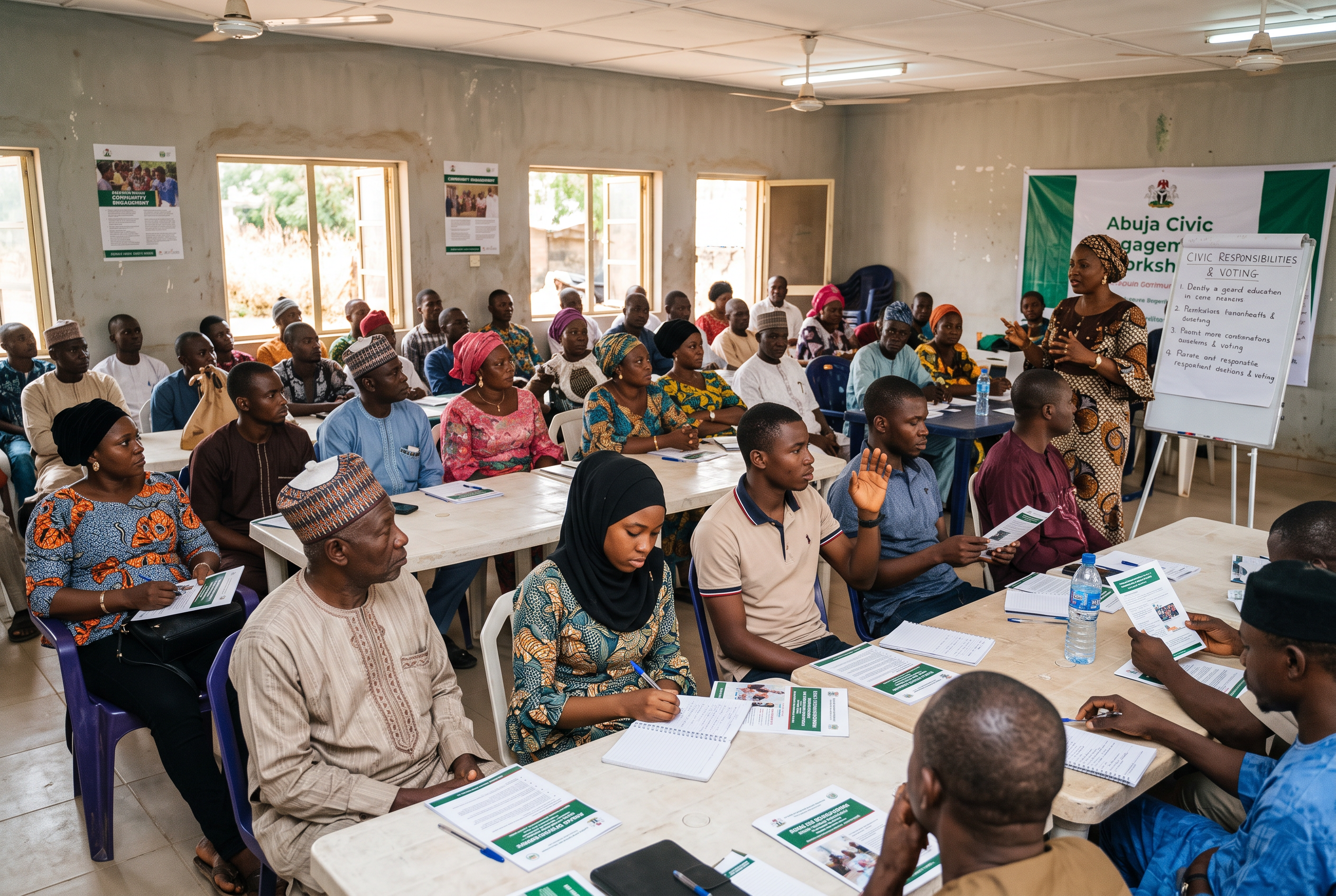
There is no single official “citizen code” in Nigerian law, so the right answer depends on what you are being asked for: when a passport, visa form or airline asks for Nigeria’s citizenship or nationality code, the answer is NGA, the three-letter code printed in the machine-readable zone of every Nigerian passport and used in the ISO 3166 international standard, with NG as the two-letter version and 566 as the numeric one; when a bank, telecoms company or government agency wants the code that identifies you personally, it means your 11-digit National Identification Number issued by NIMC, which is held by citizens and legal residents alike; and when Nigerians say “our code” in everyday conversation they almost always mean +234, the international dialling code. Behind every one of these labels sits Chapter III of the 1999 Constitution, which decides who is a citizen in the first place, through birth, registration or naturalisation, and which the Ministry of Interior administers.
If you prefer it as a quick reference, keep this list somewhere handy:
- NGA: nationality or citizenship code on passports, visa applications and airline bookings
- NG: two-letter country code for web forms, courier labels and state codes such as NG-LA
- 566: numeric country code, also the naira’s numeric currency code
- +234: international dialling code for calls and WhatsApp numbers
- NIN: your personal 11-digit identity number from NIMC
- NGN and .ng: the naira’s currency code and the internet domain
That is it. Six labels, one country.
What Are the State Codes for Nigeria’s 36 States and the FCT?
Here the plot thickens, because “state code” means at least four different things in Nigeria, and the newest one arrived only weeks ago.
The oldest system most of us met is the six-digit postcode. NIPOST split the country into nine regions decades ago, with the first digit marking the region and the last three marking the delivery point. Each main post office ended in 0001, which is why Ikeja’s code was 100001, Garki in Abuja was 900001, Port Harcourt was 500001 and Enugu was 400001. Courier companies still ask for these codes, and many online checkout pages will refuse to proceed without six digits in the box.
The second system is the one international software uses: ISO 3166-2. Every state gets “NG-” followed by two letters, so Lagos is NG-LA, Kano is NG-KN and the Federal Capital Territory is NG-FC. You will see these on international e-commerce sites, in shipping software and in drop-down menus built by foreign developers.
The third system lives on your car. Nigerian number plates carry a three-letter code for the local government area where the vehicle was registered (KJA for Ikeja is probably the most photographed), along with the state’s name and slogan along the top of the plate.
And the fourth system is brand new.
On 1 October 2026, the Federal Government launched the National Digital Alphanumeric Postcode System, which gives every addressable building its own 11-character code. In Joel Oladele’s report from the launch, the Communications Minister, Bosun Tijani, put the cost of poor addressing at between ₦50 billion and ₦80 billion a year in missed and failed deliveries. Anyone who has stood at a junction in Ajah describing “the blue gate after the mosque, opposite where the mallam sells suya” to a confused rider will find that figure easy to believe.
The new code reads from large to small, rather like a set of Russian dolls. Take the official sample, FC 02 A09 DB 09. FC is the state or territory (two letters), 02 the local government area (two digits), A09 the district (three characters), DB the area (two letters), and 09 the individual building (two digits). Spacing does not matter, so FC02A09DB09 is the same code. The postcode belongs to the building, not the person, so if you move house you take the new building’s code. Individuals can look theirs up free at postcode.gov.ng, by sharing their location while standing at the building or by pasting a Google Maps link, and NIPOST has said it is aiming for full coverage of all 36 states and the FCT by December 2026.
And here is the twist I promised.
The two-letter prefixes NIPOST published for the new postcodes match the ISO codes for 32 of the 37 states and territory. For five states, they do not.
Nigeria’s State Codes at a Glance: ISO 3166-2 and NIPOST Postcode Prefixes
| State or territory | Capital | Geopolitical zone | ISO 3166-2 code | NIPOST postcode prefix |
|---|---|---|---|---|
| Abia | Umuahia | South East | NG-AB | AB |
| Adamawa | Yola | North East | NG-AD | AD |
| Akwa Ibom | Uyo | South South | NG-AK | AK |
| Anambra | Awka | South East | NG-AN | AN |
| Bauchi | Bauchi | North East | NG-BA | BA |
| Bayelsa | Yenagoa | South South | NG-BY | BY |
| Benue | Makurdi | North Central | NG-BE | BE |
| Borno | Maiduguri | North East | NG-BO | BR |
| Cross River | Calabar | South South | NG-CR | CR |
| Delta | Asaba | South South | NG-DE | DE |
| Ebonyi | Abakaliki | South East | NG-EB | EB |
| Edo | Benin City | South South | NG-ED | ED |
| Ekiti | Ado-Ekiti | South West | NG-EK | EK |
| Enugu | Enugu | South East | NG-EN | EN |
| Federal Capital Territory | Abuja | North Central | NG-FC | FC |
| Gombe | Gombe | North East | NG-GO | GM |
| Imo | Owerri | South East | NG-IM | IM |
| Jigawa | Dutse | North West | NG-JI | JI |
| Kaduna | Kaduna | North West | NG-KD | KD |
| Kano | Kano | North West | NG-KN | KN |
| Katsina | Katsina | North West | NG-KT | KT |
| Kebbi | Birnin Kebbi | North West | NG-KE | KE |
| Kogi | Lokoja | North Central | NG-KO | KG |
| Kwara | Ilorin | North Central | NG-KW | KW |
| Lagos | Ikeja | South West | NG-LA | LA |
| Nasarawa | Lafia | North Central | NG-NA | NA |
| Niger | Minna | North Central | NG-NI | NI |
| Ogun | Abeokuta | South West | NG-OG | OG |
| Ondo | Akure | South West | NG-ON | ON |
| Osun | Osogbo | South West | NG-OS | OS |
| Oyo | Ibadan | South West | NG-OY | OY |
| Plateau | Jos | North Central | NG-PL | PL |
| Rivers | Port Harcourt | South South | NG-RI | RI |
| Sokoto | Sokoto | North West | NG-SO | SK |
| Taraba | Jalingo | North East | NG-TA | TA |
| Yobe | Damaturu | North East | NG-YO | YB |
| Zamfara | Gusau | North West | NG-ZA | ZA |
The table’s lesson is simple: Borno, Gombe, Kogi, Sokoto and Yobe each have one code in the international standard and a different one in the new NIPOST postcode, so anyone from those five states should check which system a form is asking for before typing. Everywhere else, the two letters after “NG-” are the same letters that open your building’s new postcode.
Why does this matter in real life? Picture a logistics firm in Kaduna writing software that assumes the two systems match. Every parcel bound for Maiduguri, Gombe, Lokoja, Sokoto or Damaturu gets a broken code, and somebody’s wedding aso ebi sits in a warehouse for a fortnight. Small differences, big headaches.
So, with all these codes floating about, how do you get your own house in order? This is the routine I now walk friends and family through, and it takes a single afternoon:
- Find the document that proves your citizenship, which for most of us means a birth certificate showing a Nigerian parent, or a current passport, and keep a scanned copy in your email as well as the paper original in a clear A4 plastic wallet.
- Confirm your 11-digit NIN by dialling *346# from the phone number you used at enrolment, which usually costs about ₦20 in airtime, and if the number has changed since then, visit a NIMC enrolment centre rather than paying anyone who promises a shortcut.
- Look up your building’s new postcode at postcode.gov.ng while standing inside the building with location turned on, then write it down in its five groups, for example LA 01 A03 FK 01, and use the edit option if the details are wrong, since NIPOST says corrections take about 48 hours.
- Rewrite your phone number in international form by dropping the leading zero and adding +234, then check that the result is 13 digits after the plus sign and update your WhatsApp profile, CV and email signature to match.
- Check the photo page of your passport, confirm the bottom line of the machine-readable zone shows NGA as nationality, and note the expiry date, remembering that a home renewal now costs ₦100,000 for the 32-page, five-year booklet and ₦200,000 for the 64-page, ten-year booklet.
- Note your state of residence’s ISO code and its NIPOST prefix side by side, especially if you live in Borno, Gombe, Kogi, Sokoto or Yobe, so you never mix the two up on a form.
- Make a personal code card the size of a bank card, 85.6 mm by 54 mm, with your postcode, your phone number in international format and only the last four digits of your NIN, then laminate it at a business centre for around ₦300 to ₦500 and keep it in your wallet.
A few design notes on that card, because a little care goes a long way. Use a plain sans-serif font at 9 or 10 points, keep letters and numbers in capitals, and leave a clear gap between each group of the postcode so nobody confuses the letter O with zero. Keep the full NIN off anything you carry daily; if the card goes missing in a danfo, you lose ₦500 of lamination, not your identity.
And if you want to go further and put the postcode on your gate (which I would recommend, given how many riders still ring me from the wrong street), think like a signwriter. A common rule of thumb is about 25 mm of letter height for every three metres of reading distance, so 75 mm letters are readable from roughly nine metres away, which is about the width of most residential streets in Yaba or Wuse. Dark letters on a pale background beat anything decorative. A simple aluminium plaque around 300 mm by 100 mm costs somewhere between ₦15,000 and ₦35,000 from most sign shops in Lagos, and less in many state capitals.
Who Is the Number 3 Citizen in Nigeria, and Why Does the Order Matter?
Now for the question that sounds like a pub quiz and turns out to be about the Constitution.
Nigeria follows an order of precedence, a protocol ranking used to decide who sits where at state functions, who speaks last, whose car leaves first and whose name appears first on an invitation. By long convention, it runs like this:
The number one citizen is the President, currently Bola Ahmed Tinubu. The number two citizen is the Vice President, Kashim Shettima. The number three citizen is the President of the Senate, Godswill Akpabio, who also serves as Chairman of the National Assembly. The Speaker of the House of Representatives, Tajudeen Abbas, is number four, and the Chief Justice of Nigeria, Kudirat Kekere-Ekun, is number five, with the Deputy Senate President, Barau Jibrin, commonly placed sixth.
So the short answer is Akpabio. The more interesting answer is why.
The ranking itself is protocol rather than statute; you will not find a numbered list of citizens anywhere in the Constitution. But the top three positions mirror the constitutional line of succession almost exactly. Under section 146, if the office of President becomes vacant, the Vice President takes over. If both the President and Vice President are gone at the same time, the President of the Senate holds the office of President for no more than three months, during which a fresh election must be held. That is what makes the Senate President number three: on the worst day in the country’s political life, he is the person keeping the seat warm.
Akpabio, a former two-term governor of Akwa Ibom State and former Minister of Niger Delta Affairs, was elected President of the 10th Senate on 13 June 2023. With the 2027 elections approaching, the position is already the subject of manoeuvring; in mid-October 2026, a group of senators publicly endorsed him to keep the seat in the 11th Assembly. Whether he does is a matter for the senators elected next year, but the rank itself will stay with whoever holds the gavel.
The top of the order also carries a citizenship rule that ties neatly back to section 25. Section 131 says only a citizen of Nigeria by birth can be elected President. Citizens by registration or naturalisation, however devoted, are barred from the top job. That point sits at the heart of a pointed Guardian column by the senior advocate Ebun-Olu Adegboruwa, which opens from the premise that the President is the number one citizen of any nation and argues that this is exactly why the Constitution insists the occupant be Nigerian through the bloodline.
Does any of this affect ordinary people? More often than you would think.
If you organise events, the order of precedence decides the high table. If you write formal letters, it guides forms of address: “His Excellency” for the President and Vice President, and “Distinguished Senator” for members of the upper chamber, including its President. And if you have ever watched a protocol officer at a state funeral in Uyo quietly swap two place cards five minutes before the governor arrives, you will know that getting the order wrong can cost far more goodwill than any caterer’s mistake.
My own small styling tip for event planners: print place cards with the full title on the first line and the name on the second, in the same font size, and seat the highest-ranking guest at the centre of the high table with precedence alternating right and left outward. It looks orderly, photographs well, and spares you a very awkward conversation in the car park.
Final Thoughts on the Citizen Code of Nigeria
If my niece texted me the same question today, I would not give her one code. I would give her a short map.
The citizen code of Nigeria, in the sense of the legal label for your nationality, is NGA, and it is backed by the three doors of Chapter III: birth, registration and naturalisation. The code that identifies you as a person is your 11-digit NIN. The code people mean over a plate of pepper soup is +234. The state codes come in several flavours, and the newest NIPOST prefixes differ from the international ones in five northern and central states. And the number three citizen is the Senate President, because the Constitution makes him the emergency custodian of the presidency.
None of this is exotic knowledge. It is the everyday grammar of being Nigerian on paper, and once you have it straight, forms stop being frightening and start being boring, which is exactly what forms should be.
Here is where I would start this week:
- Sit down with one form you have been avoiding, perhaps a visa application or a bank update, and fill it in using this guide’s quick reference list rather than guesswork.
- If you are Nigerian by birth and hold a second passport, keep your Nigerian passport valid, because your right to dual citizenship is secure but your right to travel on an expired booklet is not.
- Share the five mismatched state codes with anyone you know who runs a delivery, logistics or e-commerce business, since one corrected spreadsheet column can save them weeks of failed drop-offs.
Related Articles
If the three doors into citizenship caught your interest, my earlier piece on the two kinds of Nigerian, by law and by identity looks at how citizenship by birth sits alongside the ethnic and regional identities we use every day, and why the two so often get confused on official forms.
And because citizenship is the key that unlocks so many protections, my guide to the fundamental rights every Nigerian can claim in court walks through Chapter IV of the Constitution, which follows directly after the citizenship chapter, and explains how to enforce those rights when they are breached.
Key Takeaways
- Use NGA for nationality on passports and visa forms, NG for country fields on web forms, and +234 with the leading zero dropped for every phone number you share abroad
- Retrieve and safeguard your 11-digit NIN, but remember it identifies residents as well as citizens, so your birth certificate or passport remains your proof of citizenship
- Look up your building’s new NIPOST postcode now, and double-check the state prefix if you live in Borno, Gombe, Kogi, Sokoto or Yobe
Frequently Asked Questions About the Citizen Code of Nigeria
What is the citizen code of Nigeria?
There is no single legal “citizen code”, but the code used for Nigerian nationality on passports, visa forms and airline systems is NGA, with NG as the two-letter version and 566 as the numeric version. The code that identifies an individual Nigerian is their 11-digit National Identification Number, and the country’s dialling code is +234.
Is NGA or NG the correct code for Nigeria?
Both are correct, because NGA is the three-letter code used on passports and many visa forms, while NG is the two-letter code used on most web forms and courier labels. Check how many letters the box allows and use the matching version.
What is Nigeria’s international dialling code?
Nigeria’s international dialling code is +234, and you drop the leading zero of the local number when you add it. A mobile number written locally as 0803 123 4567 therefore becomes +234 803 123 4567.
Is my NIN the same as my citizenship?
No, your NIN is an identity number issued by NIMC to both Nigerian citizens and foreigners legally resident in Nigeria. Your citizenship is proved by documents such as your birth certificate, certificate of registration or naturalisation, or Nigerian passport.
How do I find my NIN if I have lost my slip?
Dial *346# from the phone number you registered with NIMC and choose the NIN retrieval option, which works on all networks and usually costs about ₦20 in airtime. If that number is no longer yours, visit a NIMC enrolment centre with a valid means of identification.
How do I find my new digital postcode in Nigeria?
Visit postcode.gov.ng or the NIPOST postcode app, allow location access while standing at the building, or paste a Google Maps link for the building. The lookup is free for individuals, and the code belongs to the building rather than to the person living there.
What is the state code for Lagos?
Lagos is NG-LA in the international ISO 3166-2 standard, and its new NIPOST digital postcodes begin with LA. Its main legacy six-digit postcode, used by many couriers, is 100001 for Ikeja.
Why do some Nigerian state codes differ between systems?
The international ISO standard and NIPOST’s new postcode system were designed separately, so five states ended up with different letters. Borno, Gombe, Kogi, Sokoto and Yobe use BO, GO, KO, SO and YO in the ISO standard but BR, GM, KG, SK and YB in the new postcodes.
Who is the number 3 citizen in Nigeria?
The number three citizen is the President of the Senate, currently Godswill Akpabio, after the President and the Vice President. The ranking reflects section 146 of the Constitution, which makes the Senate President acting President for up to three months if both higher offices fall vacant at the same time.
Can a foreign husband become a Nigerian citizen through marriage?
Not through the marriage route, because section 26 of the Constitution currently allows registration only for a woman married to a Nigerian citizen. A foreign husband would normally have to qualify through naturalisation, which requires around fifteen years of residence among other conditions.
Can a Nigerian hold dual citizenship?
Yes, a Nigerian citizen by birth can hold another nationality without losing Nigerian citizenship. People who became Nigerian by registration or naturalisation, however, forfeit Nigerian citizenship if they acquire or keep another country’s citizenship.
How much does a Nigerian passport cost in 2026?
For applications made within Nigeria, the 32-page booklet valid for five years costs ₦100,000 and the 64-page booklet valid for ten years costs ₦200,000. Nigerians applying abroad pay US$150 and US$230 respectively, so always confirm the current fee on the immigration portal before paying.

