 Follow Us on Google News



 Follow Us on Google Discover
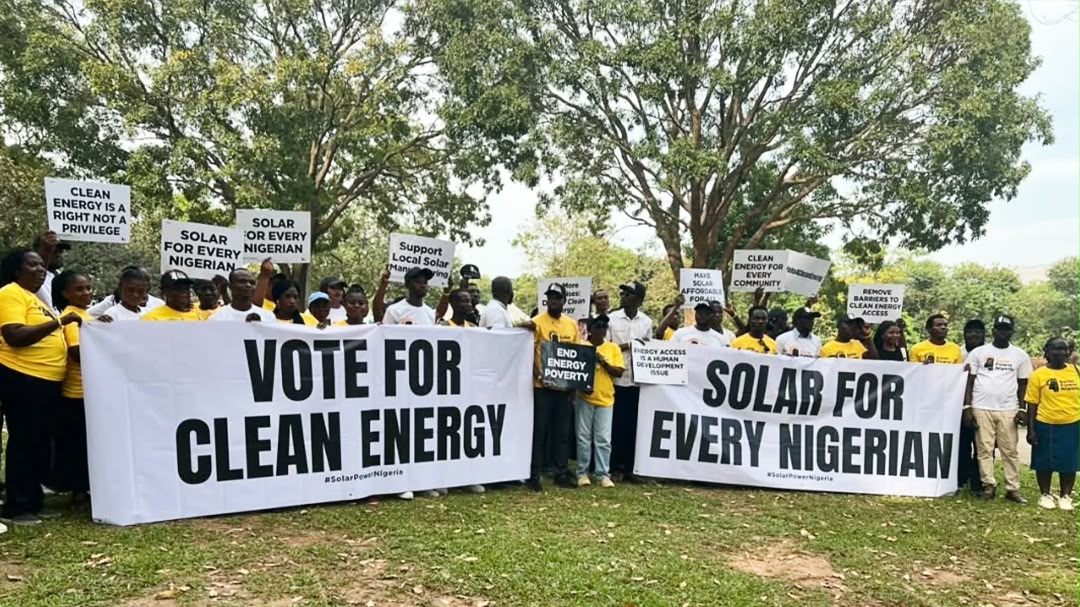
A coalition of clean energy advocates has urged political candidates ahead of the 2027 general elections to make affordable electricity and expanded access to solar power key priorities in their campaign promises.
The Solar Power Nigeria Coalition made the call during a clean energy march at Millennium Park in Abuja, where it urged the Federal Government and political leaders to develop clear and measurable plans to address the country’s electricity challenges.
The Nigerian Campaign Director of the Secure Energy Project, Joseph Ibrahim, said candidates should explain how they intend to expand electricity access, reduce energy costs and support the growth of Nigeria’s local solar industry.
He called for incentives, skills development and certification programmes to strengthen local solar manufacturing and installation, while urging the government to prevent substandard solar products from entering the market.
Ibrahim also welcomed the reported decision by the Federal Government to withdraw a proposed ban on solar panel imports.
He warned that restricting imports could increase prices and make solar energy less affordable for households and businesses.

He said solar power and mini-grids could help bridge Nigeria’s electricity access gap, adding that state governments should take advantage of the Electricity Act 2023 to develop decentralised electricity markets and expand renewable energy projects.
Speaking, the Nigeria National Coordinator of GreenFaith Africa, Lucky Abeng, urged the government to prioritise millions of Nigerians who still lack access to electricity.
Abeng said achieving Sustainable Development Goal 7, which seeks to ensure access to affordable, reliable, sustainable and modern energy for all by 2030, would require stronger partnerships between government, faith-based institutions and technical colleges.
He called for increased investment in renewable energy, as well as training programmes to develop local skills and strengthen domestic manufacturing capacity.
Abeng urged Nigeria’s delegation to the forthcoming COP31 climate conference in Türkiye to translate the country’s climate commitments into practical action that would improve electricity access and support the transition to cleaner energy.
Another advocate, Abimbola Ajayi, stressed the need to empower local solar technicians and expand the deployment of mini-grids in communities that remain disconnected from the national electricity grid.
Ajayi encouraged households and businesses to consider solar power as an alternative source of electricity, noting that expanding access would require coordinated efforts from government, industry players and consumers.
The coalition urged political leaders to move beyond campaign promises and set out practical measures for making electricity more affordable and accessible, particularly for underserved communities.

