 Follow Us on Google News



 Follow Us on Google Discover
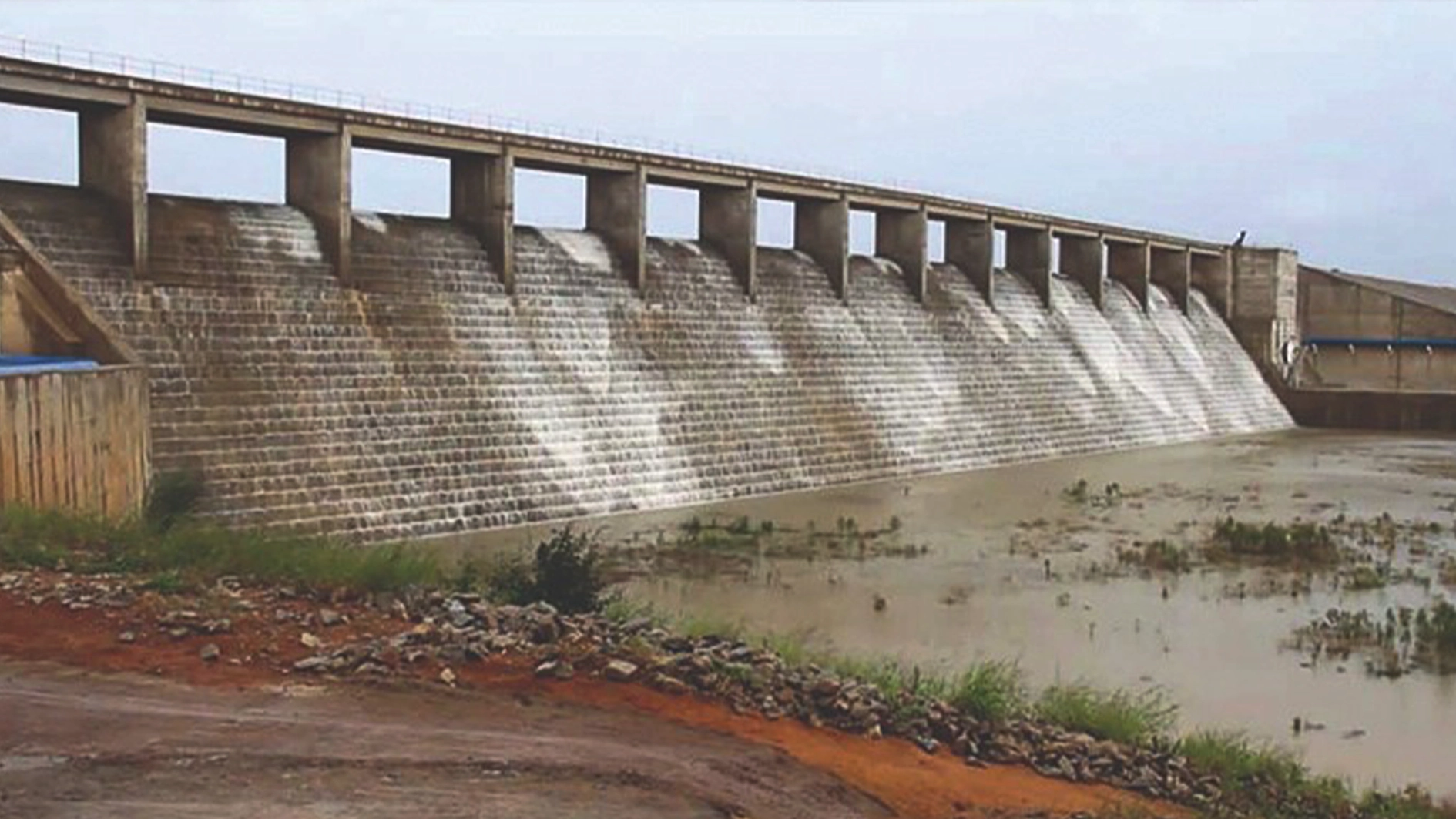
From rehabilitating troubled hydropower assets to building a culture of technical competence, the outgoing Mainstream Energy Solutions chief offers lessons for a sector still struggling to turn installed capacity into reliable electricity. KINGSLEY JEREMIAH reports.
Last week in Abuja, industry leaders, engineers, regulators, colleagues and friends gathered to celebrate the retirement of Lamu Audu, the pioneer Managing Director and Chief Executive Officer of Mainstream Energy Solutions Limited (MESL). Their tributes celebrated a career spanning decades in Nigeria’s electricity industry, including 13 years leading a company that has become one of the country’s most significant hydropower operators.
Beyond the ceremonies and emotional farewells, however, Audu’s departure raises a question Nigeria’s electricity sector can no longer afford to ignore. What would change if the competence, technical discipline and institutional continuity associated with his leadership became the standard for managing the country’s entire power industry?
Since the 2013 privatisation of the power sector, Nigerians have waited for the promise of improved electricity supply to become a daily reality. Although installed generation capacity has increased, households and businesses remain exposed to unreliable supply, forcing many to invest in generators, inverters and solar systems.
The problem is not simply that Nigeria lacks generating assets. It is that the country continues to struggle to make its existing infrastructure work efficiently, deliver electricity to consumers and recover enough revenue to sustain investment.
The Nigerian Electricity Regulatory Commission’s operational performance fact sheet for August 2026 provided a revealing illustration. Against installed capacity of about 13,625 megawatts, average available capacity stood at 4,758MW, while average generation was approximately 4,102MW. In other words, barely a third of installed capacity was available for dispatch.
That gap is central to understanding why electricity supply remains inadequate despite years of reform.
From troubled assets to improved performance
When Mainstream took over the Kainji and Jebba hydropower plants in November 2013, the assets faced serious operational challenges.
According to Audu’s farewell address, Kainji had an installed capacity of 760 MW, but no generating unit was operational at the time, while Jebba’s 578.4MW capacity was constrained by equipment and operational problems.
The company inherited ageing equipment, obsolete control systems and low staff morale. Rather than treating these difficulties as permanent limitations, its leadership approached them as engineering and management problems requiring sustained investment, rehabilitation and workforce development.
Under Audu, Mainstream expanded the combined capacity of Kainji and Jebba from 460MW to 922MW, according to the International Hydropower Association’s profile of the engineer. The company subsequently expanded its portfolio to include other hydropower assets, including Zungeru and Kashimbila.
The significance of this achievement lies not merely in the numbers but in the approach behind them.
In his farewell address, Audu recalled how the company restored generating units, introduced modern supervisory control and data acquisition systems, invested in personnel and strengthened operational safety. He credited the board, shareholders, management and staff with making the transformation possible.
His account presents a model of leadership that recognises an important distinction. Acquiring infrastructure is not the same as making it productive.
Nigeria’s wider electricity industry has struggled with precisely that distinction. Privatisation transferred assets and operational responsibilities to private companies, but it did not automatically resolve the financial, technical and institutional problems inherited from the former public-sector system.
Mainstream’s experience suggested that reform must be measured by functioning equipment, dependable output, competent personnel and sustainable operations, rather than ownership changes or announced capacity alone.
Why the wider sector remains trapped
The first bottleneck is the persistent gap between installed and available generation capacity. On Monday, Nigeria’s grid failed again. That has happened over 140 times since privatisation. Plants cannot produce at their rated capacity when equipment is defective, maintenance is inadequate, gas supplies are constrained, or operators lack sufficient working capital.
For gas-fired plants, unreliable fuel supply and outstanding payments across the electricity value chain have repeatedly undermined production.
Hydropower operators face different challenges, including equipment maintenance, hydrology and the need for continuous investment in ageing infrastructure.
The second problem is transmission and distribution. Electricity generated at a power station must still pass through transmission infrastructure and distribution networks before reaching consumers. Congestion, technical losses, inadequate infrastructure and commercial weaknesses can prevent additional generation from translating into improved supply.
NERC’s second-quarter 2025 report, for instance, recorded an average transmission loss factor of 8.58 per cent. This illustrated how part of the electricity injected into the grid can be lost before reaching distribution companies.
The financial structure of the market compounded these difficulties. When distribution companies cannot collect sufficient revenue, or when payments do not flow reliably to market participants, generators and other operators face constraints on maintenance and investment. Consumers, meanwhile, contend with poor supply, estimated billing concerns and rising energy costs.
These problems cannot be resolved by appointing a competent managing director to one company. They require coordinated action across generation, transmission, distribution, regulation and market finance.
The leadership question Nigeria must confront
At Audu’s farewell gathering, a director of Mainstream Energy Solutions Limited, Ibrahim Ismail, opened proceedings, setting the tone for an occasion focused on the outgoing chief executive’s contribution to the organisation.
Former chairman of NERC, Sanusi Garba, brought the perspective of electricity regulation to the gathering. His presence showed the importance of constructive engagement between operators and the institutions responsible for setting and enforcing industry rules.
Immediate past chairman of the National Assembly Service Commission, Ahmed Kadi Amshi, represented another dimension of public-sector leadership and institutional governance. Former executive director of systems operations at the Transmission Company of Nigeria, Mamman Lawal brought experience from the transmission and system operations side of the industry.
Executive Director of Corporate Services, Usman Umar, spoke from the perspective of a colleague who had worked closely with Audu. In his tribute, he described the outgoing managing director as a leader of strong convictions, integrity and commitment, while acknowledging that managing a complex organisation inevitably involves difficult decisions and disagreements.
Literally, the gathering brought perspectives from engineering, regulation, governance, technical operations, corporate services and legal management. The central message was that Audu’s contribution extended beyond an individual executive’s performance. It involved building and leading a team capable of rehabilitating critical infrastructure and sustaining operations.
But the more important question for Nigeria is why such capacity is not consistently reflected across the sector.
Too often, leadership appointments in strategic public institutions become exercises in political accommodation rather than transparent assessments of technical knowledge, managerial experience and demonstrated results. Where appointments prioritise political loyalty over competence, institutions risk losing continuity, weakening accountability and repeating costly mistakes.
The answer is not to exclude political oversight from a sector of national importance. It is to ensure that political leaders establish clear objectives and appoint qualified professionals to deliver them, with performance measured against published targets.
Making competence institutional
Audu himself acknowledged that Mainstream’s achievements were not the work of one person. In his farewell address, he thanked the company’s chairman, board, shareholders, management and staff, while describing the organisation as a family.
That observation matters because Nigeria cannot build a reliable electricity industry around a succession of exceptional individuals. It must create institutions in which competent leadership is supported by professional staff, predictable regulation, adequate financing and measurable accountability.
First, government and private operators should prioritise rehabilitation and maintenance of existing assets before celebrating new capacity. Every major plant should have transparent performance targets covering availability, generation, maintenance and safety.
Second, appointments to critical technical and regulatory positions should be based on demonstrable qualifications, relevant experience and measurable performance. Boards should publish clear expectations for managing directors and assess their performance against them.
Third, investment must follow operational priorities. Generators need predictable market payments, while transmission and distribution companies require investment plans tied to verifiable improvements in service delivery. Regulatory authorities must enforce obligations consistently rather than allow persistent underperformance to become normal.
Fourth, the industry must strengthen succession planning. Mainstream’s transition to Siraj Abdullahi is an opportunity to demonstrate that institutional knowledge can survive a change in leadership. Mainstream has confirmed Abdullahi’s appointment as Audu’s successor.
Finally, consumers must become central to measuring success. Installed capacity, financial returns and corporate growth are important, but they cannot substitute for dependable electricity in homes, hospitals, schools and factories.

A legacy that should challenge the system
Audu’s 13-year tenure does not offer a complete solution to Nigeria’s electricity crisis. Mainstream operates a particular portfolio of hydropower assets, and its experience cannot simply be replicated across every segment of the power industry.
Nevertheless, it demonstrated what sustained technical leadership, rehabilitation, investment in people and organisational continuity can achieve.
At his farewell, Audu recalled the words of his chairman: “If we don’t invest as Nigerians, who will?”
The question now extends beyond investment to the quality of leadership and governance surrounding it.
Nigeria has spent years restructuring its electricity industry. The next phase must concentrate on making the system work: restoring available capacity, strengthening the grid, improving distribution, securing market finances and appointing people capable of delivering results.
The ultimate measure of Audu’s legacy will not be the tributes paid at his retirement. It will be whether the lessons of his leadership are applied beyond Mainstream. For a country where unreliable electricity continues to constrain businesses and households, that is the challenge worth carrying forward.

