 Follow Us on Google News



 Follow Us on Google Discover
• Seek two-hour deadline for IReV uploads
• Utomi, others raise concern over suspected AI-generated images in voter register
As the 2027 general elections inch closer, Civil Society Organisations (CSOs) are putting together measures to ensure a credible election that will be acceptable to the majority of voters.
But they are not confident that officials of the Independent National Electoral Commission (INEC) and the police will remain unbiased as they are meant to be.
Raising concerns over alleged political partisanship within the electoral system and the security agencies, Concerned Citizens for Nigerian Democracy (CCND) warned that declining public confidence in the 2027 elections could threaten Nigeria’s stability.
To address the issue, the CSOs launched the Nigeria Election Data Observatory (NEDO) consortium to strengthen independent election observation, data sharing and electoral transparency.
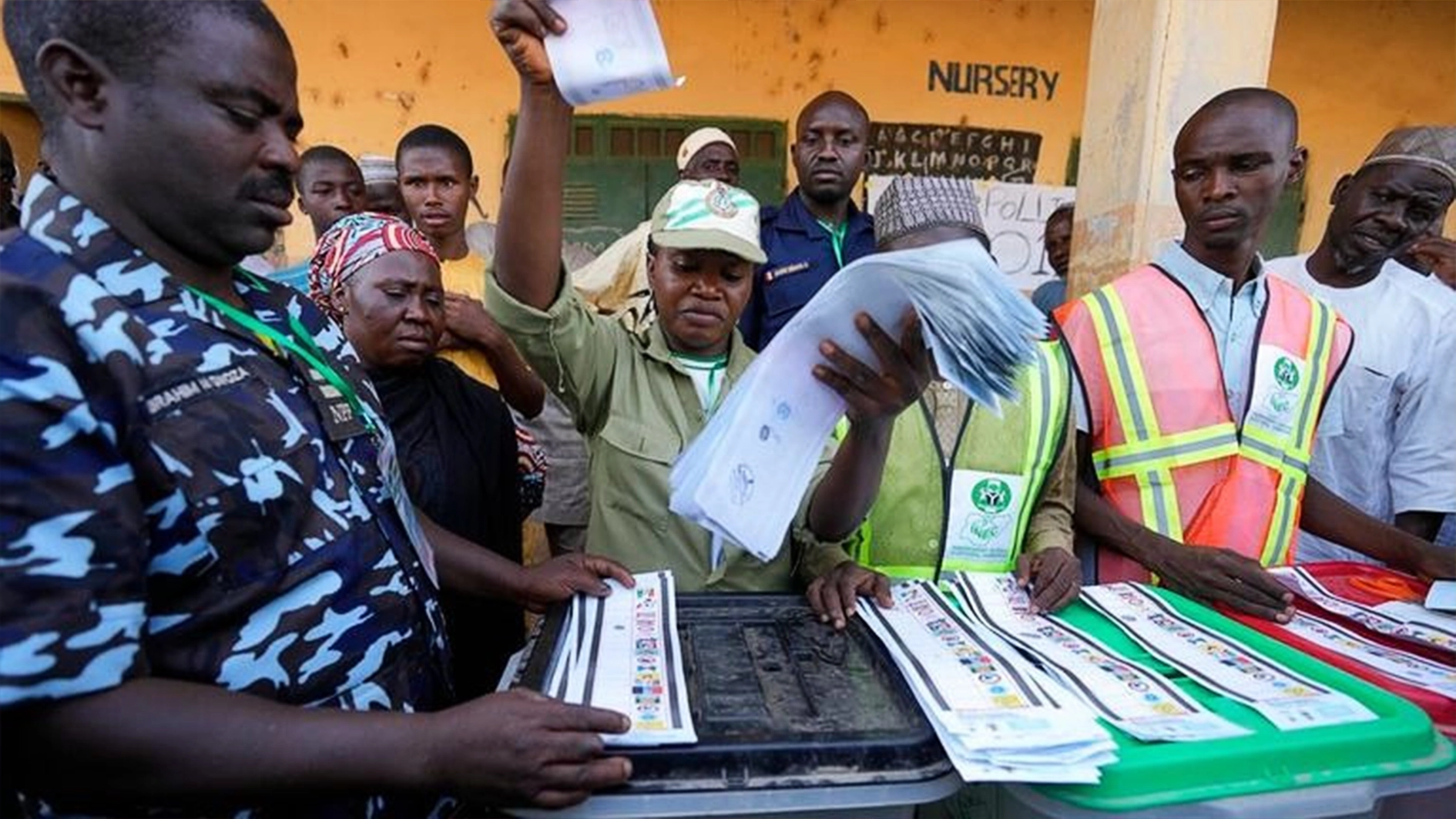
They also urged INEC to upload polling-unit results to its Result Viewing Portal, IReV, within two hours of counting during the elections.
Also, political economist, Prof. Pat Utomi, raised concerns over the credibility of the country’s electoral process following the discovery of photographs suspected to have been generated by Artificial Intelligence (AI) in INEC’s online voter register.
CCND called on INEC to investigate allegations of political affiliations among some electoral personnel and demanded that security agencies guarantee all candidates equal access to campaign venues.
At a briefing in Abuja yesterday, CCND co-convener, Kingdom Okere, accused the political establishment of failing Nigerians and warned that the country could face another political crisis if the credibility of the electoral process was compromised.
He said the All Progressives Congress (APC), which came to power on a promise of change, had left many Nigerians questioning the direction of the country.
“Thirteen years ago, the APC deceived Nigerians with the promise of change. What Nigerians are experiencing today is something difficult to describe,” he said, adding that the situation had become an “abracadabra” for many citizens.
But the group’s central warning was directed at the institutions responsible for delivering and securing the 2027 elections.
Okere alleged that concerns had emerged over the political affiliations of some INEC personnel, particularly those serving in sensitive information technology and election-monitoring departments.
He also questioned whether some recently recruited ad hoc electoral workers had political affiliations that could compromise their neutrality.
Since the allegations were not independently established at the press conference, CCND urged INEC to investigate them and ensure that electoral appointments and deployments were transparent and based on impartiality.
In his opening remarks, co-convener, Michael Ademofe, described CCND as a non-partisan citizens’ movement incorporated in the United States, with members across Nigeria’s six geopolitical zones and in the Diaspora.
Ademofe warned that growing voter disengagement and the possibility of citizens rejecting results they considered manipulated could create a dangerous atmosphere in a country already facing economic hardship and insecurity.
He cited the violence that trailed the 2011 general elections, when more than 800 people were reported killed, as a reminder of the potential consequences of electoral disputes.
THE organisations that launched the NEDO are Dataphyte Foundation, Yiaga Africa, BudgIT Foundation, Centre for Journalism Innovation and Development (CJID) and DEAN Initiative.
Speaking on behalf of the consortium during a briefing yesterday in Abuja, the Country Director of Dataphyte Foundation, Oluseyi Olufemi, stated that the platform was aimed at combining the organisations’ networks, resources and expertise to improve election monitoring and provide Nigerians with credible, independently verifiable electoral information.
According to him, Dataphyte Foundation, which serves as the consortium’s secretariat, developed a shared data aggregation and information-sharing platform that allows participating organisations to exchange electoral information through Application Programming Interfaces and other data-sharing systems.
The platform, he said, features automated data-scraping technology designed to retrieve election results published by INEC in real time. Using AI-powered Optical Character Recognition (OCR), the system converts images of result sheets uploaded to the IReV portal into machine-readable data for analysis and publication.
The information will be used on interactive election-result platforms operated by consortium members, including Dataphyte Foundation and BudgIT Foundation, while relevant data will be made available to the public.
Olufemi explained that the platform will enable partners to contribute, access and reuse verified election data across their respective platforms and public communication channels.
The Programme Manager at Dataphyte Foundation, Abdulahi Adebayo, said the application would feed information into a shared evidence repository accessible to consortium members for analysis, reporting, visualisation, advocacy and public communication.
The consortium plans to deploy more than 4,000 observers through its member organisations’ networks during the 2027 general elections to monitor polling units and different levels of result collation.
After the elections, the consortium will analyse its evidence alongside official results, publish a post-election report and make relevant data available for research, advocacy and electoral reform.
CCND also urged INEC to upload polling-unit results to the IReV within two hours of counting and publish collation forms at every level.
“The commission should ensure that results are uploaded to IReV within two hours of counting and publish collation forms at every level.
“It should also ensure access to the collation process and clear guidelines on electronic transmission of results,” he said.
UTOMI warned that the presence of the images in a database used for the country’s electoral process raised questions about the verification of voter information, transparency and accountability ahead of the 2027 general elections.
Speaking yesterday, he said the commission could not afford to handle issues relating to the credibility of the electoral process carelessly.
The Guardian reported it observed the suspected AI-generated images while examining voter profiles on INEC’s official website, with many records appearing to contain photographs that might not be authentic pictures of registered voters.
Among the profiles identified were those bearing the names Ealefoh Oritsenoma, Ebamenbhegbe Besi, Ebhohimen Godwin, Jacob Gabriel, Maniru Noah, Matthew Isaac and Odion Bibi.
The voter identification numbers displayed alongside the profiles were partially masked on the website.

