
 Get Guardian on Google
Nigeria’s commitment to reduce greenhouse gas emissions by 32.2 per cent by 2035 and achieve net-zero emissions by 2060 reflects significant climate ambition, but delivering on these targets will require urgent action, adequate financing, and stronger accountability. Experts stressed the need for transparent financial tracking, clear implementation plans, institutional coordination and community participation to ensure that climate commitments translate into real benefits,
CORNELIUS ESSEN reports.
AS preparations for the 31st United Nations Climate Change Conference (COP31) intensify, Nigeria faces a critical test of its climate ambition in translating emissions-reduction pledges into measurable results across the economy.
The country is already grappling with recurrent flooding, desertification, coastal erosion, rising temperatures and growing threats to food security. Meanwhile, its dependence on fossil fuels and infrastructure deficits complicate the transition to a low-carbon economy. Delivering on its climate commitments will therefore require coordinated policies, sustained investment and accountability across government, industry and communities.
Nigeria’s Third Nationally Determined Contribution (NDC 3.0), submitted to the United Nations Framework Convention on Climate Change in September 2025, commits the country to reducing greenhouse gas emissions by 32.2 per cent by 2035, against its recalculated 2018 baseline of 573.5 million tonnes of carbon dioxide equivalent.
The economy-wide target covers energy, transport, industrial processes, agriculture, land use and waste management, supporting Nigeria’s ambition to achieve net-zero emissions by 2060. The plan also seeks to increase renewable energy’s share of electricity generation from 22 to 52 per cent and reduce emissions from oil and gas operations.
However, the financial demands are substantial. Nigeria estimates that implementing its NDC 3.0 will require approximately $337 billion between 2026 and 2035. This comprises $195 billion for emissions reduction, $141.5 billion for climate adaptation and about $500 million for climate empowerment activities.
The government expects to mobilise $67 billion, or about 20 per cent of the total, from domestic resources, leaving approximately $270 billion dependent on international support. Bridging this financing gap will be crucial, especially as competing demands for infrastructure, healthcare, education, and economic recovery continue to pressure public finances.
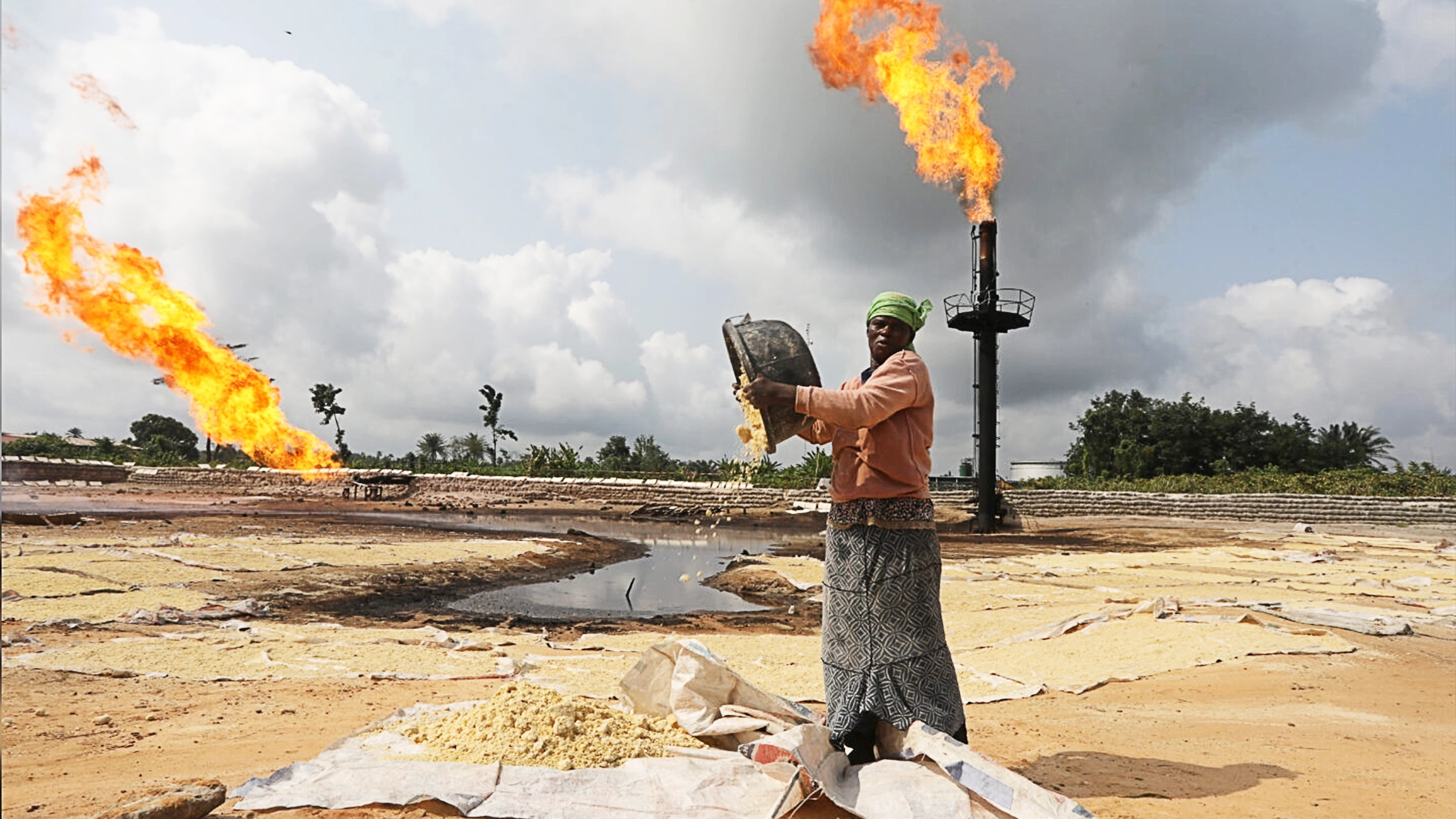
The urgency is evident in the energy sector. Nigeria flared approximately 229 billion cubic feet of natural gas in 2024, an increase of about 12 per cent over the previous year, ranking seventh among the world’s largest gas-flaring countries by volume. Its NDC commits the country to ending routine gas flaring by 2030 and cutting fugitive emissions from oil and gas operations by 60 per cent by 2035.
Achieving these goals will require investment in gas capture, methane monitoring, renewable electricity, energy efficiency and cleaner transport, alongside stronger enforcement of environmental regulations. Yet, beyond setting targets and announcing policies, Nigeria must demonstrate that it has the resources, institutional capacity and implementation mechanisms to deliver the promised results.
The central issue is the widening gap between climate ambition and actual delivery. While Nigeria has established emissions-reduction targets, renewable-energy goals and a net-zero ambition for 2060, the credibility of these commitments will ultimately depend on the resources committed and the results achieved. A target on paper does not automatically translate into a solar mini-grid in an underserved community, reliable clean electricity for businesses, reduced gas flaring or better protection for flood-prone settlements.
The Climate Policy Initiative’s Landscape of Climate Finance in Nigeria 2025 found that tracked climate finance reached $2.5 billion in 2021–2022, up from $1.9 billion in 2019–2020. However, this remained far below estimated annual requirements, leaving a financing gap of $27.2 billion a year. The figures highlight the scale of the challenge and the need to move beyond financial pledges towards actual disbursements and completed projects.

Speaking on the issue, President/Founder and Global Lead of the Women Environmental Programme (WEP), Dr Priscilla Achakpa, said Nigeria’s climate commitments must translate into concrete, measurable and adequately financed actions. She argued that the country’s success should be measured not only by emissions reductions but also by improvements in people’s livelihoods.
Achakpa called for stronger climate governance and accountability, increased investment in climate-resilient agriculture and ecosystem restoration, and the integration of climate priorities into national and state development plans. She stressed that climate action must be gender-responsive, inclusive and locally driven to reduce inequalities and strengthen community resilience.
She also emphasised the importance of ensuring that climate finance reaches women, young people and vulnerable communities directly. Civil society organisations and local communities, she said, must be meaningfully involved in decision-making and implementation, with responsible institutions required to provide evidence of progress towards the 2035 targets.
According to her, mobilising the required funding remains one of Nigeria’s most significant implementation challenges and announcing a financing requirement is not the same as securing the money. “The country needs a comprehensive climate investment plan that identifies the total cost of implementation, the domestic resources available, the international support expected and the remaining financing gap.
“Each major climate commitment should have an estimated implementation cost, an identified funding source, a responsible institution and a clear delivery timetable. Such a framework would help the government distinguish projects that can be financed domestically from those requiring international grants, concessional loans, guarantees or private investment.”
Contributing to the debate, Director-General of the National Council on Climate Change (NCCC) Dr Omotenioye Majekodunmi said Nigeria had taken important steps towards establishing the institutional architecture for carbon projects but must ensure that they deliver genuine emissions reductions.
“Nigeria should participate in carbon markets on terms that are credible, transparent, equitable, and beneficial to Nigerian people, especially in the areas of strong national oversight. If we get it right, carbon markets can help finance clean energy, while creating green jobs and improved waste management,” she said.
Majekodunmi said carbon markets could provide additional resources for climate action, but their contribution will depend on credible emissions accounting, effective national oversight and safeguards to ensure that projects benefit local communities, adding that it would complement, rather than replace, domestic budgetary commitments and other sources of climate finance.
She expects that increased domestic budgetary allocations should also be reflected in annual budgets and medium-term expenditure frameworks. “Federal and state governments should integrate climate priorities into spending on renewable energy, resilient infrastructure, flood management, climate-smart agriculture, forest protection and early-warning systems. Making climate-related expenditure identifiable in public budgets would enable citizens to track how much is allocated, released and actually spent.”
Majekodunmi said Nigeria would strengthen its ability to access international climate finance through institutions such as the Green Climate Fund, the Global Environment Facility and multilateral development banks, as well as securing more grant-based financing for adaptation should be a priority, particularly for vulnerable communities and projects that cannot generate sufficient revenue to repay loans.
She stated that sovereign green bonds could provide another avenue for financing climate projects, provided they are structured responsibly, adding that every issuance should identify eligible projects, establish transparent selection criteria and provide for independent verification of expenditure and results. Clear reporting on funds raised, disbursed and spent would reduce uncertainty for investors while limiting the risk of creating hidden liabilities for taxpayers.
Majekodunmi further said a publicly accessible climate-finance dashboard would further strengthen transparency by showing how much funding has been pledged, approved, received, allocated, disbursed and spent. Such a system would help distinguish genuine climate investment from financial announcements that have yet to translate into implementation. Where institutions fail to meet their legal or budgetary obligations, appropriate accountability mechanisms should be used to investigate shortcomings and correct failures.
For the Convener of the Africa Climate Forum, Prof. George Nwangwu, Nigeria needs a platform that brings together ideas, policy, investment and innovation to advance practical solutions to climate challenges. He argued that success by 2035 should be measured by the country’s ability to reduce emissions, use climate finance responsibly and make its people safer and more resilient.
“Nigeria needs to ensure that climate action does not become an exercise in producing reports and announcing projects while ordinary citizens continue to bear the costs of pollution, unreliable electricity, flooding, food insecurity and environmental degradation,” he said.
Nwangwu called for a clear delivery compact covering priority mitigation and adaptation projects. Such a framework, he argued, should connect policy commitments to practical interventions that protect livelihoods, strengthen infrastructure and reduce communities’ exposure to climate risks.
This distinction is important because mitigation and adaptation address different but interconnected challenges. Mitigation involves reducing greenhouse gas emissions, while adaptation seeks to reduce vulnerability to existing and anticipated climate impacts, including flooding, drought, extreme heat, food insecurity and coastal erosion. Nigeria must pursue both if its climate commitments are to deliver meaningful economic and social benefits.
Prof. Edem Eniang of the University of Uyo said Nigeria’s commitments were significant, but their credibility would ultimately depend on implementation rather than declarations. The path to achieving the targets, he argued, must begin with decisions, investments and accountability today.
Eniang identified the Climate Change Act 2021 as an important institutional foundation but warned that Nigeria could struggle to meet its 2035 targets if climate policies remained isolated within relevant ministries. Climate considerations, he said, must inform national budgets and decisions on energy, agriculture, transport, housing, industrialisation, infrastructure and the green economy.
He said, by the end of 2027, Nigeria should aim to have a publicly accessible implementation plan identifying sectoral targets, budgets, responsible institutions and annual milestones towards 2035. The plan should also clarify how much climate finance the country needs, how much it has secured and which commitments remain unfunded. Independent assessments and accessible public reporting would enable citizens to determine whether climate promises are translating into tangible improvements.
The don noted that renewable energy deployment must be central to this effort. Utility-scale solar installations, distributed solar systems and mini-grids should be developed according to local needs and conditions, expanding access to reliable and affordable electricity. Cleaner cooking solutions should also be promoted with due consideration for electricity reliability, household incomes and the practical circumstances of communities.