
 Get Guardian on Google
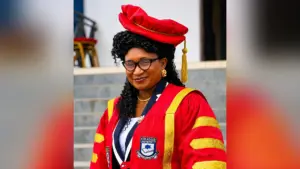
The Principal of Government Secondary School, GSS, Wuse Zone 1, Mrs Bilkisu Ibrahim, has commended Non-Governmental Organisations (NGOs) for their pivotal role in youth enlightenment, empowerment, and peace-building across Nigeria.
She gave the commendation following a sensitization programme by the Change a Child Community Initiative, led by Blessing Awamba, in Abuja.
Ibrahim noted that external interventions reinforce moral instructions given by school authorities.
She said “Most of the NGOs are trying their best. When they come we always ask them what they are going to talk about.
“We know we allow them to talk to students, not because we are not telling the students, but because if people will come from outside and talk to them, they will take it more serious,” she stated.
The observed that NGOs provide vital material support including scholarships for indigent students and the distribution of sanitary pads.

She added that the peace advocacy was timely, coinciding with the approach of elections when young people are susceptible to manipulation therefore the sensitization. It will go a long way because we are approaching the era of election and they can be influenced outside.
“With this information, I’m sure the school will build on that. We will continue reminding them, for peace sake, that they should stay at home, but if they must go out, then they must not fight with anybody. We will also tell them not to join any party or anything because they are too young for that.”
A Senior Secondary 1 student of Government Model Secondary School, Jikwoyi, Adakole Ochemaike, said peace forms the bedrock of a unified society, noting that personal mindset transformation is essential.
“I can help ensure peace in the society in my own way. From what I learnt, I can change my mentality first and then talk to others about it. I will advise them and try my best to help them stop crisis in the society and encourage peace and tolerance,” Ochemaike said.
Another student, Unique Joseph, highlighted forgiveness, tolerance, and teamwork as vital tools for conflict prevention, noting that accommodating diverse perspectives is necessary for collective progress.
Joseph explained that “I learnt today that we should forgive others to avoid conflict, because if we want peace there has to be tolerance and forgiveness in order to avoid conflict.
“I also learnt that if there are two or more people in a group, you have to substitute your own idea for others, for the one that can be achieved for now.”
Similarly, Abeki Bryan, a student at Government Secondary School (GSS) Wuse Zone 1, pledged to eschew favouritism and embrace active listening to resolve disputes amicably.
“I learned that peace is better in sorting out issues than violence and I will use peace more by hearing other people out, being equal. I will stop favouritism by picking my friends over other people, meanwhile I’m supposed to pick everybody” Bryan stated.