
 Get Guardian on Google
Sixty-one years after the establishment of the Defence Industry Corporation of Nigeria (DICON), Nigeria’s quest for self-sufficiency in military equipment production has received a fresh boost, as DICON-D7G unveiled plans to expand indigenous defence manufacturing, attract foreign investment and create 7,000 employment opportunities for retired military personnel and civilians.
The initiative, being promoted at the ongoing Africa International Defence Exhibition (AFRIDEX) in Lagos, also includes plans to secure 40,000 square metres of land for the establishment of a world-class international exhibition centre.
The Chief Executive Officer of DICON-D7G, Mr Osman Chennar, disclosed this in a statement issued and made available to Journalists in Kaduna on Monday, saying the initiative was aimed at accelerating Nigeria’s transition from dependence on imported military equipment to local manufacturing, technology transfer and industrial self-sufficiency.
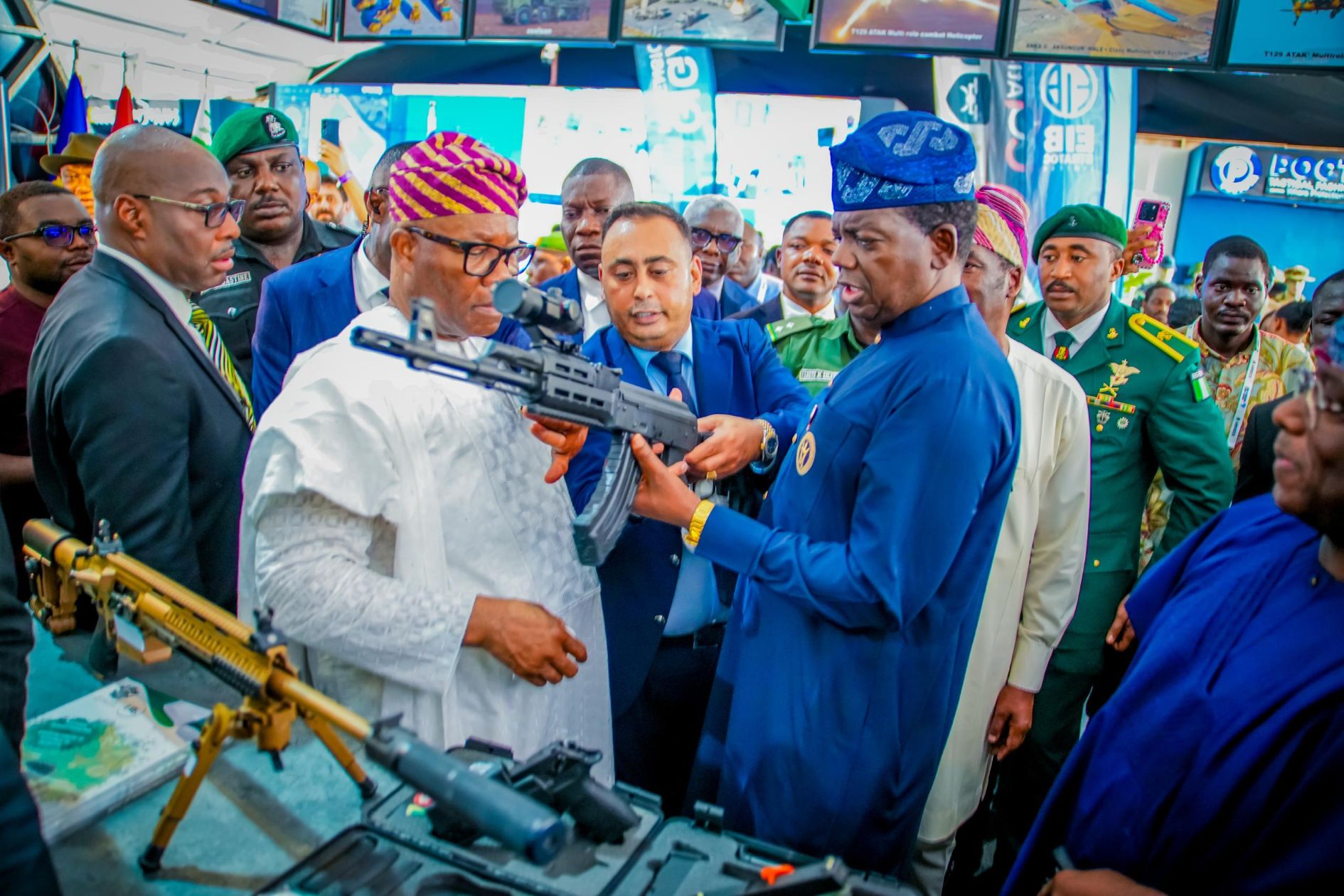
DICON-D7G, a major sponsor of AFRIDEX, is using the international exhibition to promote its vision of building a stronger Nigerian military-industrial complex through local production, strategic partnerships, investment mobilisation and employment generation.
The renewed push comes 61 years after the establishment of the Defence Industries Corporation of Nigeria (DICON) in 1964, with the country still working towards developing the capacity to manufacture a substantial proportion of the military equipment required by its armed forces.
For decades, Nigeria has depended considerably on foreign suppliers for military hardware, ammunition, components and other defence technologies, raising concerns about foreign exchange expenditure, supply-chain vulnerabilities and the sustainability of national security operations.

Chennar said DICON-D7G was seeking to address the challenge by bringing government institutions, private investors, indigenous manufacturers, research organisations and international technology partners together.
“Our ambition is to move Nigeria from dependence on imported military equipment to a country that can increasingly manufacture, maintain and sustain its own defence requirements,” he said.
According to him, Nigeria possesses the human resources, technical expertise and industrial potential to achieve defence industrial independence through strategic investments and effective partnerships.
He said the organisation’s objective was to move Nigeria beyond importing finished defence products to developing the capacity to design, manufacture, maintain and eventually export military equipment.
As part of its international expansion, DICON-D7G recently made its debut at an exhibition in Qatar, where it sought partnerships with foreign manufacturers, investors and technology companies to facilitate technology transfer and strengthen local production.
“Our engagement with international partners is designed to encourage technology transfer, attract investment and build the technical capacity required to strengthen Nigeria’s defence industry,” Chennar said.
He described AFRIDEX as an important platform for bringing manufacturers, investors, technology developers and other stakeholders together to advance Nigeria’s defence industrial ambitions.
The exhibition, he said, would provide opportunities to promote indigenous innovation, attract investment and encourage collaboration capable of translating Nigeria’s industrial potential into practical defence manufacturing capabilities.
In another major development, DICON-D7G is pursuing the acquisition of approximately 40,000 square metres of land in Lagos for a proposed international exhibition centre.