
 Get Guardian on Google
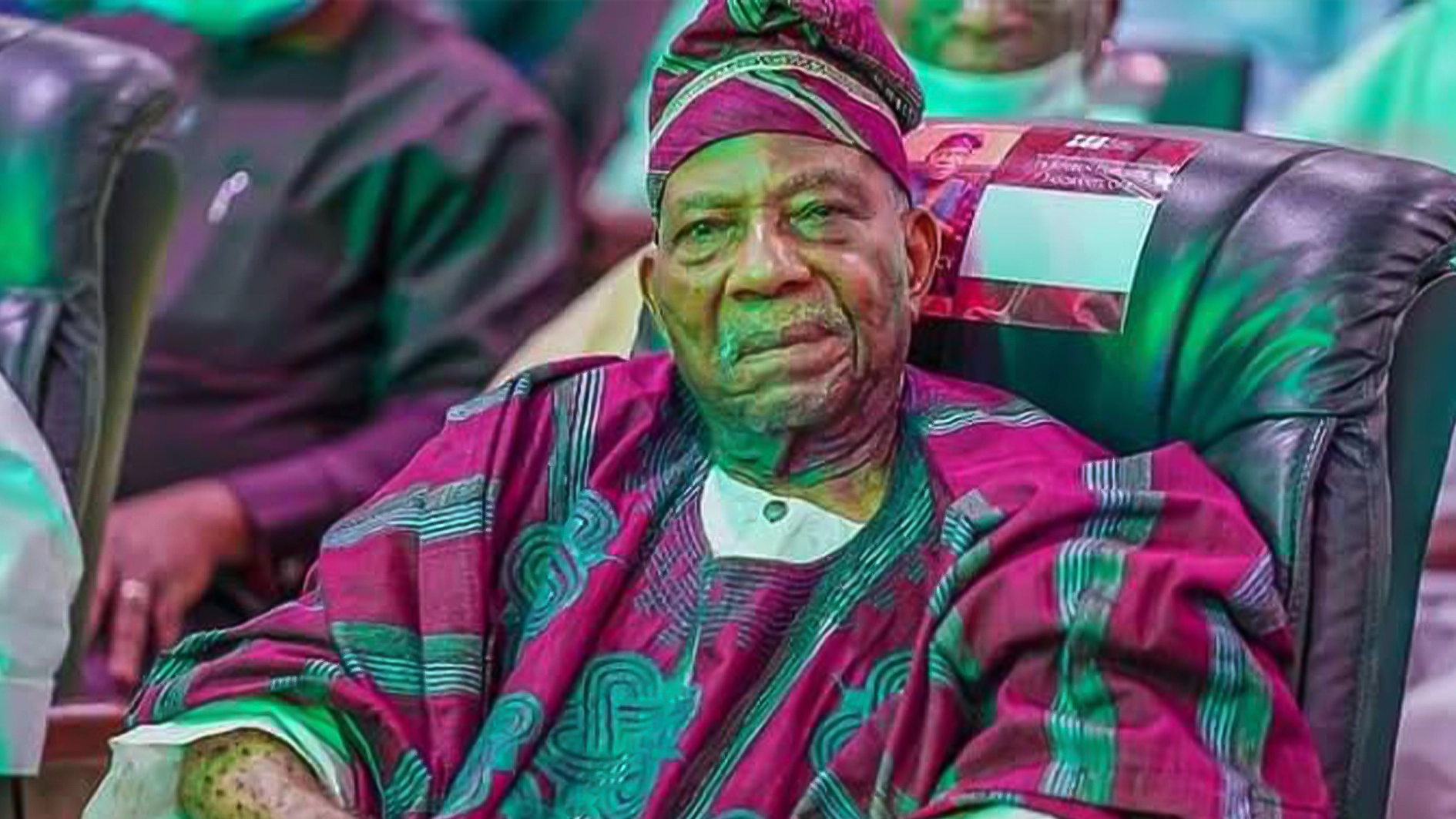
The passing on October 20, 2026, of the elder statesman and National Leader of the pan-Yoruba social-political organisation, Afenifere, Pa Reuben Famuyide Fasoranti (OFR), at the age of 100 years marked the end of an era that will continue to feature prominently in national discourse even as the country inches towards the 2027 general elections.
His century-long life was a lesson in integrity, discipline, selflessness, and unwavering commitment to the progress of his Yoruba people and the unity and development of Nigeria. Pa Fasoranti was one of the few remaining members of the old guard led by the late sage, Chief Obafemi Awolowo, who unleashed nationalist struggles and an ideological revolution that led to Nigeria’s independence in 1960 and later shaped the country’s path to building a new nation in the post-independence era.
Fasoranti belonged to the generation of Nigerian politicians whose convictions were sharply shaped by the nationalist struggles and Awolowo’s progressive philosophy. They fought against military dictatorship to attain democratic rule in 1999. Fasoranti was born on May 11, 1926, in Uso, in present-day Owo Local Government Area of Ondo State. He was educated at St. Andrew’s Primary School, Owo; Ondo Boys High School; and the Yaba Higher College, Lagos, before studying English and Geography at the University College, Ibadan. He obtained a postgraduate diploma in Education from the University of Hull, United Kingdom. His appetite for learning led him to obtain a master’s degree in education administration and School Management from Macquarie University in Australia.
The late Fasoranti was an educationist par excellence, a politician, and a pro-democracy activist, among others. He gave an outstanding account of himself, drawing on his educational background. He built a career in teaching and as a school administrator, serving in several institutions, including the Oyemekun Grammar School, Akure, and the Iju-Itaogbolu Grammar School, where he served as founding principal. His contribution to the development of education was remarkable and a good advertisement for the role of the educationist in society. After retiring from teaching, he established the popular Omolere Nursery and Primary School and the Akure High School in Akure. He also established the St Frances’ Academy, Igoba, in memory of his wife. Fasoranti belonged to a generation of Nigerians devoted to democratic principles, which they pursued rigorously. His political history was strongly rooted in the ideals and principles of his Yoruba nation. In every judgment, he was learned, refined, charismatic, and visionary. He participated in the political activities of the Action Group (AG) in the First Republic and played a prominent role in the leadership and success of the Unity Party of Nigeria (UPN).
Between 1979 and 1983, he served as Commissioner for Finance under the UPN administration of the late Chief Michael Adekunle Ajasin, as governor of Ondo State. In a proud defence and celebration of his appointment of Fasoranti as commissioner, Ajasin, on page 199 of his autobiography titled ‘Ajasin: Memoirs and Memories’, wrote: “I have known Chief Fasoranti for a long time within and outside politics. He was by any standard a solid personality. He was solid in capability, integrity, dependability, reliability, efficiency, effectiveness and loyalty. For this reason, I decided to put him in charge of finances as my Finance Commissioner.” And in justification of the trust vested in him, according to records, Fasoranti’s tenure was marked by efforts to improve the state’s financial management and development, demonstrating his commitment to public service and governance. He distinguished himself in every respect in his disciplined Spartan way of life, his belief in principles, and his commitment to noble causes. Though he exhibited calm and quiet disposition, he was a consistent and outspoken critic of bad governments and was one of the loud voices drawing attention to the failures in Nigeria’s democratic process.
At the centre of Fasoranti’s political history was his emergence as the leader of Afenifere after the death of Pa Abraham Adesanya, becoming an influential voice on Yoruba interests, unity, development and the political ideals, including restructuring of the country, true federalism and accountable democratic governance. He featured prominently in the June 12 struggle.

It is also on record that Fasoranti’s political exploits were characterised by some challenges, as evidenced by the assassination attempt believed to have been orchestrated by the oppressive regime of General Sani Abacha in 1996.
Despite the threats to his life while striving to liberate the Yoruba race from oppression and uphold the tenets of democratic governance in Nigeria, Fasoranti’s resilience and fortitude remained unshaken, symbolising the strong spirit of resistance against tyranny and oppression.
However, Fasoranti paid for his activism, particularly for being an Afenifere leader. His daughter, Funke Olakunrin, was killed in July 2019 in an attack along the Ondo-Ore expressway. The murder attracted widespread outrage and renewed national discourse on the high level of insecurity in the country.
The departure of Fasoranti, one of the great followers of Awolowo, has further depleted the rank of frontline nationalists who inspired the youth of their time with their sincerity, eloquence, patriotism and sense of purpose. Some questions that can be asked are: where are the Nigerians today, especially members of the political class, who are without blemish and can also be an inspiration to today’s youth with positive drive to nation-building and development? Where are those patriotic Nigerians who, beyond political expediency, will see a vision of a greater tomorrow for our youth through, for instance, education and go forthrightly to realise it, as done by the sage, Awolowo and his faithful disciples?
Eminent Nigerians across the country, including President Bola Tinubu, have paid glowing tributes to the late nationalist, extolling his virtues, especially the laudable role he played in the development of education and entrenchment of democratic government in Nigeria.
Fasoranti’s exemplary life, profound contribution to the development of education and his role in nation-building will endure through the ages.