
 Get Guardian on Google
By Babatunde Adekanmbi
As Nigeria gradually approaches the 2027 general elections, the growing intensity of political conversations across the country calls for sober reflection, restraint and a renewed commitment to democratic values. Although political competition is an essential feature of democratic governance, the emergence of hostility, intimidation, destruction of campaign materials and increasingly divisive rhetoric raises legitimate concerns about the direction of our political culture.
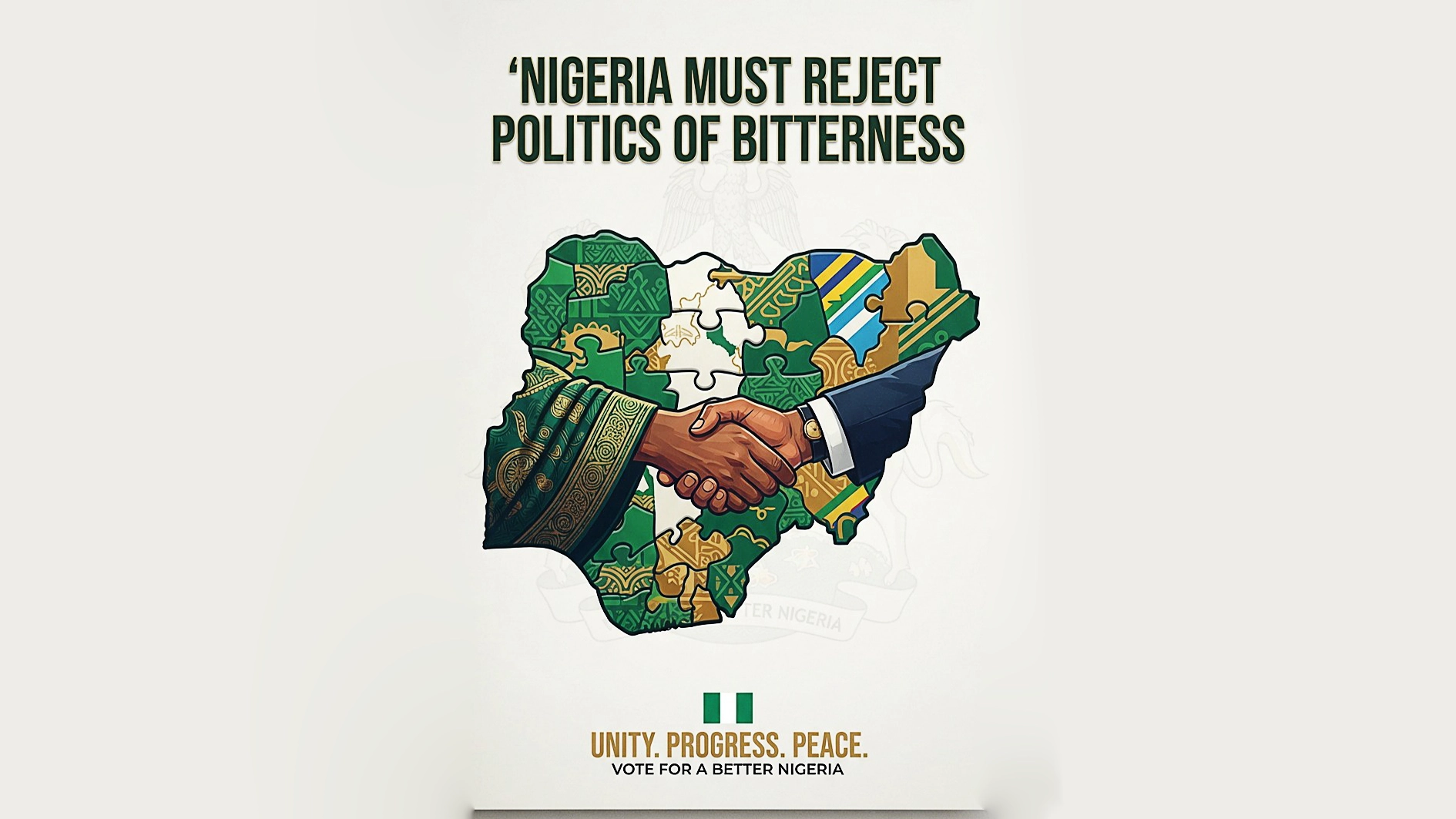
In an important intervention titled “Rejecting the Politics of Bitterness: A Call for Peaceful Democratic Engagement in Nigeria,” Professor Ojo Emmanuel Ademola, First African Professor of Cybersecurity and Information Technology Management, offers a timely perspective on the dangers of allowing political ambitions to undermine national cohesion and democratic stability.
His central message is both compelling and necessary: Nigeria must not sacrifice its democratic progress on the altar of political bitterness, personal ambitions and partisan loyalties.
At a time when political alignments, electoral predictions and presidential ambitions are increasingly dominating public discourse, Professor Ademola’s position reminds us that no individual, political party, ethnic group or region possesses a monopoly on political power, public dissatisfaction or the democratic right to participate in governance.
This is a fundamental principle that Nigerians must uphold as preparations for another electoral cycle gather momentum.

Political competition must not become political hostility
One of the most significant concerns raised by Professor Ademola is the growing tendency for political competition to degenerate into intolerance and hostility. Reports of harassment against political aspirants, destruction of campaign posters and billboards, and the use of inflammatory political language are troubling developments that deserve collective condemnation.
Democracy derives its strength from diversity of opinion, freedom of association and the constitutional right of citizens to support candidates of their choice. Consequently, political disagreement should never become an excuse for intimidation, victimisation or violence.
Professor Ademola’s argument is particularly relevant because political intolerance rarely emerges as a full-blown crisis. It often begins with verbal aggression, hostile campaigns and seemingly insignificant acts of provocation before escalating into more serious confrontations.
Nigeria must therefore recognise these early warning signs and resist every attempt to normalise political aggression.
The destruction of another person’s campaign materials does not strengthen one’s preferred candidate. Harassing political opponents does not demonstrate political superiority. Rather, these actions expose the inability to accommodate democratic pluralism.
No democracy can thrive on bitterness
At the heart of Professor Ademola’s intervention is the conviction that politics must remain a platform for service, development, constructive engagement and nation-building.
Political offices are temporary, electoral victories are never permanent, and the dynamics of political alliances can change at any time. Today’s political opponent may become tomorrow’s governing partner, while former allies may eventually find themselves on opposing sides.
This reality should encourage political maturity and discourage the culture of vengeance that increasingly characterises political conversations.
Leadership should not be measured by the number of opponents humiliated, reputations destroyed or insults exchanged. It should be measured by the capacity to build consensus, accommodate divergent perspectives and pursue the collective interests of society.
As Professor Ademola rightly emphasises, the true test of democratic leadership goes beyond winning elections. It lies in preserving peace, promoting justice and serving the people.
Nigeria needs political actors who understand that national stability is more important than personal political advancement.
Poverty requires governance, not just charity
Another important dimension of Professor Ademola’s argument is the relationship between poverty, social vulnerability and the responsibility of government.
Nigeria’s socioeconomic difficulties cannot be explained exclusively through individual choices, personal attitudes or the absence of family and community support. Such explanations overlook the structural conditions that continue to expose millions of citizens to economic hardship.
While religious institutions, charitable organisations and community networks provide commendable humanitarian assistance, their interventions cannot replace effective governance and comprehensive social protection systems.
This distinction is particularly important in a country where millions of citizens continue to confront unemployment, rising living costs, inadequate healthcare and limited access to quality education.
Professor Ademola’s position challenges political leaders to look beyond temporary interventions and embrace sustainable solutions that address the underlying causes of poverty.
Meaningful poverty reduction requires employment opportunities, productive economic policies, accessible public services, institutional accountability and social safety nets that protect vulnerable populations.
The responsibility of government is not merely to respond to suffering but to create the conditions that prevent citizens from remaining trapped in cycles of deprivation.
Consequently, the 2027 electoral conversation should place greater emphasis on policies capable of improving the living conditions of ordinary Nigerians rather than allowing political personalities and rivalries to dominate the national agenda.
Political leaders must take responsibility for their words and actions
Professor Ademola also draws attention to the responsibility of political leaders and their supporters in maintaining a peaceful democratic environment.
The language of political leadership carries considerable influence. Statements made by candidates, party officials and influential supporters can either reduce tensions or intensify existing divisions.
In a diverse country such as Nigeria, political mobilisation must never exploit ethnic, religious or regional identities to create hostility among citizens.
Our diversity should remain a source of national strength rather than a weapon for electoral manipulation.
Political leaders must demonstrate restraint, discourage inflammatory rhetoric and ensure that their supporters understand the importance of peaceful engagement.
Equally, citizens must recognise that political loyalty should never supersede their responsibility to the nation. Supporting a candidate does not require endorsing every statement, action or strategy associated with that individual.
Democratic maturity demands the ability to question political leaders, acknowledge opposing viewpoints and maintain mutual respect even in moments of intense disagreement.
The digital age demands responsible political engagement
Professor Ademola’s perspective becomes even more relevant when considered against the realities of contemporary digital communication.
Social media platforms have fundamentally transformed political participation in Nigeria. Citizens can now engage public officials, circulate information, question government decisions and influence national conversations with unprecedented speed.
However, these opportunities also introduce serious risks, particularly the spread of misinformation, disinformation, online harassment and politically motivated propaganda.
The circulation of fabricated electoral predictions and inflammatory narratives can deepen existing divisions and undermine public confidence in democratic institutions.
As a Professor of Cybersecurity and Information Technology Management, Professor Ademola’s emphasis on responsible digital engagement carries particular significance.
The digital space must not become an unrestricted environment for political abuse, malicious propaganda and incitement. Citizens must exercise discernment, verify information before sharing it and distinguish legitimate political criticism from deliberate attempts to mislead or provoke.
Democracy requires informed citizens, and an informed citizenry cannot be built on rumours, fabricated narratives and emotional manipulation.
The responsibility to protect the integrity of public discourse therefore extends beyond political institutions to every individual participating in the digital environment.
National unity must be greater than political ambition
Perhaps the most important message running through Professor Ademola’s intervention is the need to choose national unity over political division.
Nigeria is confronted by challenges that demand collective attention. Insecurity, unemployment, poverty, infrastructural deficiencies and governance concerns cannot be adequately addressed in an atmosphere dominated by resentment and political hostility.
No political party can independently resolve every national challenge, and no individual possesses all the answers required to move the country forward.
The ability to cooperate across political, ethnic, religious and regional boundaries is therefore essential to sustainable national development.
Professor Ademola’s appeal reminds Nigerians that peaceful elections are not solely the responsibility of government institutions and security agencies. They are a collective responsibility involving political leaders, party supporters, religious institutions, the media, civil society and ordinary citizens.
Every Nigerian has a role to play in protecting the country’s democratic future.
The democracy we must preserve
As Nigeria approaches the 2027 general elections, the country must deliberately reject the politics of bitterness and embrace a culture of tolerance, civility and constructive democratic engagement.
Professor Ojo Emmanuel Ademola’s intervention offers more than a warning against political intolerance; it presents a call for a more responsible political culture in which leadership is defined by service, disagreement is accommodated through dialogue and national interests take precedence over partisan ambitions.
The destruction of campaign materials, harassment of political opponents and promotion of divisive narratives offer no meaningful contribution to democratic development. Instead, they threaten the peace and stability upon which the nation’s future depends.
Nigeria must understand that elections are temporary, political offices are transitional and governments will inevitably change. However, the consequences of political violence, social division and institutional instability can remain long after electoral contests have ended.
Ultimately, the greatest achievement of democracy is not simply the ability to win political power but the capacity to preserve the institutions, freedoms and national values that make peaceful political competition possible.
As Professor Ademola’s message underscores, Nigeria must remain bigger than individual ambitions, political parties and electoral calculations.
We must learn to disagree without becoming enemies, compete without destroying one another and pursue political ambitions without compromising the peace and unity of our nation.
That is the responsibility of every Nigerian, and it is a democratic principle worth defending.
Adekanmbi is a Nigerian digital content creator, media communicator, journalist, and educational entrepreneur.