
 Get Guardian on Google
The Federal Government has charged States to align agricultural production with consumption to protect farmers from losses and stabilise food prices for Nigerian households.
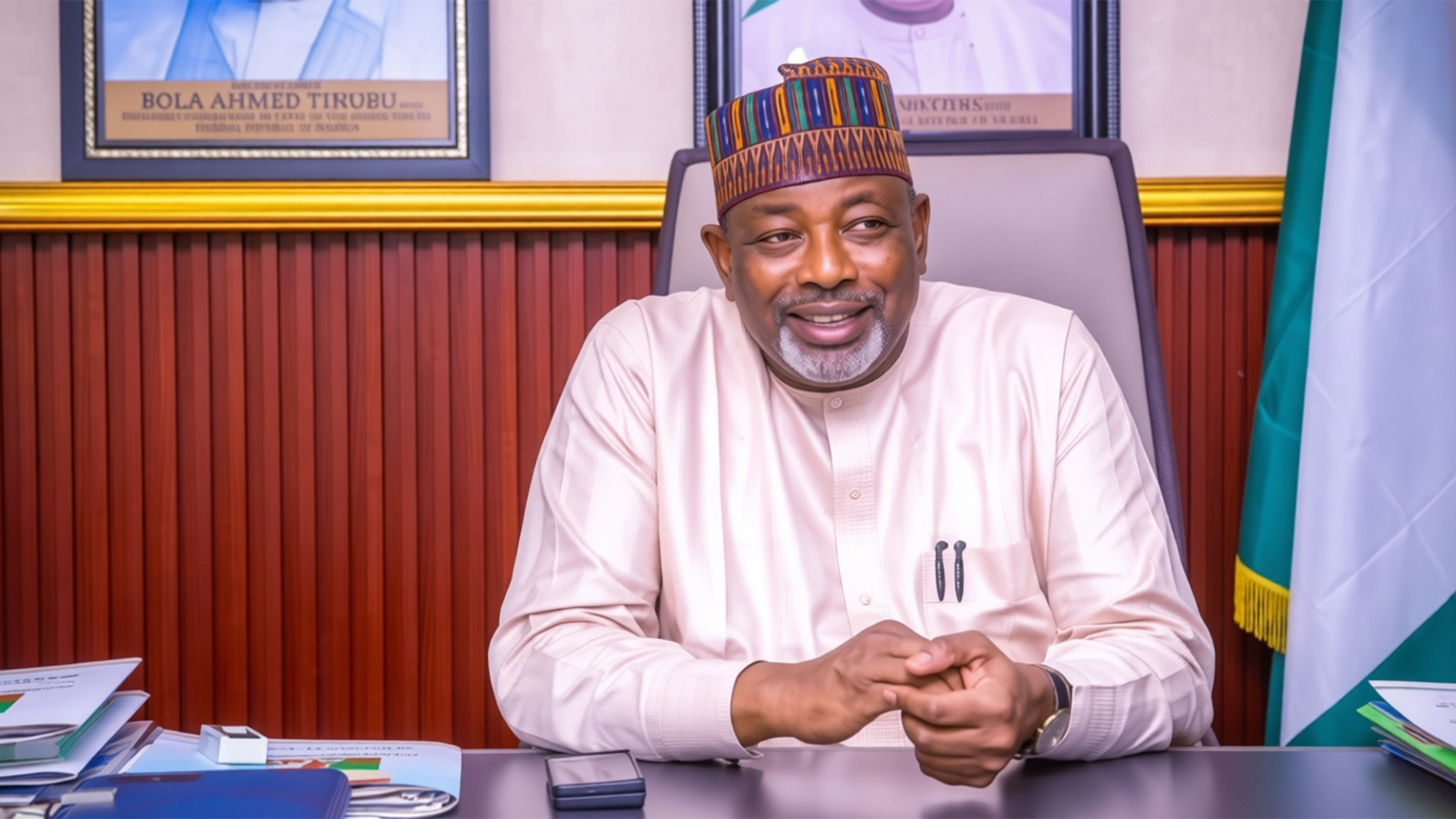
The Minister of Agriculture and Food Security, Senator Abubakar Kyari made the call at the National Council on Agriculture and Food Security (NCAFS), held in Enugu state with the theme “Enhancing Agricultural Value Chains, Agro-Industrialization and Market Access for Economic Growth.”
Kyari urged Commissioners to build on progress ahead of the 2027 season through more reliable production forecasts, closer alignment between agricultural supply and industrial demand, as well as provided a stronger coordination between producing and consuming areas.
He said the alignment would protect farmers from losses, ensure factories get raw materials in the right quantity and quality, stabilise food prices for consumers, and reduce waste across value chains
Using maize as an example, the minister said prices of maize affects feed mills, poultry producers, food processors and ultimately the consumer as processors need raw materials delivered in the right quantity, at the required quality, and at a commercially viable cost not production estimates.
He said that is why agricultural value chains must connect production with processing, investment and dependable markets.

Kyari stated that the past three years exposed a difficult imbalance in agricultural markets.
Kyari recalled that when food prices rose, households struggled to afford basic necessities. When commodity prices later declined, many farmers found themselves selling their harvests at prices that could not cover their production costs.
He however mentioned that access to regional and international markets will require more than trade agreements, as products must meet standards for quality, safety, traceability and consistency of supply.
These requirements, he said, determine whether Nigerian businesses can compete and sustain their presence in those markets.
He recalled food inflation hit 40.87 per cent in June 2024, eased to 8.89 per cent by January 2026 and rose again to 19.59 per cent by September 2026 as costs remained high and farmers’ incomes came under pressure.
The Minister however attributed the high cost of fertiliser to the escalation of conflict in the Middle East, which disrupted energy, shipping and fertilizer markets, pushing urea above $850 per tonnes in April 2026 and transmitting higher input, energy and transport costs to farms.
He however assured that President Bola Ahmed Tinubu, has responded with a clear sense of urgency, recognising that sustainable food security requires substantial investment in agricultural production and financing.
He highlighted interventions by the government to include the operationalization of the National Agricultural Development Fund (NADF) recapitalisation of the Bank of Agriculture introduction of the N200 billion Guaranteed Minimum Price Programme.
He also disclosed that NADF through the National Agricultural Development Fund, the Farm Input Support Programme has reached over 115,000 beneficiaries across 25 States and the Federal Capital Territory.
He disclosed that about N16.27 billion wasdisbursed through agribusiness financing, while the Bank of Agriculture has financed over 500,000 smallholder farmers and is anchoring the Guaranteed Minimum Price Programme to protect eligible farmers against distress sales through structured purchases and commodity aggregation.
Citing the latest figures from the National Bureau of Statistics, the Minister said in the second quarter of this year, Nigeria’s economy grew by 4.43 per cent, with agriculture recording growth of 4.39 per cent and contributing 26.15 per cent of real Gross Domestic Product. In 2025, he said, agricultural value added reached ₦101.46 trillion at current prices.
He described the progress as a collective achievement of Federal and State Governments, Ministries, Departments and Agencies, development partners, research institutions, farmers’ organisations and the private sector.
Kyari commended Governor Peter Ndubuisi Mbah for accountability, noting that the governor’s presentation of his administration’s achievements against the commitments in his manifesto showed an understanding that public office must deliver measurable results.
Declaring the Council open, the Enugu State Governor Peter Mbah welcomed Minister’s of Agriculture , Livestock Development, Commissioners and delegates from the 36 states and FCT, and development partners.
He asserted that Nigeria does not suffer from shortage of agricultural potential or policies, but from failure to turn potential and policies into an agricultural economy that delivers prosperity at scale. A farmer can produce a good harvest and still struggle to earn a decent living, he said.
The Governor disclosed the State’s determination to grow its economy from approximately $4.4 billion to $30 billion, with agriculture as one of the principal engines, noting that at the administration’s assumption of office, agriculture was already contributing approximately 40 per cent of its GDP.
Mbah stated that the state shifted the Ministry of Agriculture towards agro-industrialisation moving from how much farmers can grow to how much value can be created from what they produce.
He enumerated some achievements of the state, including support to over 60,000 farmers, 107 tractors assembled in Enugu, over 84,000 farmers captured in a digital registry, the 260 Farm Estates Programme, a 187,000-hectare Land Bank, expansion of palm and Songhai projects, revival of Sunrise Flour Mills, a livestock centre at Ubahu and a cargo terminal to link Enugu produce to international markets.
In his Vote of thanks, the Minister of State for Agriculture and Food Security, Sen. Dr. Aliyu Sabi Abdullahi, thanked participants on behalf of the Federal Ministry of Agriculture and Food Security for their valuable contributions, commitment and active participation.
Accordimg to him, deliberations reinforced the importance of strengthening agricultural value chains, promoting agro-industrialization, improving market access and enhancing food security.
He assured that the Federal Government, through the Ministry, will continue to advance initiatives aimed at increasing agricultural productivity, promoting mechanization and digital agriculture, supporting farmers, attracting private investment, and creating opportunities for employment and economic growth.
The highlights of the event were the consideration and approval of the 48th technical meeting, as well as the presentation of the communique.