
 Get Guardian on Google
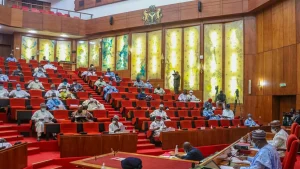
The Nigerian Medical Association (NMA) has strongly criticized a legislative proposal by the National Assembly to impose fines and imprisonment on healthcare workers who reject emergency patients.
In a statement on Thursday signed by President Nigerian Medical Association (NMA), Dr. (Prof.) Afekhide Ernest Omoti, he stated that criminalizing such actions is unjust while the government fails to provide the necessary resources, infrastructure, and enabling environment required to deliver proper emergency care.
Prof. Omoti added that although the association acknowledged the fundamental right of patients to receive urgent medical attention regardless of financial status, it maintains that lawmakers must first address systemic healthcare deficiencies rather than penalizing overburdened professionals.
“The National Health Act (NHA) already provides a legal framework for the protection of patients requiring emergency medical treatment, but stressed that the existing provisions prohibit the refusal of emergency medical care.
The critical question, therefore, is not necessarily the absence of legislation but the failure to implement existing provisions and create the enabling environment for their effective execution.
“Of particular importance is Section 6 of the National Health Act, which establishes the Basic Health Care Provision Fund (BHCPF) and provides for the funding of emergency medical treatment. This provision recognises that emergency care requires financial support and that healthcare facilities must not be left to bear the cost of providing such services without appropriate reimbursement.

“Unfortunately, the implementation of this aspect of the BHCPF remains inadequate. Hospitals and healthcare facilities that have provided emergency treatment, often at considerable financial cost and sometimes at the expense of their already overstretched resources, are unable to access the expected refunds or reimbursement. This creates an unsustainable situation in which hospitals are expected to provide emergency care without the necessary financial support.“he said.
According to Prof. Omoti, “It is fundamentally unfair to impose criminal liability on healthcare workers and hospitals for failing to deliver services when government has not fulfilled its corresponding responsibility to provide the resources and enabling environment required for such services.”
He added that beyond the funding challenges, “Nigeria is confronted with a scandalous shortage of doctors and other healthcare professionals. This is largely attributable to poor remuneration, unfavourable working conditions, inadequate infrastructure, insecurity, excessive workloads and the general lack of an enabling professional environment.
“These challenges have fuelled the alarming emigration of Nigerian doctors and nurses to other countries, including neighbouring African countries where conditions of service are increasingly more attractive.
“Our hospitals are consequently operating with dangerously inadequate manpower. In several facilities, the few available doctors are expected to manage overwhelming patient loads, sometimes under extremely difficult circumstances and without adequate support.“he added.
Prof. Omoti decried the deplorable state of infrastructure and the persistent shortage of essential medical supplies across hospitals in the country, saying that, “Basic emergency-care requirements, including oxygen, essential drugs, blood and blood products, resuscitation equipment, consumables, functional ambulances and other life-saving facilities, are not readily available in many healthcare institutions.
“How can we reasonably expect a doctor to provide emergency care when the hospital lacks the basic equipment, drugs and consumables required to save a life? How can we threaten health workers with imprisonment for circumstances that are substantially beyond their control?“he said.
The NMA, however, called on the National Assembly to address these fundamental systemic deficiencies rather than introduce punitive measures that may further demoralise an already distressed healthcare workforce, urging the Senate to reconsider the proposed amendment in its present form and redirect its legislative energy towards addressing the fundamental challenges undermining emergency healthcare delivery in Nigeria.