
 Get Guardian on Google
The Federal Government and development experts have called for stronger monitoring and evaluation systems across public institutions to improve accountability, strengthen policy implementation and ensure that government spending delivers measurable benefits to Nigerians.
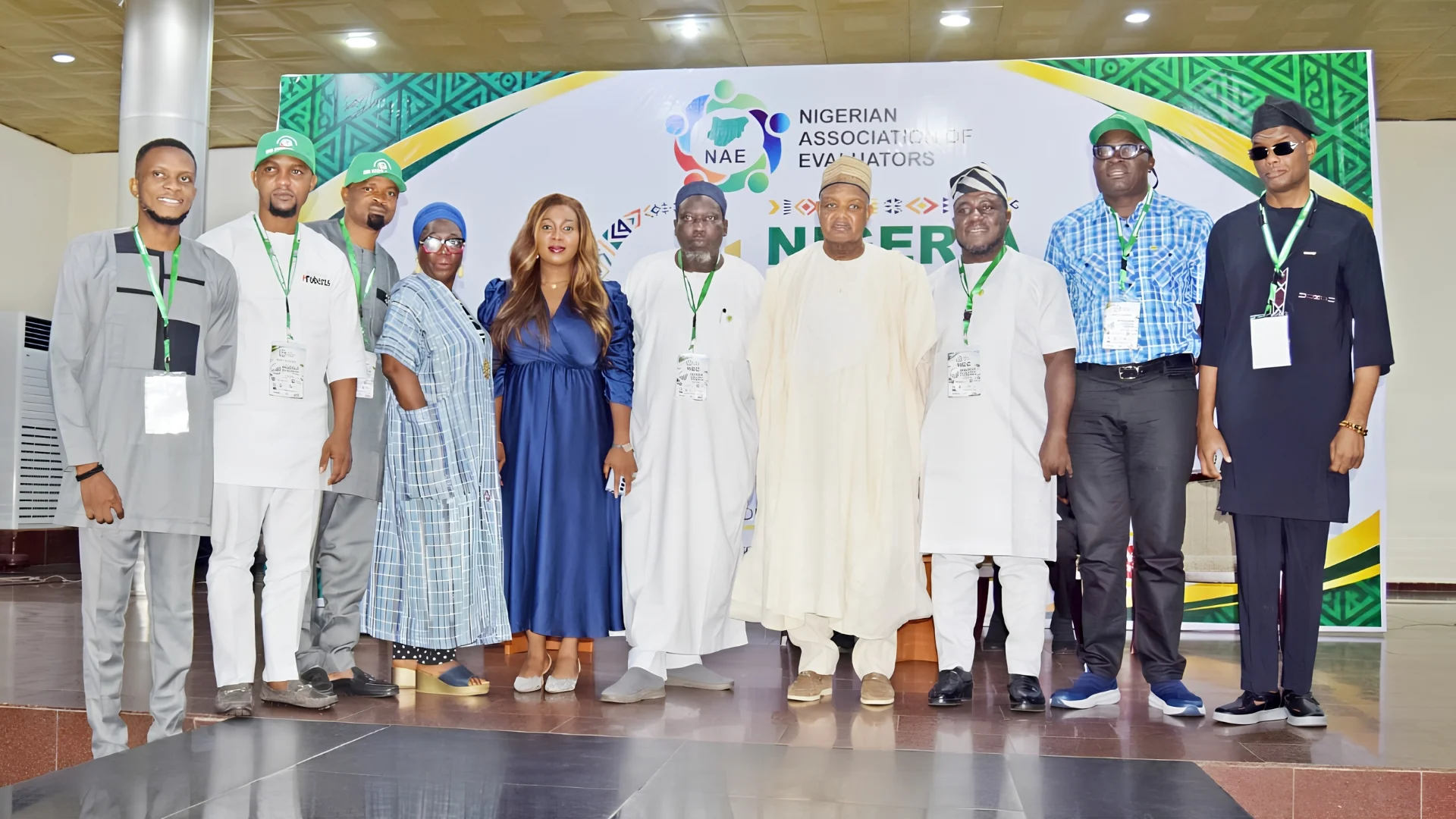
They made the call at the Nigeria Evaluation Conference 2026, organised by the Nigerian Association of Evaluators (NAE) in Abuja from November 2 to 4.
The three-day conference, themed Evaluation as a National Asset, brought together government officials, policymakers, development partners, academics and monitoring and evaluation professionals to examine how Nigeria could make better use of evidence in planning and implementing development programmes.
Discussions focused on strengthening national evaluation systems, improving the use of research findings in government decisions and establishing monitoring and evaluation as a recognised professional function within the public service.
Participants also examined the application of emerging technologies, including artificial intelligence, in assessing government programmes and development interventions.
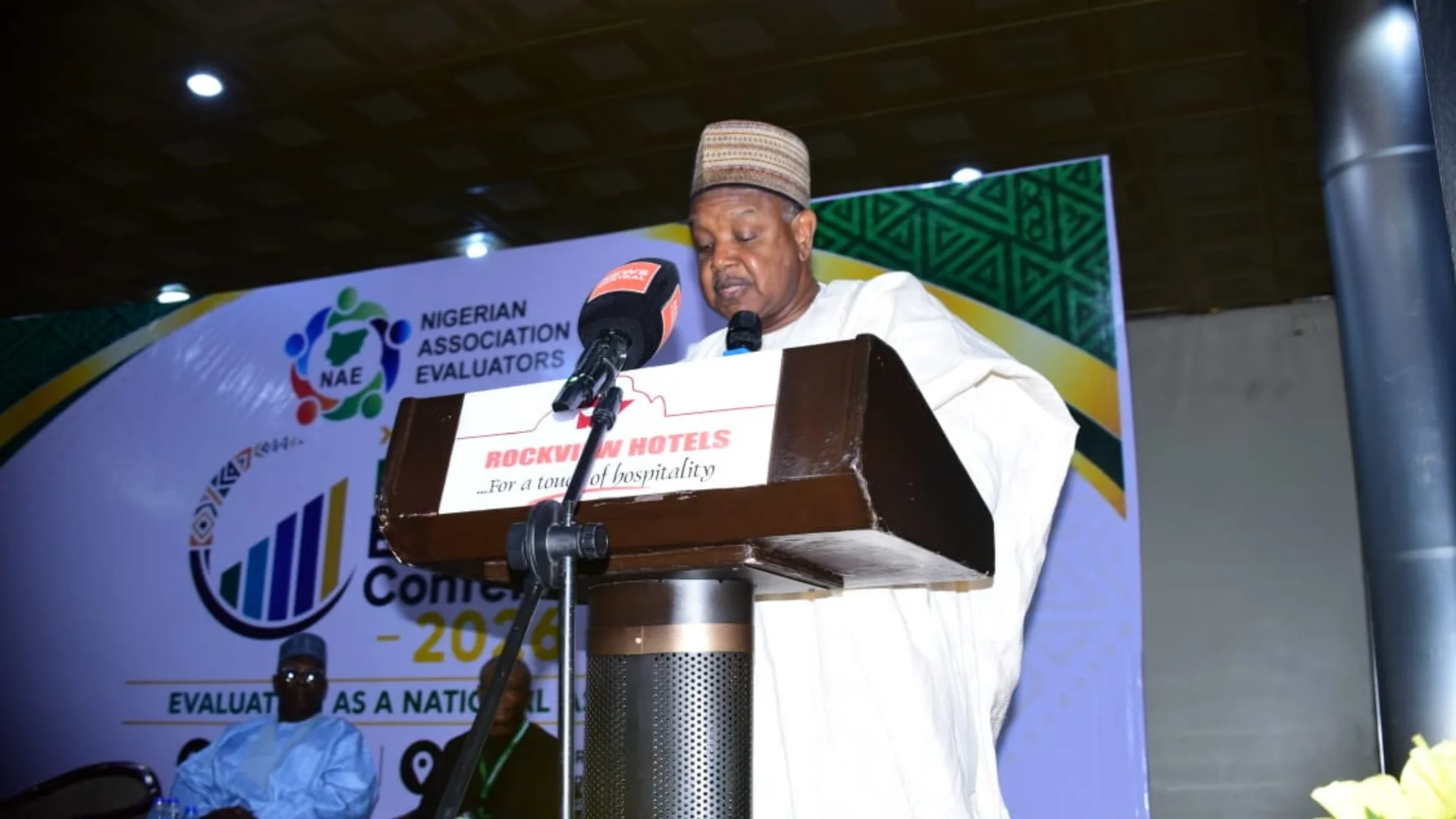
Minister of Budget and Economic Planning, Senator Abubakar Atiku Bagudu, said Nigeria’s development ambitions required effective implementation, coordination among public institutions and a stronger commitment to measuring results.

Delivering a ministerial keynote address titled Translating Nigeria’s Development Ambitions into Results, Bagudu emphasised the importance of assessing whether government policies and investments were producing their intended outcomes.
He said the country’s ambition to build a $1 trillion economy by 2030 would require strategic resource allocation and mechanisms for tracking the performance of development programmes.
According to the minister, effective monitoring and evaluation can help government institutions identify implementation gaps, assess the impact of interventions and make better-informed decisions about public resources.
He reaffirmed the Federal Government’s commitment to results-oriented development planning.
Development and evaluation expert, Dr Michael Oludare Ale, urged political leaders to ensure that their campaign promises translated into development outcomes that citizens could experience.
Ale made the call during a keynote presentation titled Who Owns the Evidence? Strengthening National Evaluation Capacity, Ownership and Accountability for Sustainable Development.
He argued that evaluation should not end with the preparation of technical reports but should influence decisions about public programmes and government priorities.
According to him, citizens are the ultimate beneficiaries of development interventions and should therefore be central to discussions about how public resources are used and assessed.
He called for stronger national evaluation capacity and greater institutional responsibility for implementing recommendations arising from evaluations.
His position drew attention to a persistent challenge in public administration: the gap between producing evidence about government programmes and using that evidence to improve service delivery.
Evaluation findings can identify ineffective interventions, implementation delays and opportunities for better resource allocation.
However, their value depends on whether public institutions act on the findings and establish mechanisms for monitoring corrective measures.
Ale maintained that political accountability should include demonstrating the practical results of government commitments rather than relying solely on policy announcements.
National President of the Nigerian Association of Evaluators, Professor Umar Ibrahim, called for monitoring and evaluation to become an integral part of government projects and development programmes.
In his welcome address, Ibrahim said public institutions needed to give greater attention to evaluating the effectiveness of their interventions.
He stressed that monitoring and evaluation should be incorporated into project design, implementation and assessment rather than treated as an activity conducted only after programmes have ended.
Ibrahim reaffirmed the association’s commitment to promoting the professionalisation and institutionalisation of evaluation in Nigeria.
The issue was examined further by the Director of Monitoring and Evaluation at the Federal Ministry of Budget and Economic Planning, Mrs Olasumbo Ayinde-Yakub.
In a presentation titled Institutionalising Monitoring and Evaluation as a Professional Career Path in the Nigerian Public Service, Ayinde-Yakub discussed the need to establish clearer professional structures for M&E practitioners.
Her presentation examined the importance of institutional recognition, professional development and sustainable career opportunities for personnel responsible for monitoring public programmes.
Establishing a recognised career pathway could help government institutions retain technical expertise and strengthen continuity in the assessment of development interventions.
It could also support more consistent standards for data collection, programme assessment and the communication of evaluation findings.
The conference did not announce a formal government decision establishing a new M&E career cadre.
However, the discussions reflected growing interest in strengthening the professional capacity of public institutions to measure development outcomes.
Ayinde-Yakub also disclosed plans to involve state governments more actively in monitoring and evaluation activities.
The proposed engagement is intended to encourage stronger participation by states in developing systems for assessing public programmes and using evidence in planning.
The move could be significant because state governments are responsible for implementing many public services and development projects that directly affect communities.
These include interventions in education, healthcare, infrastructure and other areas of social and economic development.
The conference also examined how artificial intelligence could support monitoring, evaluation, research and learning.
Chief Executive Officer of Cloneshouse, Dotun Babayemi, delivered a practical session on the application of AI in evaluation processes.
His presentation explored how emerging technologies could assist professionals with data analysis, research, reporting and other technical activities.
Participants also discussed the potential application of generative AI and AI agents in modern evaluation systems.
Such technologies may help evaluators process large volumes of information and identify patterns that require further investigation.
However, their use in public-sector evaluation also raises questions about data quality, transparency, privacy and the reliability of automated outputs.
AI-generated findings require appropriate human review, particularly where they may influence decisions about public expenditure or access to essential services.
Other technical contributions examined the relationship between evaluation, public accountability and civic participation.
Dr Joseph Odey, Monitoring and Evaluation Lead of the Rule of Law and Anti-Corruption (RoLAC) II Programme, and Iliya Ambi, M&E Lead of the EU CSO Strengthening Bridge Project, delivered a presentation on Evaluation as a National Asset: Strengthening Evidence-Informed Governance and Enabling Civic Space.
The presentation addressed the importance of evidence in improving governance and creating opportunities for citizens to participate in development processes.
The conference attracted approximately 20 international delegates, according to the organisers.
Zimbabwe accounted for the largest foreign delegation, with 13 participants, while representatives from Ghana and other countries also attended.
The African Evaluation Association was represented through a delegate attending on behalf of Dr Michelle Quedtaogo.
The conference also received goodwill messages from the Chairman of the NAE Board of Trustees, Dr Shamsuddeen Usman, whose recorded message was played to participants.
Other contributors included the Permanent Secretary, Special Services Office, Aminu Sani Yar’gaya, and Idem Akpan Udoekong of International IDEA.
The conference also featured activities involving the association’s Young and Emerging Evaluators.
Members presented a report on the recently concluded Youth Evaluation Case Competition, while awards were presented to the winners.
The competition formed part of efforts to encourage younger professionals to develop evaluation skills and participate in the profession.
Building a pipeline of trained evaluators was identified as an important part of strengthening Nigeria’s long-term capacity to assess public programmes.
The conference concluded with renewed calls for evaluation to become a routine part of government planning, budgeting and programme implementation.
Participants maintained that the effectiveness of public policies should be judged by measurable improvements in people’s lives rather than the number of projects announced or reports produced.
For the Nigerian Association of Evaluators, the discussions highlighted the need to strengthen institutional capacity, professional standards and collaboration among government agencies, development organisations and independent practitioners.
The association also emphasised the importance of translating evaluation findings into practical decisions.