
 Get Guardian on Google
The confirmation of a Bundibugyo Ebola virus disease case in Abuja should be a wake-up call for the Federal Government. It is a grim reminder that infectious diseases do not respect national borders and that a country’s ability to contain an epidemic depends less on emergency declarations than on sustained investment in public-health preparedness. Nigeria must not wait until Ebola spreads before taking measures that should have been in place long before its arrival.
On October 20, 2026, the Federal Ministry of Health and Social Welfare confirmed Nigeria’s first case of Bundibugyo Ebola in the Federal Capital Territory (FCT), Abuja. The case involved a 42-year-old woman, reportedly a diplomat, who had travelled from Uganda after exposure to the virus in the Democratic Republic of Congo.
Public health authorities initiated contact tracing, identified at least 46 contacts, and placed them under surveillance. The reported flight restrictions imposed on contacts and the screening measures under consideration at the country’s entry points underscore the seriousness of the situation. International health warnings and growing concern about the spread of Ebola in parts of Africa should further galvanise the government into action. But the immediate question is not merely how Nigeria will contain this case. It is why the country appears to be confronting renewed anxiety about preparedness despite the substantial resources supposedly earmarked for that purpose months earlier.
On June 9, 2026, President Bola Tinubu approved the establishment of a Presidential Task Force on Ebola Virus Disease Preparedness and Emerging Public Health Threats and ordered the immediate release of N10 billion for emergency preparedness. The task force, chaired by the President’s Chief of Staff, Femi Gbajabiamila, was expected to strengthen the operational capacity of the Nigeria Centre for Disease Control and Prevention (NCDC) and other relevant public-health institutions.
Four months later, Nigeria confirmed an Ebola case. The development raises fundamental questions about what the task force achieved, what the N10 billion was intended to accomplish and whether the country’s preparedness improved commensurately with the money committed.
The All Progressives Congress Presidential Campaign Council reportedly stated on October 22 that the N10 billion remained untouched, while the NCDC, the Federal Airports Authority of Nigeria and other surveillance agencies had utilised other available resources. If that account is correct, the government owes Nigerians an explanation. Why was an emergency allocation approved for a serious public-health threat allegedly left unused? If the money was released, committed or spent, where are the records showing what it achieved?
The government must publish a comprehensive account of the allocation, including its release, custody, disbursements, procurement contracts, implementing agencies and measurable outcomes.
Nigerians deserve to know whether surveillance systems were strengthened, laboratories equipped, isolation facilities restored, emergency personnel trained and border-screening arrangements improved. General assurances of preparedness are insufficient. The evidence must be independently verifiable.
There is also a question of institutional responsibility. Although coordination across government is necessary during a public-health emergency, operational leadership must remain firmly anchored in the country’s professional health institutions. A presidential task force may facilitate inter-agency cooperation, but it cannot substitute for the technical expertise, established procedures and operational capacity of the NCDC and other relevant health authorities. The government should clarify the respective responsibilities of the task force and the agencies charged with implementing its mandate.
More importantly, Nigeria must abandon the culture of fire-brigade governance. The country demonstrated during the 2014 Ebola outbreak that prompt isolation, painstaking contact tracing, effective surveillance and coordinated intervention could contain a deadly infectious disease. The response was widely recognised as a significant public-health achievement. That success, however, should have become the foundation for a permanent national preparedness system, not a precedent to be recalled only when another outbreak threatens.
Nigeria now has a network of molecular diagnostic laboratories capable of testing for high-consequence pathogens, including Ebola. This is a significant improvement on the country’s diagnostic limitations during earlier outbreaks. But laboratory capacity alone cannot guarantee safety. Equipment must be functional, reagents available, personnel properly trained and referral systems capable of moving suspected cases rapidly to appropriate facilities. Diagnostic capacity is useful only when it forms part of a coordinated and adequately funded response.
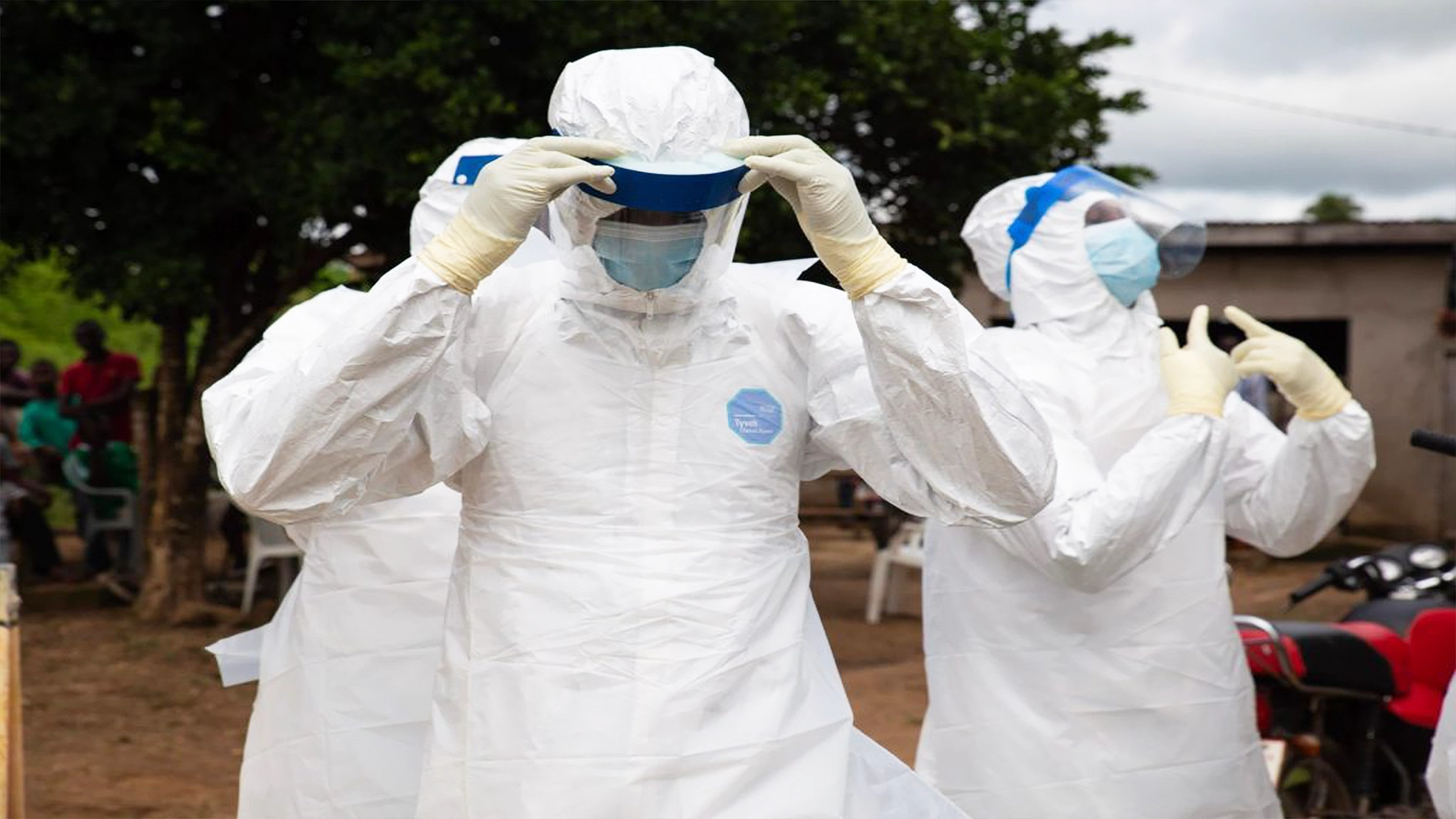
Reports that infectious-disease and isolation facilities established in the past have deteriorated or become inactive are particularly disturbing. The Federal Government and state governments should urgently audit existing facilities, restore those that have fallen into disrepair and establish adequately equipped isolation centres where necessary. These facilities must have trained clinical personnel, reliable infection-prevention systems, adequate supplies of personal protective equipment and clear referral protocols. Emergency response teams should be maintained and ready for rapid deployment, including for contact monitoring, environmental decontamination and community-level interventions.
Preparedness must also extend beyond hospitals. Airports, seaports, land borders, schools, hotels, markets, stadiums and other public spaces require effective hygiene and sanitation systems. The government should strengthen environmental health services, enforce appropriate cleaning standards and introduce structured training for cleaners, contractors, healthcare workers and other personnel responsible for maintaining hygienic environments.
Border surveillance must be strengthened without creating unnecessary panic or treating travellers as presumptively infected.
Public cooperation is equally essential. Nigerians should wash their hands frequently with soap and running water or use alcohol-based hand sanitisers. They should avoid direct contact with the blood and other body fluids of suspected or confirmed cases. Anyone developing sudden fever, muscle pain, vomiting or diarrhoea, particularly after relevant international travel or contact with a suspected case, should seek urgent medical guidance, avoid exposing others and contact the NCDC through its toll-free line, 6232, where applicable. Public-health communication must be prompt, clear and based on verified information, not rumours or sensationalism.
The Senate is right to demand emergency funding and stronger screening at Nigeria’s points of entry. But screening alone is not a substitute for a functioning national disease-surveillance system. Nor should the response to Ebola become an excuse for another round of emergency spending without transparency or measurable results.
The Tinubu administration must recognise that epidemic preparedness is a continuous public responsibility, not a political announcement or a temporary task force. The N10 billion allocation must be accounted for, and any gaps in the country’s readiness must be identified and urgently addressed. The government should publish clear preparedness benchmarks, establish independent oversight of emergency expenditure and regularly report progress to the public.
Ebola is a dangerous disease, and complacency can cost lives. Nigeria cannot afford to wait for an outbreak to expose weaknesses that should have been corrected beforehand. The decisive test of leadership is not how loudly a government announces an emergency response, but how effectively it prevents a public-health threat from becoming a national disaster.
The question Nigerians must continue to ask is: if the government knew that Ebola and other emerging infectious diseases posed a threat, why did the country still face such uncertainty about its preparedness?
The answer must not be another committee, another promise or another hurried release of funds. It must be a transparent accounting of public money and a permanent, functioning system that can detect, contain and prevent epidemics before they spiral out of control.