
 Get Guardian on Google
Nigeria’s efforts to turn its growing cultural influence into commercial wealth have received a boost, as the African Export-Import Bank (Afreximbank) and Nigerian development finance institutions announced financing arrangements totalling $118 million to support businesses in the creative industry.
The funding agreements, signed at the Creative Africa Nexus (CANEX) WKND 2026 in Lagos, comprise a $75 million facility involving Afreximbank and the Development Bank of Nigeria (DBN), as well as a $30 million financing arrangement and a $13 million grant involving the Nigerian Export-Import Bank (NEXIM), the Small and Medium Enterprises Development Agency of Nigeria (SMEDAN) and Afreximbank.
The intervention is expected to address some of the financing challenges confronting Nigerian creative businesses, particularly in accessing capital to expand production, develop intellectual property, strengthen distribution and compete in international markets.
The agreements also reflect growing efforts by the government and development finance institutions to strengthen the creative sector by providing funding and improving the business environment for entrepreneurs.
Speaking at the opening ceremony of the four-day event, which runs from November 5 to 8 at the Wole Soyinka Centre for Culture and Creative Arts, formerly the National Theatre, Lagos, Vice President Kashim Shettima said Nigeria must move beyond celebrating its cultural achievements to creating sustainable businesses from its creative assets.
Representing President Bola Tinubu, Shettima said the country should convert its global cultural recognition into commercial opportunities and lasting wealth.
“In 1977, we came to celebrate our culture. In 2026, we come to capitalise it: to turn the applause of the world into contracts, its admiration into markets, and the talent of our young people into enduring wealth,” he said.
He said the Federal Government was strengthening intellectual property protection, improving access to finance for creative businesses and positioning Nigeria to benefit from opportunities under the African Continental Free Trade Area (AfCFTA).
“Creativity is now a trade sector, and we intend to treat it as one,” he said, urging participants to use the gathering to secure business agreements.
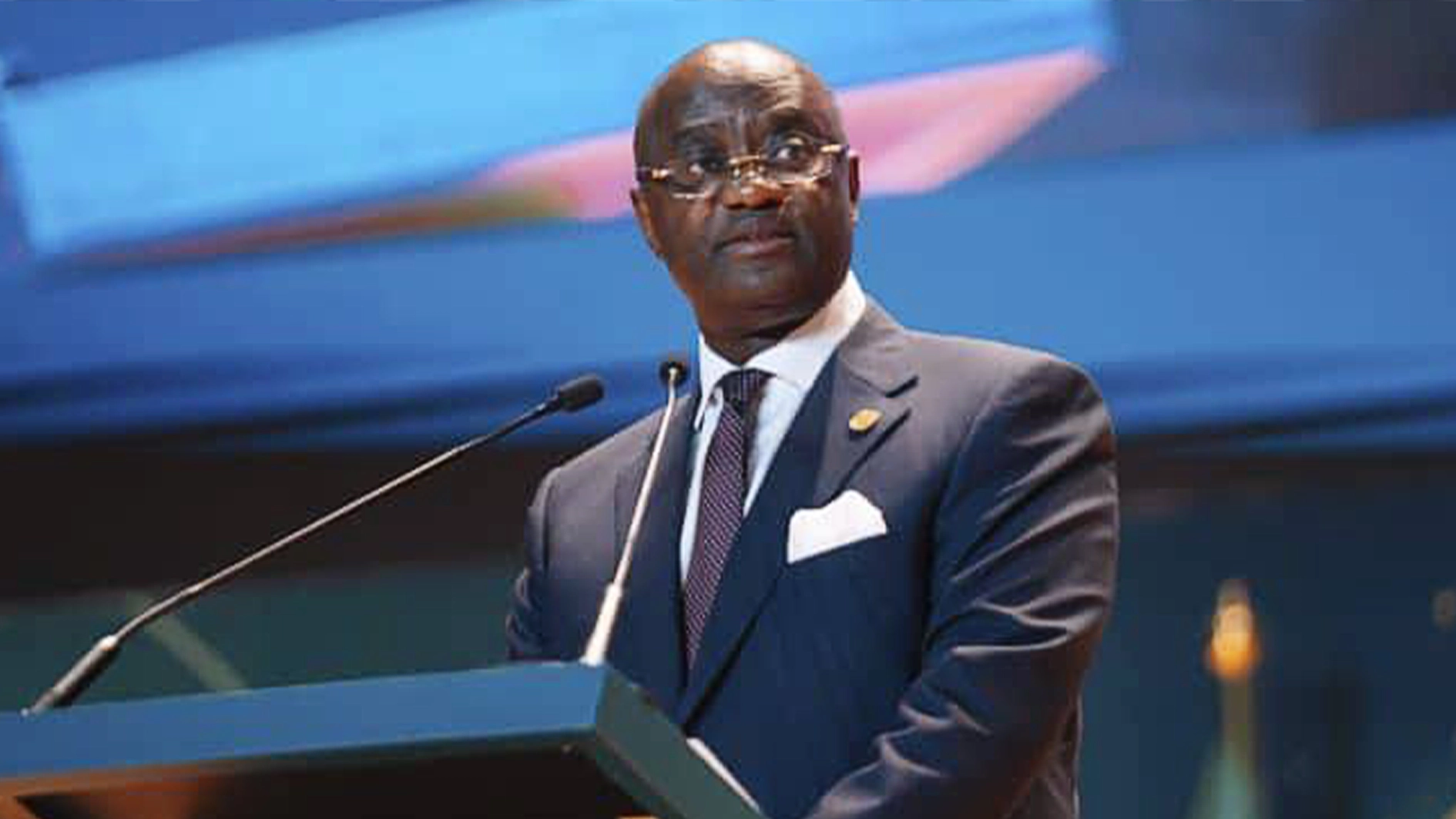
President and Chairman of the Board of Directors of Afreximbank, Dr George Elombi, said Africa’s creative industry needed more than funding for production, stressing the importance of ensuring that creators retained greater economic value from their intellectual property.
He observed that African musicians, filmmakers and other creative professionals had achieved global recognition, but much of the revenue generated from their works went to operators of distribution channels, marketing platforms and intellectual property outside the continent.
Elombi said the continent must build an ecosystem that would enable its creative entrepreneurs to own, distribute and commercialise their products.
He disclosed that Afreximbank had increased its financing commitment to Africa’s creative industries from an initial $500 million to $2 billion for the 2024 to 2027 period.
The funding is expected to support creative enterprises, production facilities, distribution platforms, branding, marketing and the development of intellectual property.
Elombi also challenged participants to ensure that the Lagos Deal Room generated several times the more than $540 million in deals facilitated at the 2024 CANEX gathering in Algiers, Algeria.
Minister of Industry, Trade and Investment, Jumoke Oduwole, said the Federal Government was also implementing policies and programmes to improve the investment environment for creative businesses.
She identified the National Intellectual Property Policy and Strategy, the Creative Sector Investment Playbook and the Investment in Digital and Creative Enterprises (iDICE) programme as important interventions to strengthen the sector.
The iDICE programme, a $617 million Federal Government initiative implemented by the Bank of Industry, is co-financed by the African Development Bank, Agence Française de Développement and the Islamic Development Bank.
The programme supports technology and creative enterprises through financing, enterprise development, skills and infrastructure.
Its participation as an official CANEX Deal Room partner is expected to connect Nigerian creative and digital businesses with potential investors and financiers.
The Deal Room is designed to facilitate direct engagements between businesses seeking funding and investors interested in opportunities in the sector. Under the arrangement, iDICE plans to engage between 15 and 20 businesses and facilitate between 40 and 50 meetings between investors and enterprises.
Lagos State Governor, Babajide Sanwo-Olu, also reaffirmed the state’s commitment to developing its creative industry, identifying intellectual property protection, access to finance and commercial transactions as important to the sector’s growth.
The financing commitments come amid efforts to increase Nigeria’s share of the economic value generated by the global creative industry, particularly in music, film, fashion and other cultural products.
However, the success of the intervention will depend on how effectively the funds are made accessible to businesses and the extent to which they address the financing and structural challenges facing operators.
For independent filmmakers, music entrepreneurs and emerging creative businesses, the key issue remains whether the commitments will translate into accessible funding for production, business expansion, intellectual property ownership and access to international markets.
CANEX WKND 2026 is hosted by the Federal Government and organised by Afreximbank under the theme, “One People, United in Culture, Creating for the World.”