
 Get Guardian on Google
Shell Nigeria Gas Limited has warned that gaps in Nigeria’s gas pipeline infrastructure could undermine manufacturing competitiveness, despite the country’s substantial gas reserves and existing transmission network.
The Managing Director of Shell Nigeria Gas Limited (SNG), Ralph Gbobo, represented by Asset Reliability and Integrity Manager, Samuel Ojo, gave the warning in a presentation titled: ‘Gas for Manufacturing: Closing the Pipeline Infrastructure Gap to Improve Manufacturing Competitiveness,’ delivered at the Manufacturers Association of Nigeria (MAN) Energy Security and Energy Efficiency Summit in Lagos.
According to the presentation, Nigeria has proven and probable gas reserves of 215.19 trillion cubic feet (Tcf), but access to the resource remains a challenge for manufacturers that require dependable energy to sustain production.
He said manufacturers spent N1.34 trillion on alternative energy in 2025, highlighting the cost burden associated with unreliable access to energy. “Manufacturers need reliable pipeline infrastructure,” he said.
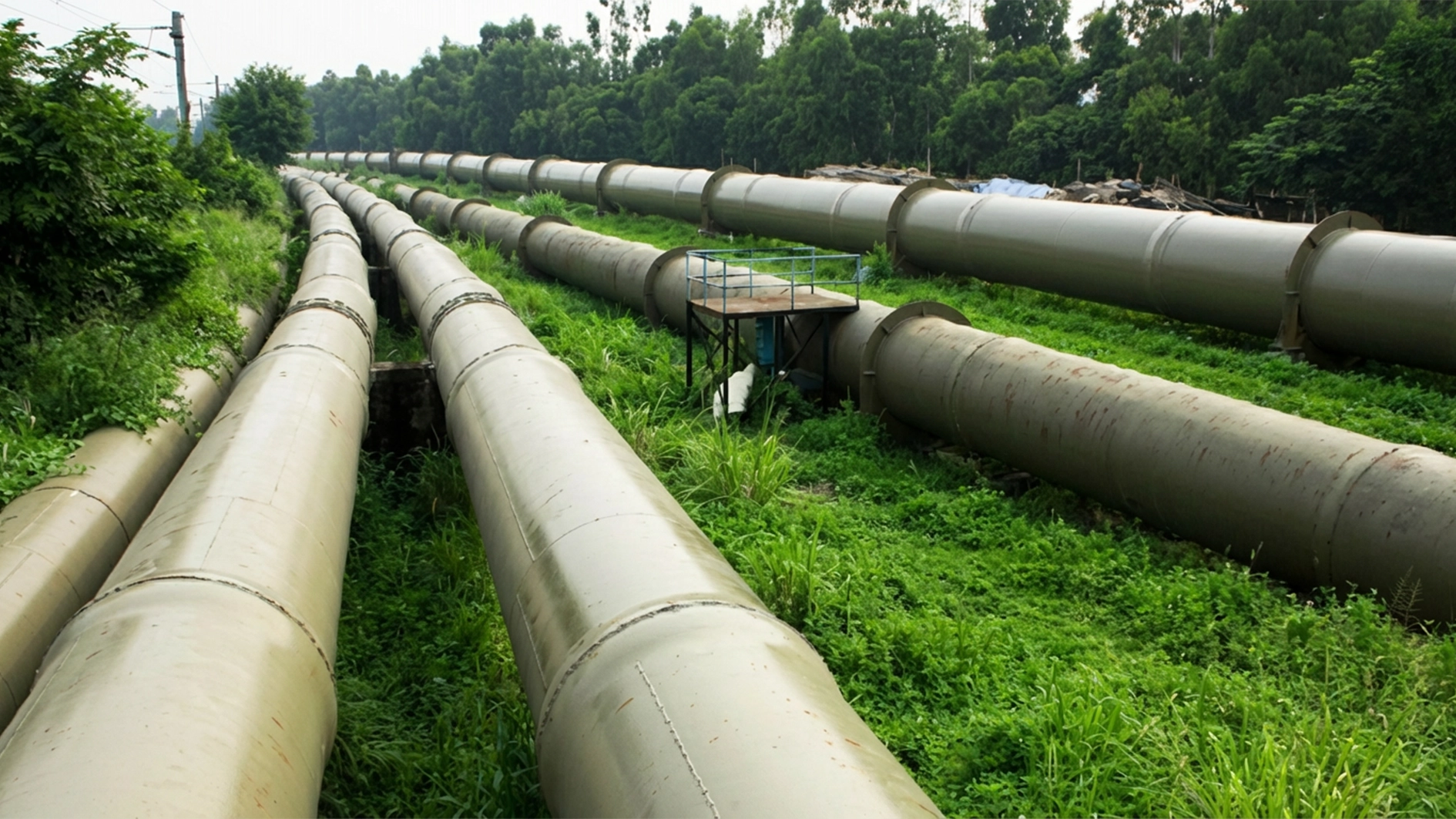
Data from the Global Energy Monitor’s pipeline tracker show that Nigeria has 3,226.41 kilometres of operating gas transmission pipelines. A further 1,427km are under construction, while 2,074.67km are proposed, which will bring the combined length of pipelines under construction to 3,501.67km.
The figures highlighted the scale of existing infrastructure as well as projects at different stages of development. However, the proposed and under-construction figures should not be interpreted as completed or operational networks.

His presentation argued that expanding access to pipeline gas could reduce manufacturers’ energy costs through electricity generation and industrial process heat, particularly for boilers, steam systems and kilns.
Its illustrative cost comparison placed diesel self-generation at an index of 100, grid supply combined with diesel backup at 62, and pipeline gas at 30.
The presentation, however, cautioned that the potential savings would depend on access to infrastructure and reliable supply.
He identified the Obiafu-Obrikom-Oben (OB3) pipeline as linking the eastern and western gas networks, while the Ajaokuta-Kaduna-Kano (AKK) project represents the next step towards expanding access to the northern market.
The presentation also cited the expanded design capacity of the East-West pipeline system (ELPS II) at 2.3 billion standard cubic feet per day, noting that compression would be required to realise the capacity.
He further highlighted the role of private distribution networks in connecting industrial clusters to the national gas infrastructure.
According to the presentation, Shell Nigeria Gas has built more than 150 kilometres of pipeline infrastructure, supplied over 130 industries across Ogun, Abia and Rivers states, and delivered 60 million standard cubic feet of gas per day to industries, equivalent to 300 megawatts of power.
The presentation explained that the connection between trunklines and factories involves tie-ins, pressure reduction and metering, distribution pipelines and factory connections.
For wider expansion, he called on the government to complete and commission trunklines, coordinate permits and rights of way, and direct eligible financing towards viable infrastructure gaps.