
 Get Guardian on Google
APC targets bigger oil production, electricity, CNG infrastructure
Minister of Budget and Economic Planning, Sen. Atiku Bagudu, has said President Bola Tinubu is working towards transforming Nigeria into a $2 trillion economy, insisting that the country has the potential to achieve an economic feat comparable to, or greater than, that of Brazil.
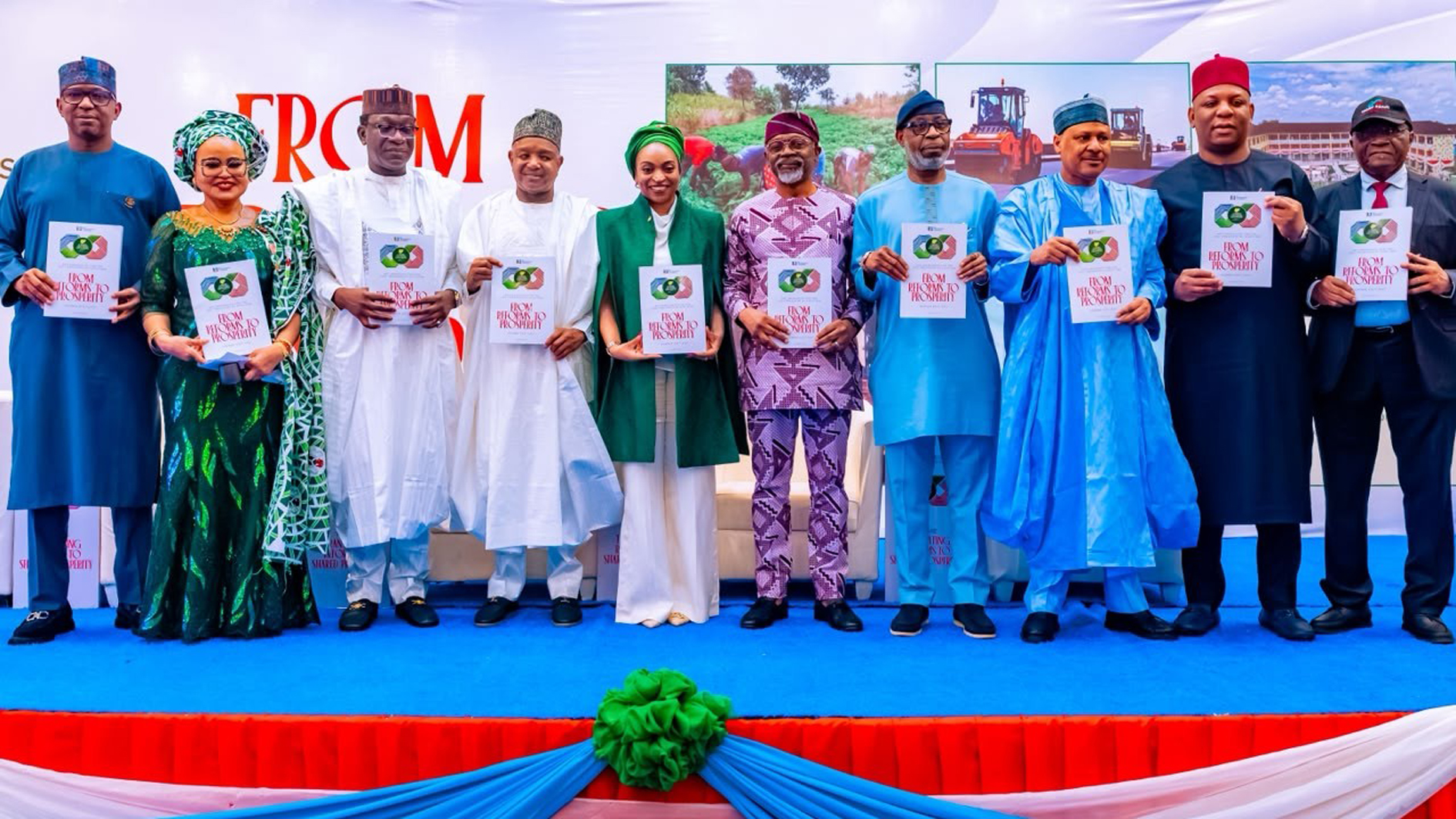
Bagudu disclosed this yesterday at the launch of the All Progressives Congress (APC) manifesto for the presidential election, entitled ‘From Reform To Prosperity’ agenda 2027 – 2031.
Also, the Minister of Industry, Trade and Investment, Dr Jumoke Oduwole, disclosed that the Federal Government is targeting at least $15 billion in yearly non-oil exports, one million export-linked jobs by 2031 and the establishment of an anchor industrial cluster in each of Nigeria’s six geopolitical zones.
On his part, Chief of Staff to the President, Femi Gbajabiamila, defended the economic reforms introduced by the Tinubu administration, saying the President chose to govern as a leader rather than a politician by confronting difficult economic challenges despite their immediate consequences for Nigerians.
APC unveiled an ambitious energy sector agenda aimed at increasing Nigeria’s crude oil production to three million barrels per day, expanding electricity generation, strengthening domestic refining capacity and accelerating the transition to gas-powered transportation.

Bagudu maintained that the President was driven by the conviction that Nigeria should not place limitations on its economic ambitions when countries such as Brazil had been able to build economies valued at about $2 trillion.
According to him, the President’s thinking is anchored on the belief that Nigeria has the human and material resources to attain a much higher level of economic prosperity if the right policies were implemented.
He said: “For the President, if Brazil can be a $2 trillion economy, why not Nigeria? Let me repeat, maybe the journalists may not care. This is how profound his thinking is: why not Nigeria?”
The minister said Tinubu had demonstrated the political courage to take difficult decisions aimed at addressing the country’s economic challenges, even when such measures attracted criticism and imposed temporary hardship on Nigerians.
Oduwole said the administration also intended to raise manufacturing’s contribution to the Gross Domestic Product (GDP) to at least 12 per cent.
She explained that the targets formed part of the government’s economic strategy to expand industrial production, strengthen exports and create quality employment opportunities across the country.
The minister said the administration’s ongoing interventions had begun to benefit different categories of Nigerians, including electricity consumers, farmers, first-time borrowers and railway commuters.
According to her, estimated electricity bills have declined under the administration, while farmers have received direct agricultural inputs to support their production activities.
She disclosed that more than 350,000 first-time borrowers had gained access to structured credit, with women accounting for 59 per cent of the beneficiaries.
President Tinubu formally launched the manifesto last Thursday as part of efforts to outline his administration’s policy direction and commitments for the 2027–2031 period.
Gbajabiamila defended the economic reforms introduced by the administration, saying the President chose to govern as a leader rather than a politician by confronting difficult economic challenges despite their immediate consequences for Nigerians.
He said Tinubu’s decision to remove the petrol subsidy and reform the foreign exchange system demonstrated his willingness to take difficult decisions in the country’s long-term interest rather than pursue policies designed to secure immediate political gains.
According to him, while politicians are often preoccupied with the next election, leaders think about the next generation.
“The President had a choice; he could either govern as a politician or govern as a leader. There is a very huge difference between the two,” he said. “If he came in as a politician and decided to govern as a politician, he would have continued on the cruise, on the path that we were taking.
Instead, knowing well the immediate consequences, he decided he would govern as a leader.”
The Chief of Staff acknowledged that the removal of fuel subsidy and the restructuring of the foreign exchange system placed considerable pressure on households, insisting, however, that leaving the problems unresolved would have further weakened Nigeria’s capacity to invest in its future.
The targets of APC, among others, are contained in its campaign manifesto and policy document unveiled yesterday in Abuja.
Presented by Oduwole, the manifesto highlighted eight priority areas the party had promised Nigerians and those that have been delivered, including ongoing reforms in the power, oil and gas sectors, describing them as critical to achieving energy security, attracting investment, stimulating industrial growth and reducing the cost of doing business.
“Building on the reform wins, we will create an economy that produces more, creates more jobs and lowers the cost of doing business and everyday living, powered by reliable and affordable energy, modern infrastructure, productive agriculture, competitive industries and stronger connections to local, regional and global markets.
“We have begun the vital work of rebuilding our national economy to serve our citizens better.
Together, we will work to deliver more reliable and affordable electricity; improve connectivity with roads, rail, ports and public transport; stronger food production and supply chains; greater value from Nigeria’s energy and natural resources; and a business environment where Nigerian enterprises can invest, grow, export and create jobs,” she said.
The party said the administration recorded improvements in power generation, metering, electricity distribution and access to off-grid renewable energy while introducing structural reforms to address longstanding financial challenges in the sector.
According to the document, Nigeria’s electricity generation peaked at 5,801.84 megawatts in March 2025, while average generation remained between 4,180MW and 4,775MW during the year, supported by additional emergency generation capacity.