
 Get Guardian on Google
Speaking at the groundbreaking of Kogi International Cargo Airport, Aviation Minister Festus Keyamo presented President Bola Ahmed Tinubu’s economic reforms as part of Nigeria’s recovery from years of structural difficulties. His assessment comes amid encouraging remarks from senior World Bank officials and former Central Bank Governor Muhammadu Sanusi II, even as questions remain about the cost of economic adjustment and how quickly ordinary Nigerians will experience its benefits.
Nigeria is on a path to economic revival, according to the Minister of Aviation and Aerospace Development, Festus Keyamo, who has linked the country’s emerging recovery to reforms introduced by President Bola Ahmed Tinubu since assuming office in May 2023.
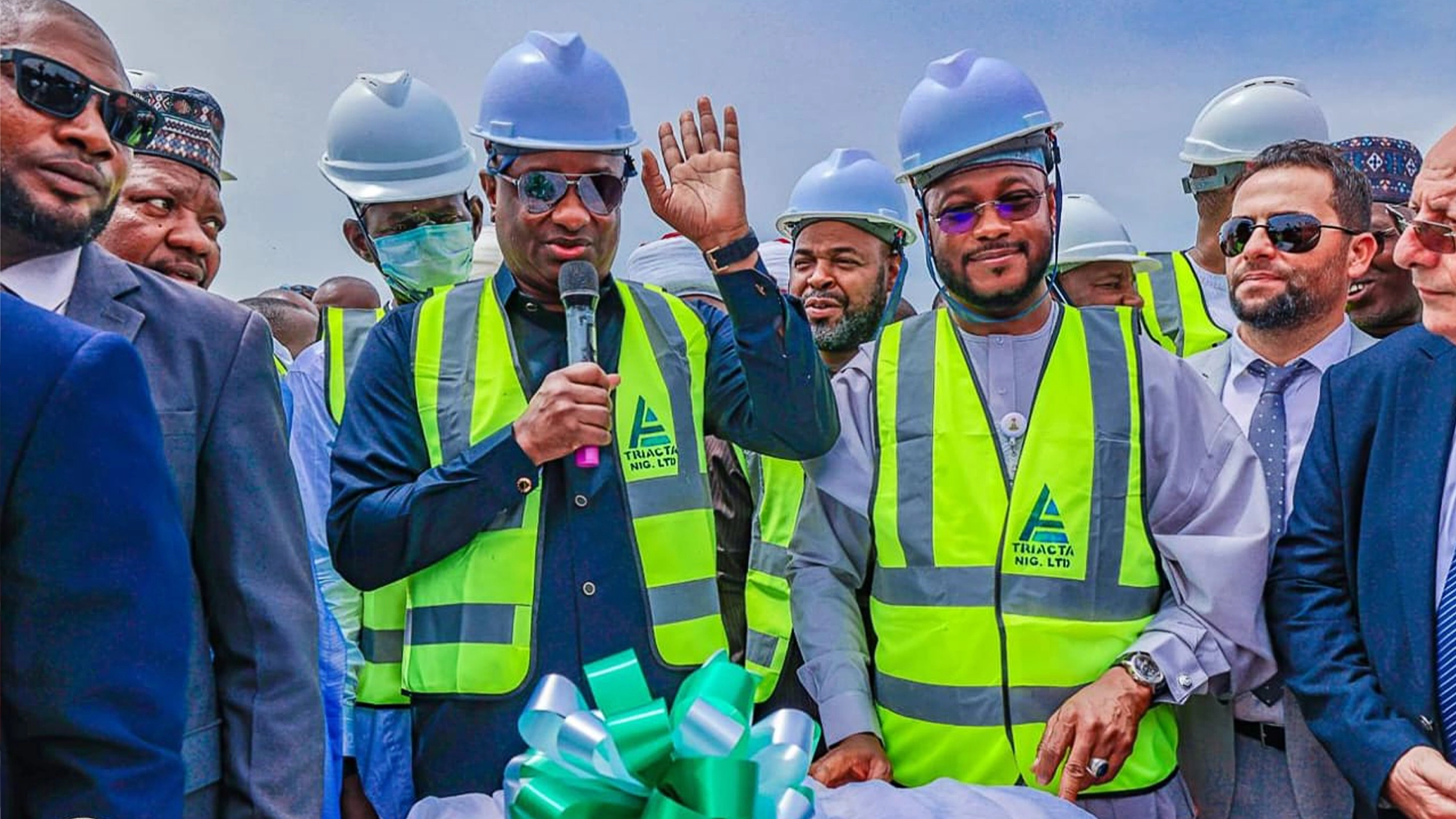
Speaking at the groundbreaking ceremony for Kogi International Cargo Airport in Zariagi, Adavi Local Government Area, on November 10, 2026, Keyamo argued that Nigeria’s economic difficulties were being confronted through policy decisions intended to restore fiscal stability, strengthen investment confidence and expand infrastructure development.
His remarks came against the background of recent assessments by international financial institutions and respected Nigerian economic figures acknowledging progress in the country’s economic management.
Among them are the World Bank’s Managing Director of Operations, Anna Bjerde, and former Central Bank Governor and Emir of Kano, Muhammadu Sanusi II, both of whom have publicly recognised aspects of the government’s reform programme.
For Keyamo, the central argument is that the administration’s economic policies should be assessed not only by their immediate costs but also by the structural changes they are producing.

World Bank Acknowledges Reform Progress
In February 2026, the World Bank described Nigeria as an increasingly important reference point in international discussions about economic reform.
During a meeting with President Tinubu at the Presidential Villa in Abuja, the bank’s Managing Director of Operations, Anna Bjerde, commended the administration’s consistency in implementing difficult policy changes.
“Nigeria is a frequent example in my discussions with people around the world,” she said, citing the reform results achieved within two years.
Bjerde’s remarks reflected the World Bank’s assessment that Nigeria had made progress in addressing longstanding economic distortions and improving confidence in policy implementation.
The institution has repeatedly emphasised the importance of sustaining reforms while strengthening economic opportunities and protecting vulnerable households.
The recognition is significant because Nigeria’s reforms have attracted both domestic criticism and international attention.
The removal of petrol subsidy and changes to foreign exchange management have affected government finances, business operations and household purchasing power.
While the administration argues that these measures are necessary to address structural weaknesses, their immediate consequences have included higher living costs and significant economic adjustment.
The longer-term question is whether improved fiscal conditions and greater policy certainty will translate into sustained investment, employment and rising living standards.
Sanusi: Nigeria Has Returned From the Brink
Keyamo’s assessment also finds support in recent comments by Muhammadu Sanusi II, the former Central Bank governor and Emir of Kano.
Speaking at the Oxford Global Think Tank conference in early November 2026, Sanusi acknowledged improvements in Nigeria’s economic position.
He described the country as having come “back from the brink,” pointing to economic growth and signs of recovery.
Sanusi cited Nigeria’s reported 4.48 per cent gross domestic product growth in the second quarter of 2026 as evidence of progress.
His assessment, however, contained an important qualification.
He warned that improvements in macroeconomic indicators would have limited social value unless government policies also addressed the difficulties confronting low-income households.
For Sanusi, recovery must ultimately be judged by its effects on employment, incomes, poverty and economic opportunity.
Sanusi
This distinction highlights the competing dimensions of Nigeria’s economic reform debate.
Macroeconomic stability is important for investment and long-term development, but improvements in national economic indicators do not necessarily translate immediately into better living conditions.
Keyamo Connects Reform to Infrastructure
At the Kogi airport ceremony, Keyamo offered a practical example of how the administration’s policies could influence infrastructure development.
The minister argued that changes to petrol subsidy expenditure and foreign exchange management had contributed to increased revenue allocations to state governments.
According to him, these additional resources have created greater opportunities for states to undertake major projects.
He attributed the Kogi airport initiative to the combination of federal economic reforms and Governor Ahmed Usman Ododo’s development priorities.
The proposed airport is intended to improve regional connectivity, support agricultural and commercial activities, attract investors and create employment opportunities.
Keyamo also defended the principle of developing infrastructure ahead of established commercial demand.
His argument was that governments must sometimes provide the roads, airports and other facilities that enable businesses to enter previously underserved markets.
The Kogi project illustrates that approach, although the facility remains at the construction commencement stage.
Its eventual economic contribution will depend on project completion, regulatory approvals, investment demand and commercially sustainable operations.
Aviation as a Measure of Reform
Nigeria’s aviation industry provides another perspective on the administration’s economic policies.
When Tinubu assumed office, foreign airlines faced difficulties repatriating hundreds of millions of dollars in revenues, while Nigerian carriers struggled to secure competitive aircraft leasing arrangements.
The Central Bank subsequently undertook a phased clearance of blocked airline funds.
By April 2024, the International Air Transport Association reported that Nigeria had cleared approximately 98 per cent of the outstanding backlog.
The government also introduced legal and regulatory changes aimed at strengthening compliance with the Cape Town Convention, improving creditor protection and restoring access to international aircraft leasing.
These measures contributed to renewed leasing activity, including Air Peace’s Boeing 737-700 dry-lease transaction with AerCap in November 2025.
They represent examples of how institutional changes can affect commercial confidence.
Other developments, including airport reconstruction and the proposed Nigeria Aircraft Leasing Company, remain at different implementation stages.
Their economic impact will depend on the completion of outstanding work and the effectiveness of subsequent operations.
Recovery and the Human Cost
Despite the positive assessments, the debate about Nigeria’s economic direction remains unsettled.
Higher government revenues do not automatically mean stronger household finances. Currency depreciation, food prices, transport costs and borrowing conditions continue to affect businesses and consumers.
Sanusi’s warning about the human cost of reform is therefore particularly relevant.
For Nigeria’s recovery to become broadly meaningful, stronger economic indicators must eventually be reflected in rising real incomes, productive employment, affordable services and improved living standards.
The World Bank has likewise emphasised the importance of reforms producing inclusive, job-creating growth rather than macroeconomic stabilisation alone.
This is the central challenge confronting the Tinubu administration as it approaches the final year of its current term.
The government’s reform programme has received recognition from international institutions and domestic economic figures, but its long-term assessment will depend on measurable improvements in economic conditions.
A Recovery Still Being Tested
Keyamo’s declaration that Nigeria is on a path to revival captures the administration’s interpretation of the country’s economic direction.
The minister sees the changes in government finances and emerging infrastructure investments as evidence that difficult policy choices are beginning to create new possibilities.
The World Bank’s recognition of reform progress and Sanusi’s acknowledgement of economic recovery lend weight to that assessment, although neither removes the need for continued scrutiny.
Nigeria’s economic outlook will depend on whether the reforms produce sustained investment, stronger institutions, competitive businesses and tangible benefits for citizens.
For Keyamo, Nigeria’s revival is underway. Whether that revival becomes broadly felt prosperity will be determined by the results Nigerians experience in the years ahead.
By Onome Amawhe
Onome Amawhe is a Nigerian journalist, writer and editorial strategist, and Founder of Africa Executive, an editorial advisory specialising in executive content, corporate storytelling and strategic publishing.