
 Get Guardian on Google
• $500m loan: Don’t saddle your successor with debt, Atiku tells Tinubu
• Oye: Reckless pre-election spending could widen Nigeria’s deficit, affect budget implementation
• DMO urges govt to cut borrowing, boost revenue
Following the latest disclosure by the Debt Management Office (DMO) that Nigeria could spend most of its Federal Government revenue servicing debt by 2030, chairman of the Alliance for Economic Research & Ethics (AERE), Dele Kelvin Oye, has warned that increased government spending ahead of the 2027 general elections could widen the country’s fiscal deficit, heighten borrowing pressures and undermine the execution of projects captured in the national budget.
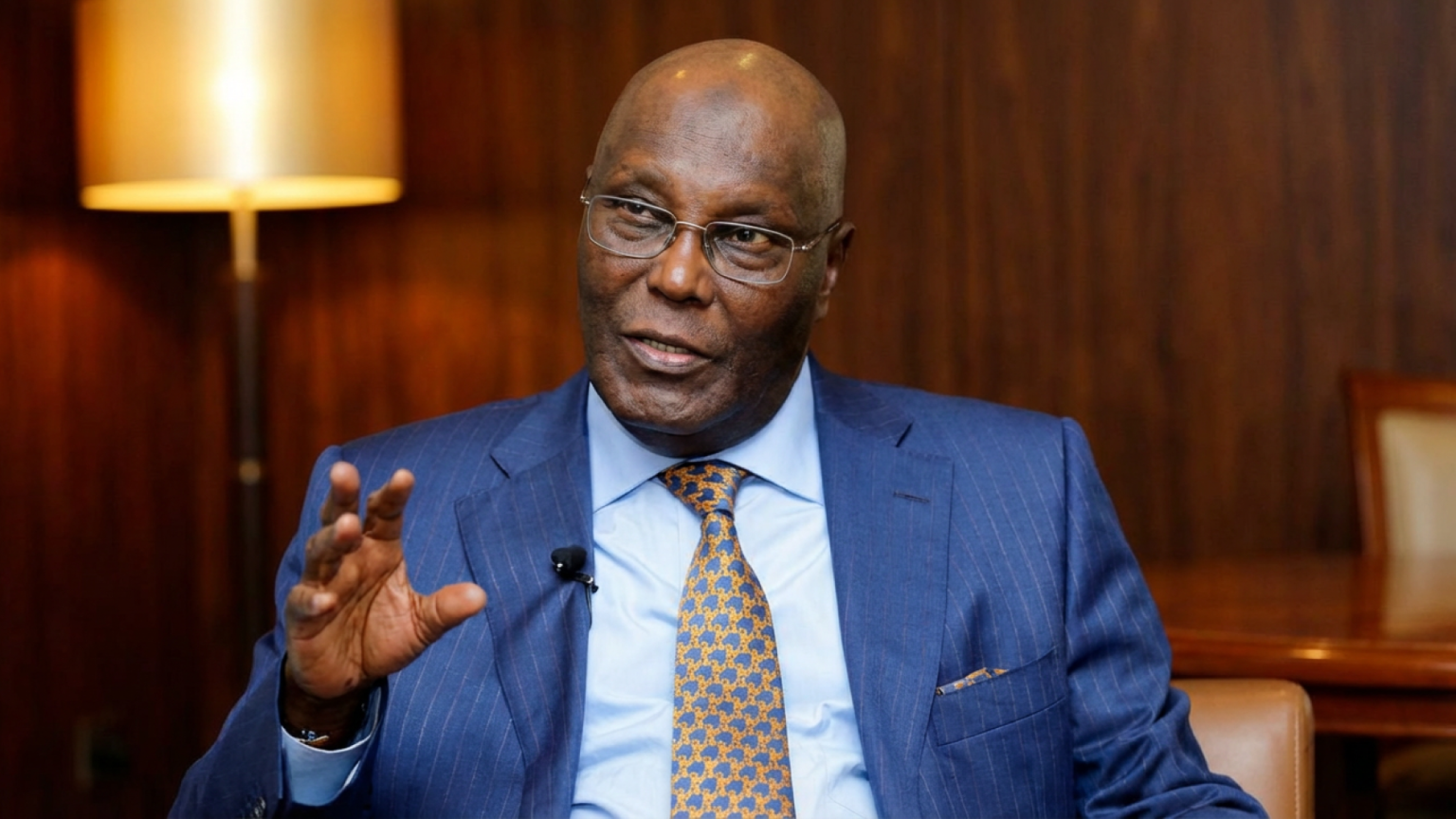
This is as former Vice President and presidential candidate of the African Democratic Congress (ADC), Atiku Abubakar, has warned President Bola Tinubu against committing Nigeria to a proposed $500 million World Bank loan shortly before the end of his current four-year tenure. He argued that no administration should saddle the country with fresh debt without adequate justification and public scrutiny.
Raising concerns about the government struggling to generate sufficient revenue to meet its obligations while making funds available for infrastructure, healthcare, education and other public services, the DMO projected that debt service will consume 71.7 per cent of Federal Government revenue by 2030 under its baseline scenario, significantly exceeding its recommended threshold of 50 per cent.
The DMO’s projections show that the debt service-to-revenue ratio, which declined from 60.6 per cent in 2024 to 44.9 per cent in 2025, is expected to rise above the recommended threshold in 2026 to 51 per cent and 57.1 per cent in 2027, before reaching 57.4 per cent in 2028 and 67.3 per cent in 2029. By 2030, debt servicing is projected to consume 71.7 per cent of Federal Government revenue.
To address the challenge, the DMO recommended increasing government revenue through tax reforms, expanding the tax base, improving compliance and deploying technology to strengthen tax administration. It also called for greater efficiency in public expenditure, urging the government to direct resources towards growth-enhancing investments capable of expanding the economy and generating additional revenue.
The debt office further advised the government to reduce new borrowing by adopting public-private partnership arrangements to finance capital projects and complying with the Fiscal Responsibility Act and provisions of the CBN Act on Ways and Means Advances.
In an assessment of the Federal Government’s 2026 budget performance in a statement yesterday, Oye said election-period spending was one of the major risks that could derail the country’s fiscal targets. “There are four risks to watch closely. First, election-period spending can put pressure on the deficit and financing needs,” he said.
Oye, with more than 30 years of experience across public- and private-sector boards, who served as President of the Nigerian Association of Chambers of Commerce, Industry, Mines and Agriculture (NACCIMA) and Chairman of the Organised Private Sector of Nigeria (OPSN), cited the World Bank’s October 2026 assessment, which identified higher pre-election spending as a factor that could widen Nigeria’s consolidated fiscal deficit in 2026.
“The World Bank identifies higher pre-election spending as one factor that could widen the consolidated deficit in 2026. That is a risk to manage, not a claim that every public project will be diverted for political purposes,” he said.
According to him, the government must exercise fiscal discipline, avoid fresh discretionary commitments that cannot be funded and delivered within a credible timetable, and ensure that available resources are directed towards completing essential projects. “Public investment should be planned around what can be funded and completed, not merely what can be announced,” he said.
Oye was reacting to the implementation of the 2026 budget, which has an approved expenditure of N68.32 trillion, projected revenue of N36.87 trillion and a deficit of approximately N31.46 trillion. He expressed concern that despite the substantial budgetary provision for capital expenditure, implementation of the 2026 capital budget for Ministries, Departments and Agencies (MDAs) remained at zero as of June 30, 2026.
According to him, the Budget Office’s second-quarter implementation report showed that government agencies were still utilising funds from the extended 2025 capital programme rather than commencing implementation of their 2026 MDA capital budgets. He, however, clarified that the reported zero implementation related specifically to the 2026 MDA capital budget, while cumulative first-half capital expenditure across broader funding categories stood at N4.177 trillion.
Oye further warned that the continued implementation of the 2025 capital programme alongside the 2026 budget could complicate public spending oversight, project monitoring and accountability.
“That overlap makes it harder to answer a basic question: which budget year paid for a project, and what was delivered from that year’s appropriation? It can also complicate cost control and public oversight,” he said.
He called on the Federal Government to close the 2025 capital programme by the statutory deadline of December 31, 2026, and explain any outstanding liabilities. “For the remaining weeks of 2026, the government should close the 2025 capital programme on the statutory date and explain any unresolved liability,” he said.
He also urged the government to avoid new discretionary commitments that could not be funded and completed within realistic timelines, while protecting essential projects that were ready for implementation. “It should avoid fresh discretionary commitments that cannot be funded and delivered within a credible timetable, while protecting essential and ready projects,” he added.
Oye also advocated a reduction in the country’s consolidated debt-service-to-revenue ratio to 40 per cent by 2028, from the World Bank’s reported 49.5 per cent baseline for 2025. He said reducing the debt-service burden would create greater fiscal room for the government to address infrastructure, public services and other development priorities.
“At 40 per cent, a larger share of comparable revenue would remain for other public purposes, though it would not all be freely available for capital spending,” he said.
Reiterating its opposition to President Tinubu’s latest request to the National Assembly for the approval of more loans, Atiku said the proposed borrowing, scheduled for consideration a few days before the May 29, 2027 presidential inauguration, could constrain the next administration and impose repayment obligations on Nigerians without allowing them to scrutinise the decision.
In a statement by Phrank Shaibu, Director of Strategic Communication, ADC Presidential Campaign Council, Atiku described the proposed loan as an attempt to mortgage Nigeria’s future and urged the World Bank not to approve the facility on the contemplated timetable.
“Taking loans as if you were a drunken sailor is a road to economic bondage, a second slavery. If this government is determined to mortgage Nigeria’s future and place our country at the mercy of creditors, we will not accept it,” he said.
He accused the Tinubu administration of attempting to commit the country to fresh financial obligations in the closing days of its current tenure, warning that such a decision could complicate governance for the incoming administration.
Invoking a Swahili proverb, the former Vice-President warned that borrowing shortly before the end of a presidential tenure could leave a successor constrained by obligations imposed by creditors.
“As the Swahili proverb warns, ‘If you borrow a man’s legs, you will go where he directs.’ A leader who borrows on his way out leaves his successor walking on the lender’s legs, constrained by obligations and choices the people did not make,” Atiku said.
He called on the World Bank to defer consideration of the proposed facility, insisting that Nigerians must first be allowed to scrutinise its terms, risks and repayment obligations. Atiku, who said he could assume office on May 29, 2027, if elected, pledged that he would not begin his proposed administration with another loan, but with a commitment to responsible leadership and fiscal discipline.