
 Get Guardian on Google
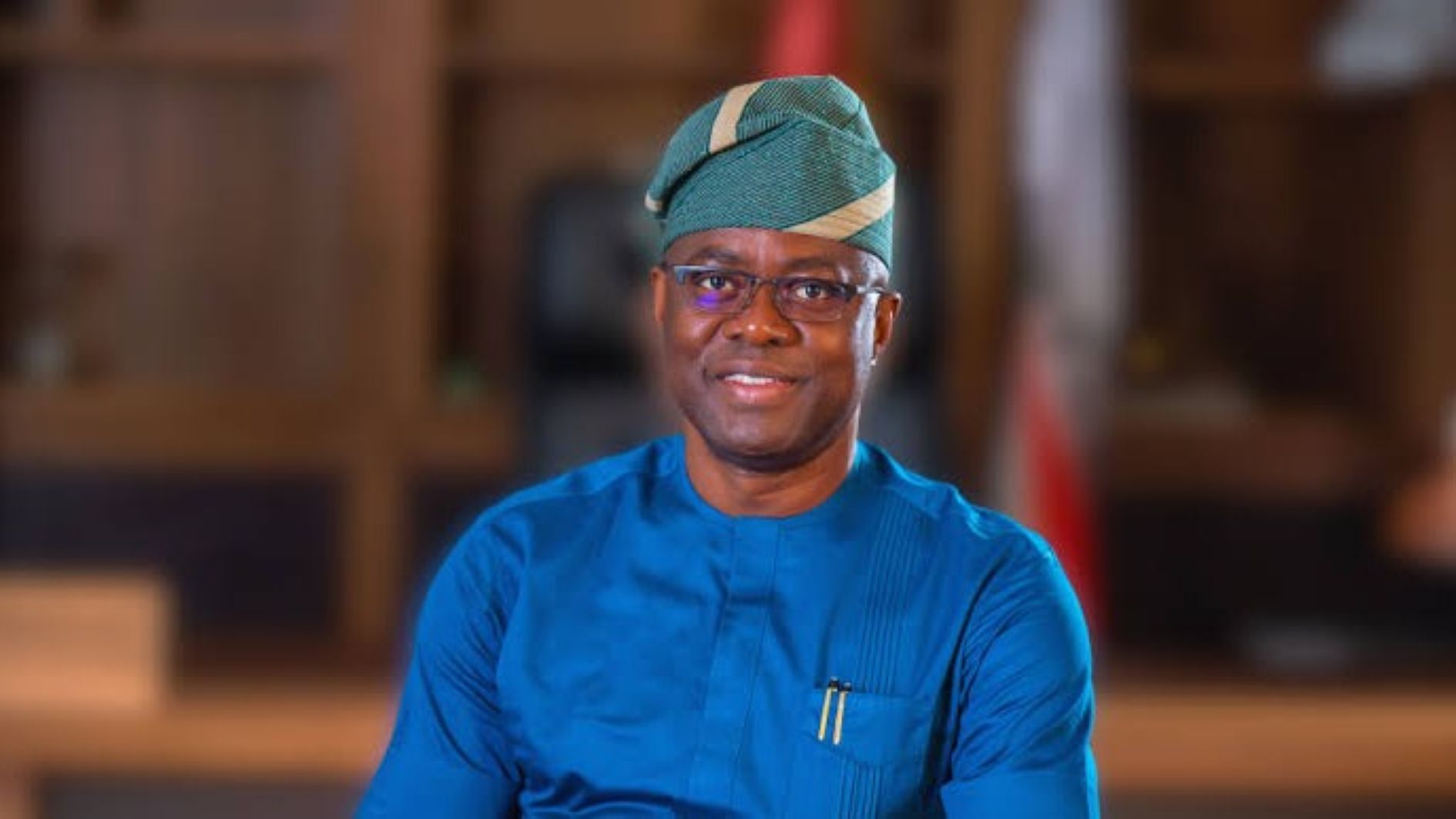
The presidential candidate of the Allied Peoples Movement (APM) in the 2027 elections and Oyo State Governor, Seyi Makinde, has unveiled a Reset Agenda proposing state police, devolution of powers and economic restructuring to address Nigeria’s governance challenges if elected. SEYE OLUMIDE writes.
Under his proposed Reset Agenda titled ‘Reset Nigeria: A Governing Programme for a Productive, Secure, Capable and Accountable Federation,’ Governor Seyi Makinde is seeking a fundamental reorganisation of the federal structure, the economy and national institutions. He argues that excessive concentration of authority at the centre, weak institutional coordination and poor accountability have undermined development.
“Reset Nigeria means correcting that course and building a federation capable of making our unity work,” he declared while presenting the programme.
The proposal comes amid public concerns over rising living costs, insecurity, unemployment, unreliable electricity, poor infrastructure and declining household purchasing power. Makinde acknowledges that Nigerians are bearing the consequences of rising food, transport, energy and housing costs, insisting that economic reforms must ultimately be judged by their impact on living standards.
Economic Restructuring And Productivity
At the centre of the Economic Reset is a promise to reorganise national priorities around productivity, domestic production, employment and lower production costs. Makinde argues that the economy is constrained by the failure to connect agriculture, transportation, energy, manufacturing, finance and security into a coordinated production system.
Rather than introduce a separate policy for every problem, the framework would identify productive sectors and remove obstacles preventing them from expanding. Its guiding principles include establishing the true cost of government interventions, assigning responsibility for results, connecting related policies, setting measurable deadlines and discontinuing arrangements that consume public funds without delivering value.
One proposal is to prioritise federal road construction along economically important corridors linking farms, industrial clusters, ports, markets and border communities. Projects, the programme says, should be assessed not merely by kilometres constructed or funds released, but by the economic opportunities created through improved transportation.
Under a proposed Federal-State Road Compact, states undertaking projects on federal roads would have agreements with the Federal Government covering financing, reimbursement, construction standards, supervision and maintenance. Makinde believes this would address uncertainty surrounding state expenditure on federal infrastructure.
Agriculture also features prominently. A national food-production strategy would coordinate farming, security, storage, processing, transportation and market access. Initial priority commodities are rice, maize, cassava, beans and tomatoes, subject to assessments of production capacity, household consumption and regional suitability.
The Federal Government would coordinate national standards, provide shared infrastructure, facilitate financing and address constraints crossing state boundaries, rather than run farms or processing businesses. The argument is that increased production alone will not reduce food prices if farmers cannot safely reach their farms, preserve harvested produce or transport it to consumers.
The programme identifies food and agro-processing, textiles and apparel, pharmaceuticals and medical supplies, and construction materials derived from local minerals as priority industrial value chains.
Federal and state governments would work with private investors to identify their infrastructure, energy, skills, financing and regulatory requirements. The intended outcome is an environment in which local businesses can expand production, create jobs and compete in domestic and international markets.
Refinery, Electricity And Fiscal Reforms
On energy, Makinde promises to end what he describes as the cycle of public expenditure on government-owned refineries that fail to operate reliably. He proposes an independent technical, financial, environmental and asset assessment of all government-owned refineries within the first six months of his administration.
Within 12 months, each refinery would be assigned one of three options: partnership with a technically qualified private operator; conversion into a commercially viable petroleum, petrochemical, storage or logistics facility; or orderly decommissioning. Viable transactions would be concluded within 18 months, with production or conversion milestones enforced by the end of the third year.
The principle, he says, is that government ownership should serve a demonstrable public interest rather than become a permanent justification for financing commercially unsustainable operations.
On electricity, the governor proposes a targeted protection arrangement for low-income households.
Qualifying metered households would receive their first 50 kilowatt-hours monthly at a protected rate.
Funding would be based on verified electricity delivered rather than estimated consumption, with priority metering for qualifying unmetered households. He also proposes support for eligible off-grid households through competitively procured solar-home-system and mini-grid connections.
On macro-economic management, Makinde promises fiscal discipline, monetary stability and a transparent foreign-exchange market. The Central Bank would retain operational independence in pursuing price stability, while the Federal Government would support monetary policy through responsible borrowing, improved revenue administration and increased domestic production.
Makinde rejects artificial exchange rates and preferential foreign-exchange arrangements that reward access rather than productivity. His fiscal framework would restrict routine monetary financing of federal deficits. Major borrowing proposals would disclose their purpose, repayment sources, foreign-exchange exposure and expected economic or social returns.
Foreign-currency borrowing, he says, should be exceptional and restricted to projects with identifiable foreign-currency earnings or concessional financing demonstrably cheaper than domestic alternatives. The proposals seek to combine market-based management with targeted social protection. Their viability, however, would depend on fiscal capacity, reliable data and institutions able to enforce the rules.
State Police And Decentralisation Of Security
Perhaps the most politically consequential proposal is the decentralisation of policing. Makinde argues that Nigeria’s security architecture concentrates operational authority at the centre while expecting governors and communities to respond to threats over which they have limited lawful control.
He says security challenges cannot be resolved simply by deploying more personnel, weapons and vehicles without improving intelligence, local knowledge, communication and accountability. His proposal is to complete the constitutional, legal, financial and operational arrangements for state police.
States seeking to establish police services would have to demonstrate sustainable funding, transparent recruitment, professional training and independent disciplinary and complaints mechanisms. State police would focus principally on public safety and crimes within their jurisdictions. Federal agencies would retain responsibility for terrorism, border security, organised crime and offences crossing state or national boundaries.
The two levels would operate through interoperable communication systems, shared intelligence and common criminal records. National standards would govern the use of force, detention, investigation, firearms and human rights. Independent oversight and judicial review would be required to prevent state police becoming instruments of political, ethnic or religious persecution.
Makinde also proposes a common Threat-to-Action Standard across security agencies. Every credible warning would have an identified lead agency, supporting institutions, a responsible command structure and a traceable response. Serious incidents would trigger operational reviews to establish what authorities knew, what action they took and where failures occurred.
Security operations would also be linked to economic recovery in affected communities. Under proposed Security and Economic Recovery Plans, protecting farming communities, transport routes, schools, markets and health facilities would go hand in hand with restoring legitimate economic activities.
Devolution And A New Federal Arrangement
Another major component is a proposed Federal Responsibilities Review to determine which responsibilities should remain exclusively federal, which require national standards but state-level implementation, and which should principally pass to states or local governments.
Makinde promised to undertake the review within his first year, producing proposals for constitutional amendments, legislation, fiscal adjustments and transition arrangements. He argues that transferring responsibilities without corresponding funds, personnel, assets and accountability would merely relocate existing failures.
The proposal has implications for natural resources, particularly solid minerals. Under the present constitutional arrangement, the Federal Government retains primary control over mineral resources, including licensing, while states contend with many environmental, security and social consequences of mining within their territories.
Makinde proposes giving state governments a greater role in decisions concerning the exploration and exploitation of solid minerals. Although the Federal Government would continue issuing mining licences under the existing framework.
States would be formally involved and allowed to raise concerns about land use, environmental protection, community interests and public safety.
He also proposes publicly accessible registers of mining licences and beneficial ownership, stronger cooperation between federal and state regulators, and improved mechanisms for tackling illegal and dangerous mining.
The proposal falls short of comprehensive resource control, but signals an attempt to give states greater influence over economic activities and resources within their territories. Any substantial change to existing ownership and control arrangements would require constitutional and legislative amendments.
Makinde says the objective is not to weaken the federation, but to make federalism more functional by taking decisions at the level best equipped to deliver results.
Education, Healthcare And Social Protection
The Reset Agenda also emphasises human capital development. In education, Makinde wants the country to move beyond measuring success mainly through enrolment figures, school buildings and certificates.
He proposes a National Foundational Learning Guarantee under which every child should acquire basic literacy and numeracy by the end of Primary Three. Working with state governments, his administration would target at least 50 per cent of Primary Three pupils meeting the national minimum proficiency standard in literacy and 65 per cent in numeracy within three years.
The programme would include teacher training, classroom support, regular assessment and additional instruction for children who have fallen behind. He also proposes stronger links between technical education, vocational training, apprenticeships and industry requirements. Skills programmes, he argues, should be judged by whether beneficiaries gain recognised competencies and secure employment or establish businesses.
In healthcare, the emphasis is on strengthening existing reforms, particularly primary healthcare, and establishing a clear guarantee of essential services in participating states. Federal health funding would increasingly be linked to verified service delivery rather than the mere existence of buildings or submission of administrative documents.
On social protection, Makinde proposes an accountable gateway connecting existing federal and state systems, including the National Social Register and cash-transfer programmes. The objective is to establish transparent eligibility requirements, traceable payments and an appeals mechanism for people wrongly excluded. The system would also respond to poverty, disability, displacement and sudden economic or climate-related shocks without creating new emergency lists whenever a crisis occurs.
Public Accountability And Citizens’ Confidence
A central theme of the Reset Agenda is accountability in public administration. Makinde believes Nigerians have become accustomed to government announcements that are not followed by identifiable results.
To address this, every major commitment would have a lead institution, delivery timetable, measurable targets and an officer responsible for reporting progress. He says that within the first 100 days, his administration would publish a consolidated Reset Delivery Plan identifying the responsibilities of ministries, departments and agencies, the legal and administrative steps required, funding arrangements and three-year implementation milestones.
He also proposes extending the “Tell Government Once” principle across public services, allowing agencies to obtain verified information already held by other institutions instead of repeatedly demanding the same documents from citizens.
On democratic governance, he supports reforms to improve transparency in electronic accreditation and transmission of election results, political financing and the appointment of electoral officials. He also pledges to protect peaceful protests, journalists, civic organisations and political opponents, arguing that criticism should not be treated as disloyalty to the country.
The Oyo Experience And The Presidential Test
Makinde’s justification for offering Nigerians the Reset Agenda rests partly on his experience as Oyo State governor since 2019. The programme cites interventions in agriculture, infrastructure, education, healthcare and security as evidence of what he believes can be achieved through better planning and institutional coordination.
In security, the document points to reductions in selected crime categories during his first term and the establishment of a toll-free emergency response number. These examples are intended to show that the national programme is informed by experience in managing a sub-national government rather than being a collection of abstract policy recommendations.
Nevertheless, moving from governing Oyo State to managing a federation of 36 states, the Federal Capital Territory and numerous national institutions presents a different challenge. Several proposals would require constitutional amendments, legislative approval, intergovernmental agreements, substantial funding and cooperation from state governments.
State policing, resource devolution and the redistribution of federal responsibilities would involve negotiations among political interests that may disagree on the extent of decentralisation. The programme’s success would therefore depend not only on the president’s commitment, but also on the willingness of governors, lawmakers and other institutions to support the changes.
Financing remains a question: the programme promises social protection, services, agriculture, industry and state policing alongside fiscal discipline and borrowing limits.
How much can be raised by eliminating duplicated expenditure, improving revenue administration and discontinuing loss-making government operations? Would the savings be sufficient to finance the commitments without imposing additional burdens on an already strained public treasury?
Makinde’s answer is that the reset would begin with an examination of existing expenditure, redirecting resources from duplication and persistent losses towards productive investment and ensuring that every major commitment has an identifiable funding source.
Ultimately, the strength of the Reset Agenda will depend not on the number of reforms proposed, but on Makinde’s ability to build political consensus, secure legislative backing and mobilise the resources required for implementation.
For Nigerians, the critical test will be whether decentralised policing can improve security without becoming an instrument of political intimidation; whether greater state participation in resource management can accelerate development without deepening regional inequalities; and whether economic restructuring can reduce production costs, create jobs and improve living standards.
Makinde’s central proposition is that Nigeria’s problems cannot be resolved through isolated policy announcements without confronting the institutional weaknesses that have undermined successive administrations. Whether his experience in Oyo State and the proposals in the Reset Agenda can convince Nigerians that he is prepared for the more complex task of governing the wider federation remains the political question ahead of the 2027 presidential election.