
 Get Guardian on Google
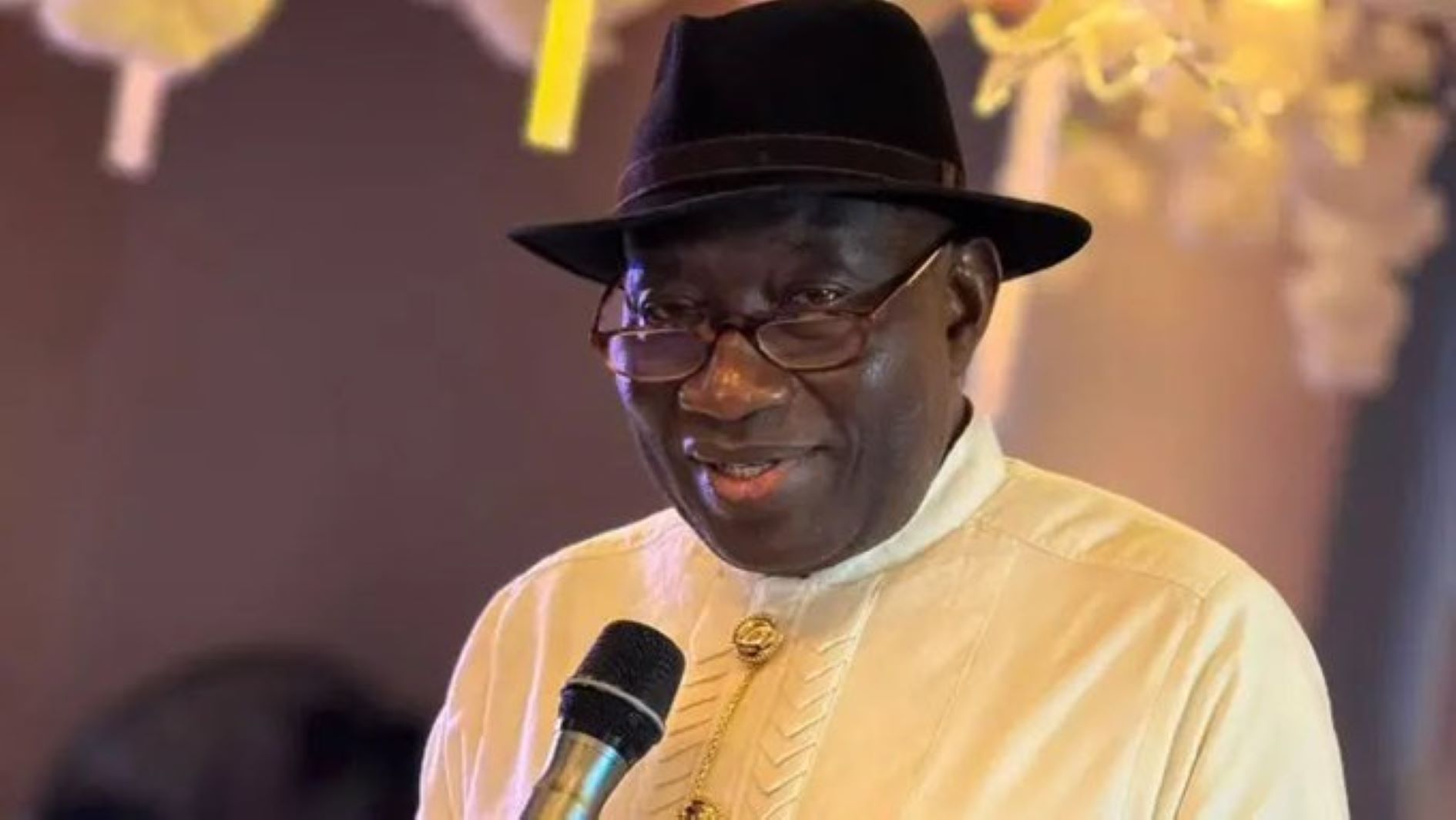
Former President Goodluck Jonathan has called for comprehensive reforms of Nigeria’s democratic system, political recruitment process and education sector, warning that the country risks disappointing its founding nationalists if it fails to translate political independence into meaningful development.
Jonathan made the call while chairing the Herbert Macaulay Memorial Colloquium in Lagos on Saturday, organised to commemorate the 162nd anniversary of the birth of the nationalist pioneer.
He said Nigeria must move beyond celebrating its independence heroes to building a country that reflects the ideals and aspirations for which they struggled.
Jonathan, who described Macaulay as a man of remarkable intellect, courage and conviction, said the nationalist was an engineer, surveyor, journalist, political activist and public intellectual who challenged colonial injustice and demanded greater political participation and self-determination for Nigerians.
He noted that Macaulay, born on November 14, 1864, witnessed Nigeria’s amalgamation in 1914 as an adult but died in 1946, 14 years before the country attained independence in 1960.
The former president said the vision of Nigeria’s founding nationalists went beyond the transfer of political power from colonial authorities to indigenous leaders, stressing that they envisaged a sovereign country where citizens could determine their destiny, control their resources and deploy them for national development.
According to him, the nationalists also envisaged a united country where every citizen, irrespective of ethnic, religious or social background, would enjoy equal rights, dignity and opportunities.
He said, “They expected independence to offer economic emancipation, industrialisation, quality education, accessible healthcare, employment opportunities, social justice and a country capable of competing confidently among the nations of the world.
“The question we must confront today is whether, 66 years after independence, we can authoritatively say that these expectations have been substantially met. How much of the dreams of our founding nationalists have been realised? Have we made the kind of progress they envisioned? And are we satisfied with where Nigeria stands today?”
Jonathan acknowledged that Nigeria had recorded progress in several areas but said patriotism required citizens and leaders to examine the country’s shortcomings honestly.
Comparing Nigeria’s development trajectory with those of South Korea, India and Singapore, he said the countries had made remarkable advances in industrialisation, technology, education, healthcare and human development despite their different historical experiences.
He observed that South Korea had emerged as a global force in electronics and advanced manufacturing, while Singapore had established itself as a centre of global commerce, innovation and institutional excellence.
He also cited India’s achievements in technology and healthcare, questioning why Nigeria and other African countries had struggled to translate their enormous human and natural resources into comparable development.
Jonathan identified leadership challenges, weak institutions, corruption, policy inconsistency, inadequate infrastructure, insecurity and over-dependence on raw material exports as some of the factors undermining Nigeria’s development.
He, however, stressed that independence and nation-building were different undertakings, noting that while independence was a historic achievement, building a prosperous and united country remained an ongoing responsibility.
Recalling the 2014 centenary celebration of Nigeria’s amalgamation during his administration, Jonathan said some Nigerians had questioned the justification for the commemoration, citing the country’s development challenges and concerns about national unity.
He said he had supported the celebration because understanding the country’s history was important to assessing its progress and repositioning it for the future.
Looking ahead to Nigeria’s centenary of independence in 2060, Jonathan urged the present generation to develop a clear national agenda that would prevent future generations from inheriting the same challenges confronting the country.
He asked what Nigeria’s human development indicators, life expectancy, education and healthcare standards, technological capacity and industrial output would look like by 2060.
He said, “These questions must not remain matters of academic debate. They should become the foundation of a national development agenda with clear objectives, measurable targets, timelines and identifiable responsibilities.
“Our political leaders must provide direction in line with a well-established national vision. Our public institutions must deliver efficiently. Our businesses must invest in productive capacity. Our educational institutions must prepare our people for the demands of the future.”
The former president also called for renewed Pan-African nationalism, saying political independence must be complemented by economic emancipation, technological advancement, educational development and stronger continental integration.
He urged young Nigerians to recognise that the nationalist struggle did not end with independence, adding that their generation had a responsibility to advance the ideals of freedom through innovation, enterprise, civic participation and responsible citizenship.
Jonathan further stressed the need to preserve Nigeria’s history and monuments, warning that a nation that forgets its past risks losing its identity and direction.
He identified four areas requiring urgent attention to reposition Nigeria for development, beginning with comprehensive democratic reforms.
According to him, the country must move away from what he described as an opaque and amorphous democratic system and strengthen the fundamental principles of popular participation, the rule of law, respect for human rights, judicial independence, accountability, pluralism and a vibrant civil society.
He also advocated reforms in the political recruitment process, criticising the continued selection of political leaders on the basis of religion, ethnicity, language and other narrow considerations.
Jonathan lamented that such considerations had prevented competent individuals from emerging as political leaders, citing situations where religious denomination could determine eligibility for political office in some parts of the country.
He said Nigeria would struggle to achieve meaningful development unless it abandoned what he described as primitive approaches to political recruitment and prioritised competence and capacity.
The former president also called for functional education capable of driving technological advancement, innovation and knowledge creation.
Citing the Times Higher Education 2027 rankings, he expressed concern that Nigerian universities remained poorly positioned among the world’s leading institutions, arguing that the country needed universities capable of competing among the top 200 or 300 globally.
He said universities should become centres of knowledge production and innovation rather than institutions primarily focused on knowledge consumption.