
 Get Guardian on Google
**Says no government can use guns to suppress public anger
***warns of catastrophic consequences of opening fire on protesters
Former Minister of Youth and Sports, Solomon Dalung, has warned presidential security operatives against opening fire on protesters following the controversy surrounding an alleged video showing youths throwing stones at a presidential convoy after President Bola Tinubu visited a mosque in Abuja
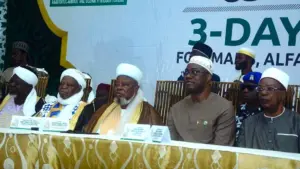
The incident reportedly occurred on Friday after Tinubu attended prayers at the Shehu Shagari Central Mosque in the Federal Capital Territory.
Videos circulating on social media allegedly showed some youths chanting rejection slogans and throwing objects towards a convoy leaving the mosque.
However, the Presidency disputed reports that Tinubu’s convoy was attacked, with presidential aide, O’tega Ogra, releasing another video which he said showed the President leaving amid cheers from supporters.
Reacting to the controversy, Dalung cautioned those defending the use of lethal force against protesters to consider the wider consequences.
He argued that presidential security personnel were not confronting an invading army or an armed insurgency but citizens expressing anger and dissatisfaction with the government.
While acknowledging that some protesters might have acted in unacceptable ways, Dalung insisted that such conduct could not justify shooting them.
He described opening fire on demonstrators as an unforgivable escalation capable of turning an isolated confrontation into a national crisis.
The former minister warned that the consequences could extend beyond those at the scene and create serious problems for the government and the President the security operatives were assigned to protect.
He stressed that no security detail, regardless of its weapons and sophistication, could shoot its way out of legitimate public anger without inviting consequences beyond its control.
Dalung also maintained that political authority does not give those in power a monopoly over the consequences of public dissatisfaction.
According to him, citizens may not possess guns, armoured vehicles or presidential escorts, but their collective strength remains something no government should underestimate.
He argued that the strength of a government should not be measured by the number of guns surrounding its President but by the confidence, respect and goodwill it commands among the people.
Dalung maintained that governments cannot manufacture public acceptance through intimidation or superior firepower.
He said genuine political authority rests on public trust and the willingness of citizens to respect those entrusted with leadership.