
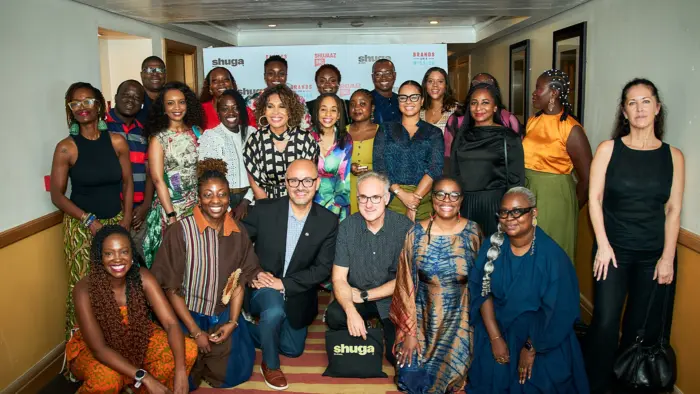
Stakeholders across the creative, corporate and development sectors have called for stronger partnerships to address harmful social norms, improve young people’s well-being and expand economic opportunities for women and girls across Africa.
The call was made at Unlikely Allies: Stories That Shift Norms, a private roundtable held recently at the Federal Palace Resort, Lagos, during CANEX WKND.
Convened by Shuga Global, Shujaaz Inc and Brands on a Mission, the gathering brought together representatives of global brands, foundations, investors, the creative industries, media organisations and youth groups to explore how storytelling can influence attitudes and inspire behavioural change.
Discussions drew on the experience of Surround Sound Kenya (SSK), a youth-focused initiative that uses storytelling across television, comics, radio, social media and community engagement to address issues affecting young people.
Established in 2023, the programme reportedly reaches 4.2 million young people in Kenya, addressing subjects including gender-based violence, reproductive health, education, livelihoods and women’s economic empowerment.
Speaking at the gathering, Chief Mission Officer of Brands on a Mission, Professor Myriam Sidibe, stressed the importance of collaboration between organisations with complementary strengths.
“Storytellers know how to reach young people’s hearts. Brands know how to reach them at scale. Funders can take a risk on something new. On our own, none of us can shift a norm,” she said.
“Together, as unlikely allies, we can. Kenya has shown it works.” The initiative seeks to engage young people through relatable stories that encourage conversations about issues often considered difficult to discuss within families and communities, including menstruation, body image, sexual and reproductive health, nutrition and financial independence.
Executive Director of Shuga Global, Wame Jallow, explained that storytelling provides opportunities for young people to recognise their experiences and question established beliefs.
“Young people don’t change because someone tells them to. They change when they see themselves in a story and talk about it with the people around them,” she said.
According to the organisers, an independent evaluation by Mathematica of an earlier phase of SSK’s family-planning storytelling intervention found a 7.7-percentage-point increase in young people’s knowledge of contraception and a 9.3-percentage-point increase in peer conversations about family planning.
The initiative expanded in 2026 with support from the Gates Foundation, bringing private-sector brands into partnerships focused on menstrual health, intimate health, nutrition and mentorship.
The first stories developed through the expanded collaboration were scheduled for release in November and December 2026.
A panel moderated by Sidibe featured Ndidi Okonkwo Nwuneli, Felicia Djibo of Deloitte and Oumar N’diaye of the Ford Foundation, alongside young people from the Shuga network. The conversation examined the sustainability of social-impact partnerships, the importance of youth participation and opportunities to expand similar interventions beyond Kenya.
Nwuneli emphasised the need for supportive ecosystems, credible data and champions who understand the objectives of social-change initiatives. “You need an ecosystem supporting you, champions who understand why you’re doing the work, and data to support it,” she said.
Djibo stressed the importance of equipping young people with relevant skills rather than focusing solely on immediate financial rewards. “What is important is to have the skills, whether short-term or long-term, to deliver and create value. That value then becomes economic value,” she noted.
Participants also explored how businesses and development organisations could support initiatives without dominating the narratives or undermining their authenticity. The gathering concluded with participants making individual commitments to support young people through partnerships, influence and practical interventions.
ISWIS Live amplifies women’s voices, conversations on relationships, careers
By Ijeoma Thomas-Odia
Nigerian podcasters Feyikemi Abudu and Jola Ayeye, popularly known as FK and Jollz, have continued to create spaces for young women to share their experiences, challenge societal expectations and engage in conversations about relationships, careers and everyday realities.
The duo brought these conversations to life during the Lagos edition of their popular podcast, I Said What I Said (ISWIS), held on November 14 and 15, 2026, at the Glover Memorial Hall, Lagos.
The two-day event attracted sold-out audiences, bringing together longtime followers and new listeners for interactive discussions, entertainment and personal storytelling.
Unlike conventional entertainment shows where audiences primarily observe performances, ISWIS Live encouraged participants to share personal experiences and contribute to discussions on issues affecting their lives.
The hosts described the Lagos gathering as particularly significant because of their longstanding connection with the city’s audience. “This is home. This is kind of where we record, this is where our base is, so it feels like these are our people more than anybody else,” they said.
One of the highlights of the event was the popular dilemmas segment, where audience members presented personal challenges and sought perspectives from the hosts. Discussions addressed relationships, marriage, careers, financial decisions and family expectations, often generating humour, differing viewpoints and reflections on societal pressures.
A particularly engaging conversation during the final session examined whether love alone was sufficient justification for remaining in an abusive relationship. Participants expressed differing opinions before the hosts shared their perspectives on the importance of making informed relationship decisions.
Beyond entertainment, the event demonstrated the growing influence of digital platforms in providing spaces for young women to express themselves and participate in conversations that may otherwise be difficult to initiate.
Speaking on the significance of the live experience, the hosts highlighted the opportunity it creates for audience participation, particularly among young women. “I think for the live show, it is that people stand up and talk especially the girl-child. You don’t really get that anywhere else,” they said.
They described the gathering as an extension of the community established through the podcast, where listeners feel comfortable sharing their experiences and exchanging opinions. “It feels like a big group of friends, and that’s what the podcast is about,” they added.
Audience members also described the event as an opportunity for connection, entertainment and personal reflection.
Taiwo, a brand and graphic designer who had followed the podcast since 2020, said attending her first live recording was an exciting experience. “I’ve known the show since 2020. This is my first live show. We never got together, but we finally got together for this one. So far, it’s been very fun, funny and interesting. I’ll definitely come back,” she said.
