
 Get Guardian on Google
By Festus Ahon
Recognition in public office is often measured by the number of awards received, but its real significance lies in the responsibilities that come with such honours and, more importantly, the impact of governance on the lives of the people.
For Delta State Governor, Sheriff Oborevwori, the recent recognition by The Sun Newspapers as Governor of the Year 2026 provides another opportunity to reflect on his administration’s development agenda, its investment ambitions and the projects being executed across the state.
Receiving the award at the 24th Sun Awards ceremony held at Eko Hotels and Suites, Lagos, on Friday, November 13, 2026, Oborevwori, who was represented by his Deputy, Monday Onyeme, said the recognition would inspire him to raise the standard of governance and sustain his commitment to service delivery.
He described the award as encouragement to do more, insisting that every achievement should serve as a stepping stone to greater accomplishments.
“Every win encourages us to sharpen up and do even better. Every step one has climbed and every achievement recorded requires that one continues to strive, improve and move ahead of the rest,” he said.
The award organisers attributed the recognition to his administration’s people-centred leadership, inclusive development initiatives and investments in infrastructure and human capital development.
However, beyond the glamour of award ceremonies, the more important test of any administration remains its ability to translate policy promises into tangible improvements in the lives of citizens. That is where Oborevwori’s development agenda, anchored on the MORE mantra of Meaningful Development, Opportunities for All, Realistic Reforms and Enhanced Peace and Security, comes into focus.
One area receiving considerable attention is infrastructure development. From urban roads to rural communities, the administration has continued to approve and execute projects intended to improve connectivity, ease transportation and support economic activities.
At its recent State Executive Council meeting held at the Government House Annex, Warri, the government approved a series of road construction, reconstruction and rehabilitation projects across the three senatorial districts.
The projects cover communities in Oshimili North and South, Udu, Ethiope West, Ndokwa West, Isoko North, Warri North, Sapele, Aniocha South and Ika North East, among others.
In Asaba, several roads in Bonsac, Zappa and other neighbourhoods were approved for construction or reconstruction. Similar interventions were approved in Ibusa, Okpanam, Agbor, Owa and other communities.
The government also approved a reduction in the completion period for two major road projects. The reconstruction of PTI-Eku Road, from Chainage 3+600 to Ugolo Junction, was reduced from 12 months to seven months, while the second phase of the Warri Internal Ring Road, from NPA Gate to Effurun Flyover Expressway, was adjusted from 12 months to eight months. These adjustments reflect the administration’s stated determination to accelerate project delivery.
Education is another sector featuring prominently in the administration’s development plans. The State Executive Council approved N10 billion for constructing and furnishing classrooms in 92 public primary and secondary schools across Delta State. The intervention is expected to address infrastructure deficiencies in the affected schools, while the approval for more than 4,500 units of school furniture is intended to improve the learning environment for pupils and students.
For communities where children still contend with inadequate classrooms and insufficient desks, the importance of such interventions goes beyond government announcements. Proper learning facilities are essential to creating an environment where teachers can teach effectively and students can concentrate on their studies.
The government’s emphasis on education also reflects a broader understanding that infrastructure development must go hand in hand with investment in people.
Beyond roads and classrooms, the administration is seeking to position Delta as a destination for domestic and international investment. At the sixth African Sub-Sovereign Governments Network (AfSNET) Investment Conference 2026 in Calabar, Cross River State, Oborevwori presented the state’s investment opportunities to prospective investors, highlighting its natural resources, strategic location and industrial potential.
Represented by the Chairman of the Delta State Investment Development Agency (DIDA), Olorogun Lucky Oghene-Omoru, the governor disclosed that the state had identified bankable projects in agriculture, energy, manufacturing and maritime development.
A major attraction is the $100 million Viability Gap Funding committed by the state government as initial support to de-risk investments and encourage private-sector participation. The funding commitment was announced at the Delta State Economic and Investment Summit in August 2026 and is intended to address financing gaps that could discourage prospective investors from undertaking major projects.
The government is also promoting two economic free zones located in Kwale and Koko, with opportunities for gas-based industries, manufacturing and other commercial activities.
Among the proposed investments are a ceramics raw materials plant requiring about €50 million and a glass manufacturing facility estimated to cost between $50 million and $200 million, depending on its production capacity.
The proposed Burutu Seaport also featured prominently in the governor’s presentation. With its strategic access to inland waterways linking commercial centres such as Onitsha and Lokoja, the port is expected to create opportunities for maritime transportation, trade and industrial development. Oborevwori said the project secured a 40-year concession in 2023, while its second phase is designed to accommodate a depth requirement of 21 metres. He also identified the ports in Warri, Sapele and Koko, alongside existing jetties, as assets that could support shipbuilding and related maritime businesses.
The acquisition of 99.99 hectares of land by multinational agribusiness company, Olam, for a proposed $70 million agro-processing facility was also cited as an indication of investor interest in the state.
With an estimated population of 6.7 million, a gross domestic product of about $4.67 billion and a 2026 budget of approximately N1.72 trillion, Delta has considerable economic assets to leverage.
Its power generation capacity is another advantage. According to the governor, power plants in Sapele, Ughelli and Okpai have a combined installed generation capacity exceeding 3,500 megawatts. The administration is pursuing reforms to address transmission and distribution challenges and encourage private investment in the electricity value chain.
Yet, attracting investors requires more than identifying opportunities. Reliable infrastructure, efficient regulations, security and consistency in government policies will be critical to converting investment proposals into operational businesses and sustainable employment.
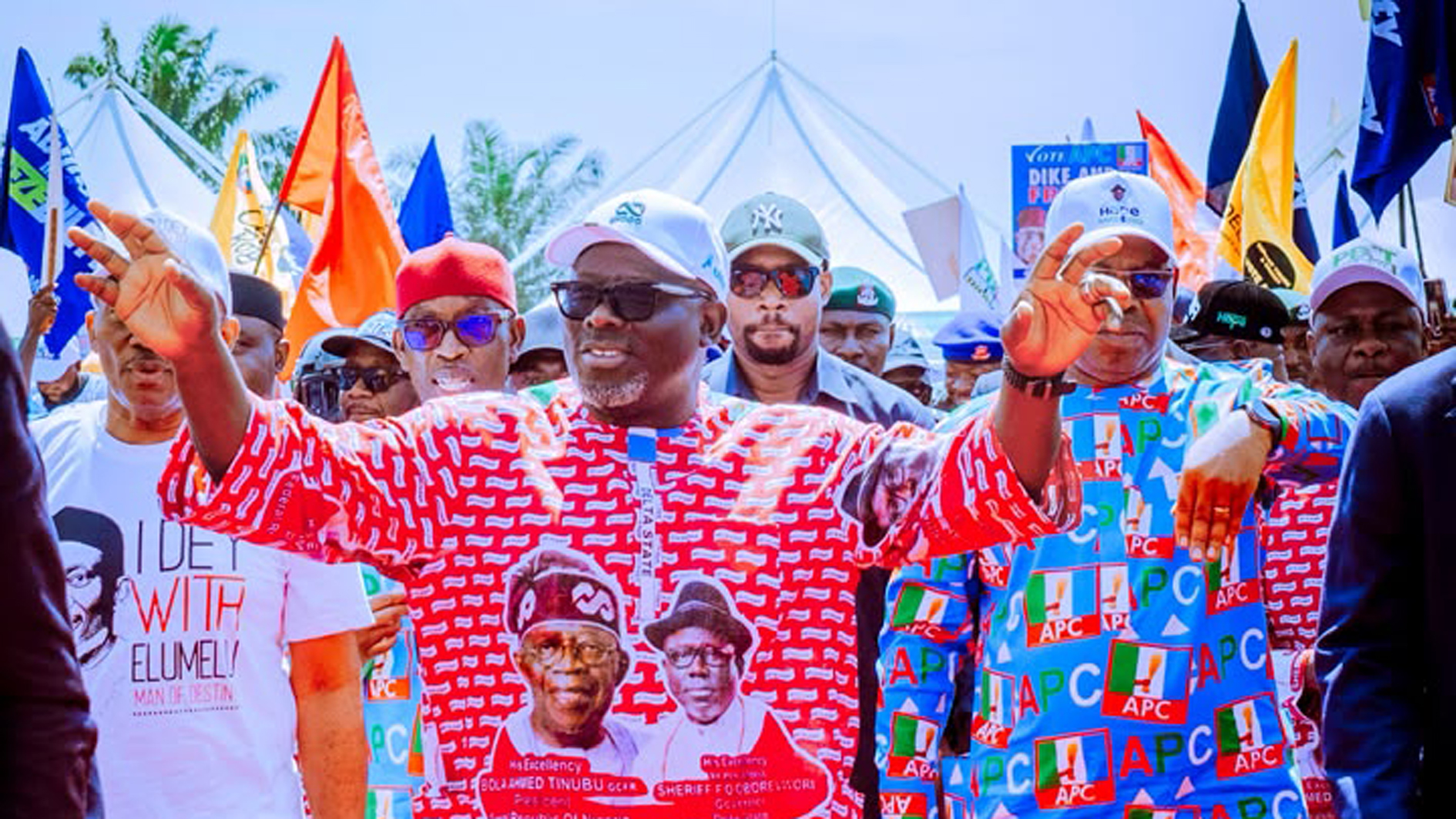
Politically, Oborevwori has also been taking his administration’s message to communities across the state as the 2027 general election approach. At rallies in Oshimili North, Oshimili South, Warri South-West and Udu, he has consistently linked his development programme to the importance of grassroots participation and political support.
In Akwukwu-Igbo, headquarters of Oshimili North, he expressed confidence in the APC’s grassroots support, declaring that the party did not need to buy votes where it already enjoyed the people’s backing. He recalled the electoral support recorded by the local council in the last election and urged residents to sustain their participation in the political process.
At Ogbe-Ijoh and Otor-Udu, he commended the unity among political leaders, traditional rulers, women and youths, urging them to support President Bola Tinubu and other APC candidates.
The governor has also credited the economic reforms of the Tinubu administration with improving the revenue capacity of state governments, arguing that increased allocations have strengthened his government’s ability to execute projects and meet financial obligations, including the approval of a 13th-month salary for state workers.
Meanwhile, the Nigeria Union of Journalists (NUJ) has recognised Oborevwori with its Media-Friendly Governor of the Year Award, citing his administration’s relationship with journalists and commitment to press freedom.
Presenting the award at the union’s fourth Annual Milestone Recognition of Media Icons in Abuja, NUJ National President, Alhassan Yahya, said the administration had maintained a cordial relationship with journalists.
In his keynote address, Oborevwori described a free and responsible press as indispensable to democracy, stressing that journalists must uphold accuracy, fairness and integrity, particularly at a time when misinformation and unverified reports are spreading rapidly through digital platforms.
Oborevwori, who was represented by his Chief of Staff, Johnson Erijo, said: “Public trust is the foundation of journalism. Once lost, it is difficult to regain.”
The NUJ recognition, coming alongside The Sun award, has drawn attention to another aspect of governance: the relationship between government and institutions that hold public office accountable.
For Oborevwori, the latest honours come at a time when his administration is pursuing an extensive programme of infrastructure renewal, educational investment and economic expansion.
As the state moves towards another election cycle, the expectations of citizens will remain firmly tied to these practical outcomes.