
 Get Guardian on Google
Carte blanche is a French expression that literally means a “blank card” and figuratively refers to unhampered freedom, permission, or authority to act as one wishes.
In the context of this essay, carte blanche represents the relative freedom of literature in its relationship with literary theories and criticism. It raises question the question of whether literature possesses an independent existence, or does it require the intervention of literary theories and criticism to become meaningful? Put differently, can literature function as a self-sufficient artistic creation, or is its intellectual and interpretative significance dependent on critical frameworks?
This question emerged during a discussion among colleagues concerning the relationship between literature and literary criticism. One position maintained that literature without literary theories and criticism is hollow, while the opposing position argued that literature can exist and function independently of both. However, the debate becomes more complicated when we consider that literature is not simply a narrative arrangement of events. It is also a complex artistic, cultural, historical, psychological, and ideological expression whose meanings may extend beyond the intentions of its author.
The central argument of this essay is that literature can exist independently of formal literary theories and criticism, but its interpretation, intellectual depth, and critical possibilities are significantly enriched by them. Consequently, literature may possess carte blanche as a creative practice, but its interpretative possibilities are rarely exhausted by narrative alone.
Beyond Narratology
To argue that literature is merely narrative is to reduce its artistic and intellectual possibilities to the arrangement of events, characters, and actions. Narratology, as the systematic study of narrative structures and techniques, offers valuable tools for examining how stories are constructed. However, literature encompasses more than the mechanics of storytelling.
A literary text may communicate cultural assumptions, political ideologies, psychological conflicts, historical experiences, and philosophical questions. These dimensions are not always immediately apparent through a straightforward reading of the narrative. Literary theories and criticism provide conceptual frameworks through which such meanings can be identified, examined, and challenged.
For instance, a postcolonial reading of a novel may reveal how colonial power operates through language, representation, and cultural identity. A psychoanalytic interpretation may investigate unconscious desires, repression, and conflicts within a character. A feminist reading may expose gender hierarchies that a conventional interpretation overlooks, while a post-structuralist approach may question the assumption that a literary text possesses one stable and definitive meaning.
These approaches demonstrate that literary criticism does not merely repeat what a text says. It interrogates how a text produces meaning, whose interests it represents, what assumptions it reproduces, and what possibilities its language opens up.
Nevertheless, this does not mean that literature cannot exist without criticism. A poem may move its reader, a play may entertain its audience, and a novel may communicate an experience without either the writer or the reader possessing formal knowledge of literary theory. The distinction, therefore, is between literature’s existence as an artistic creation and the various critical possibilities through which its meanings can be explored.
Beginning of Literary Criticism
The relationship between literature and criticism can be traced to ancient Greek philosophical debates about mimesis, a term commonly translated as imitation or representation. The concept raises questions about the relationship between artistic representation and reality, does literature reproduce the world as it is, represent the world as it appears, or construct an alternative reality through artistic imagination?
Plato’s Republic, particularly Book X, provides one of the most influential philosophical examinations of this question. In his discussion of poetry and imitation, Plato expresses reservations about the epistemological, moral, and psychological implications of poetic representation. His argument is connected to his philosophical understanding of reality, knowledge, and the ideal state.
For Plato, the imitative poet does not necessarily possess genuine knowledge of the things represented. Rather, the poet may reproduce appearances without understanding the underlying truth of the objects or actions depicted. Plato also worries that poetry can stimulate emotions and encourage forms of behaviour that conflict with rational self-government. Consequently, he proposes restrictions on the presence of certain poets and poetic representations within his ideal republic.
It would, however, be inaccurate to conclude that Plato simply denied the existence or value of literature. His position is more complex, he recognises the power of poetry while questioning its authority, truthfulness, and moral influence. His philosophical opposition to particular forms of poetry is itself evidence of how seriously he takes its capacity to shape human consciousness and society.
This is where the significance of literary criticism becomes apparent. Plato’s argument provides a framework for asking whether literature is truthful, morally defensible, or socially beneficial. His position does not establish that literature is hollow without criticism; rather, it demonstrates that literature can become the object of systematic philosophical examination.
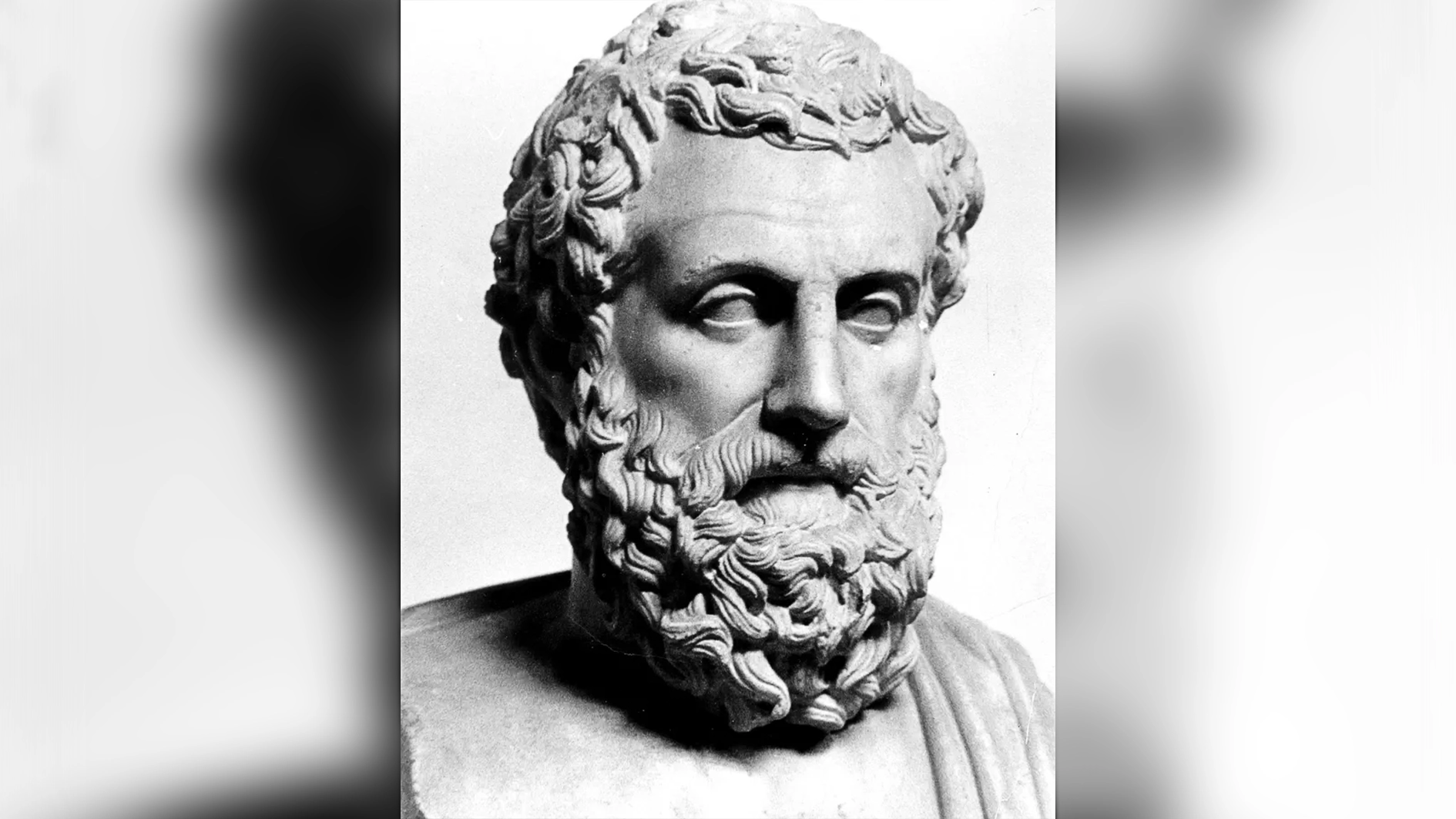
Aristotle’s Poetics
Aristotle’s Poetics offers another foundational contribution to the study of literature. Although Aristotle engages with questions that also concern Plato, his treatment of poetry differs substantially from the Platonic position. Rather than approaching imitation primarily through the suspicion that it distances human beings from truth, Aristotle examines the nature, structure, and effects of poetic representation.
For Aristotle, mimesis is a fundamental aspect of artistic creation and human learning. Human beings derive pleasure from representations and can acquire understanding through them. Poetry, therefore, should not automatically be regarded as an inferior imitation of reality. It can represent universal patterns of human action and experience, allowing audiences to recognise possibilities that extend beyond particular historical events.
In discussing tragedy, Aristotle emphasises plot, character, thought, diction, melody, and spectacle, identifying plot as the principal organizing ele…
By Muhammed Lawal