
 Get Guardian on Google
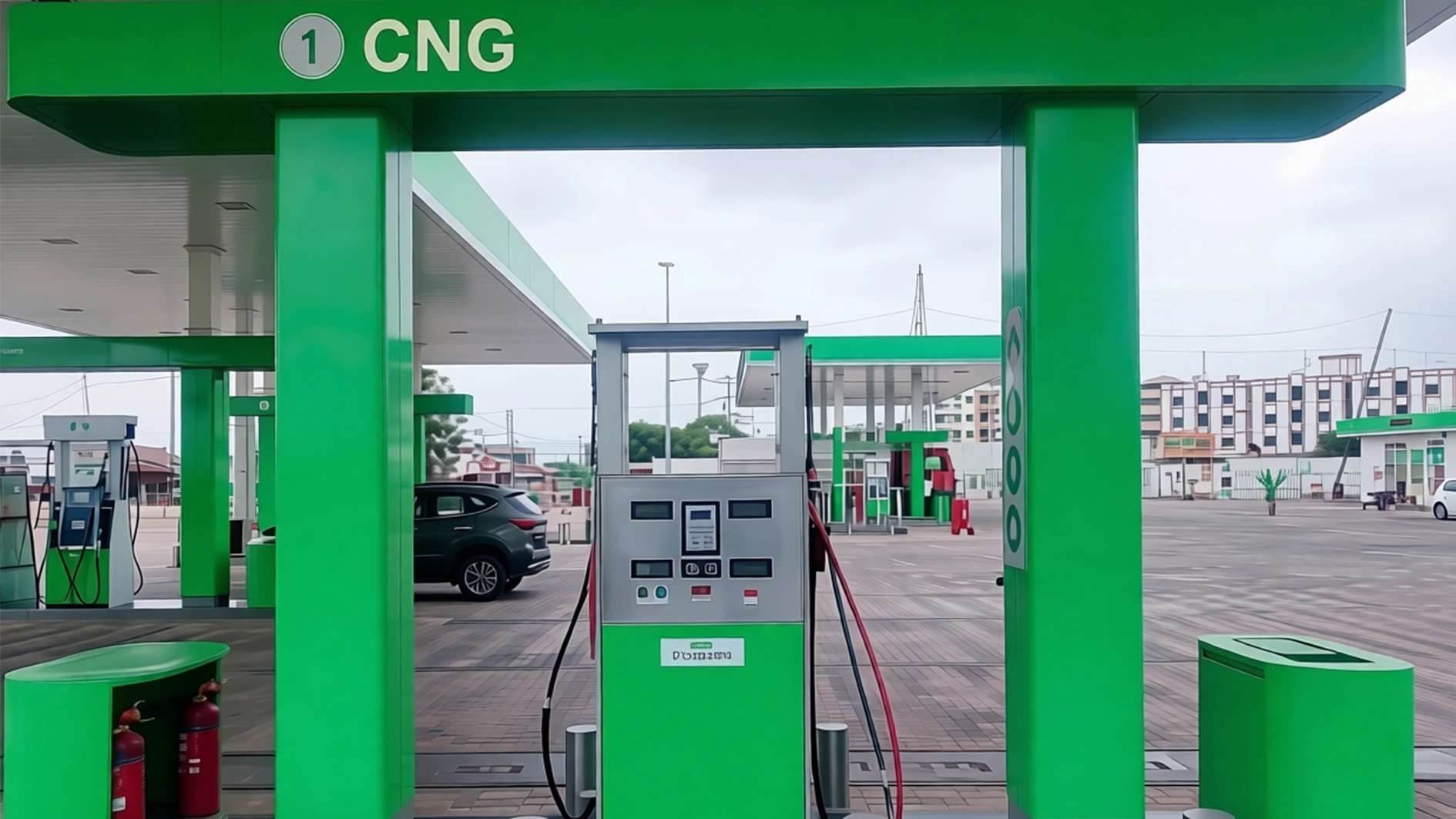
The Federal Government, through the Midstream and Downstream Gas Infrastructure Fund (MDGIF), has begun expanding its Compressed Natural Gas (CNG) infrastructure across public tertiary institutions, with plans to cover 60 universities.
This aims to reduce transportation costs for both students and staff in Nigeria’s tertiary institutions.
Minister of Education, Dr Tunji Alausa, disclosed this during the commissioning of CNG refuelling stations and vehicle conversion centres at the University of Lagos (UNILAG), the University of Ibadan (UI), the Federal University of Technology, Akure (FUTA), and the Federal University, Oye-Ekiti (FUOYE).
Alausa said the intervention was aimed at reducing the financial pressure on students who spend a significant portion of their daily expenses on moving between their hostels, lecture halls, and other university facilities.
He, however, urged university authorities and transport operators to ensure that the lower operating costs associated with CNG are reflected in student fares.
He added that the stations would also provide practical training opportunities for students, particularly those studying engineering and other technical disciplines.
Executive Director of the Midstream and Downstream Gas Infrastructure Fund (MDGIF), Oluwole Adama, said the commissioning brings the number of universities with operational CNG stations under the joint initiative with FEMADEC Energy Limited to 11.
He listed the other institutions as Yakubu Gowon University, Abuja; Federal University of Technology, Owerri; Obafemi Awolowo University (OAU), Ile-Ife; University of Uyo; University of Calabar; Federal University of Petroleum Resources, Effurun; and University of Nigeria, Nsukka, Enugu Campus.
Adama said the Fund had supported 25 fully operational CNG stations nationwide in two years, while nine additional stations, mostly in northern Nigeria, are expected to be commissioned within weeks.
He added that its portfolio comprised 31 projects and 205 infrastructure assets across the country.
He said the investment was intended to ensure that Nigeria’s gas resources translated into infrastructure that people could put to productive use.
Adama, therefore, urged students to take interest in the technology behind the facilities, noting that engineering, digital systems, safety, maintenance, research and enterprise were among the opportunities the gas industry offered.
In his remarks, the Chief Executive Officer of FEMADEC Energy Limited, Fola Akinnola, said the company was completing work on six additional universities scheduled for commissioning before the end of the year, while the remaining three institutions in the initial 20-campus rollout would be completed early next year.
He said the company began the project with three universities before extending it to four more institutions in the South-South and South-East, bringing its coverage to 11 with the latest commissioning.
Also speaking, National President of the National Association of Nigerian Students (NANS), Akinteye Babatunde Afeez, said transportation remains one of the major daily expenses confronting students.
He said the success of the programme would be measured by whether students actually pay lower fares and enjoy more reliable transport services.