
 Get Guardian on Google
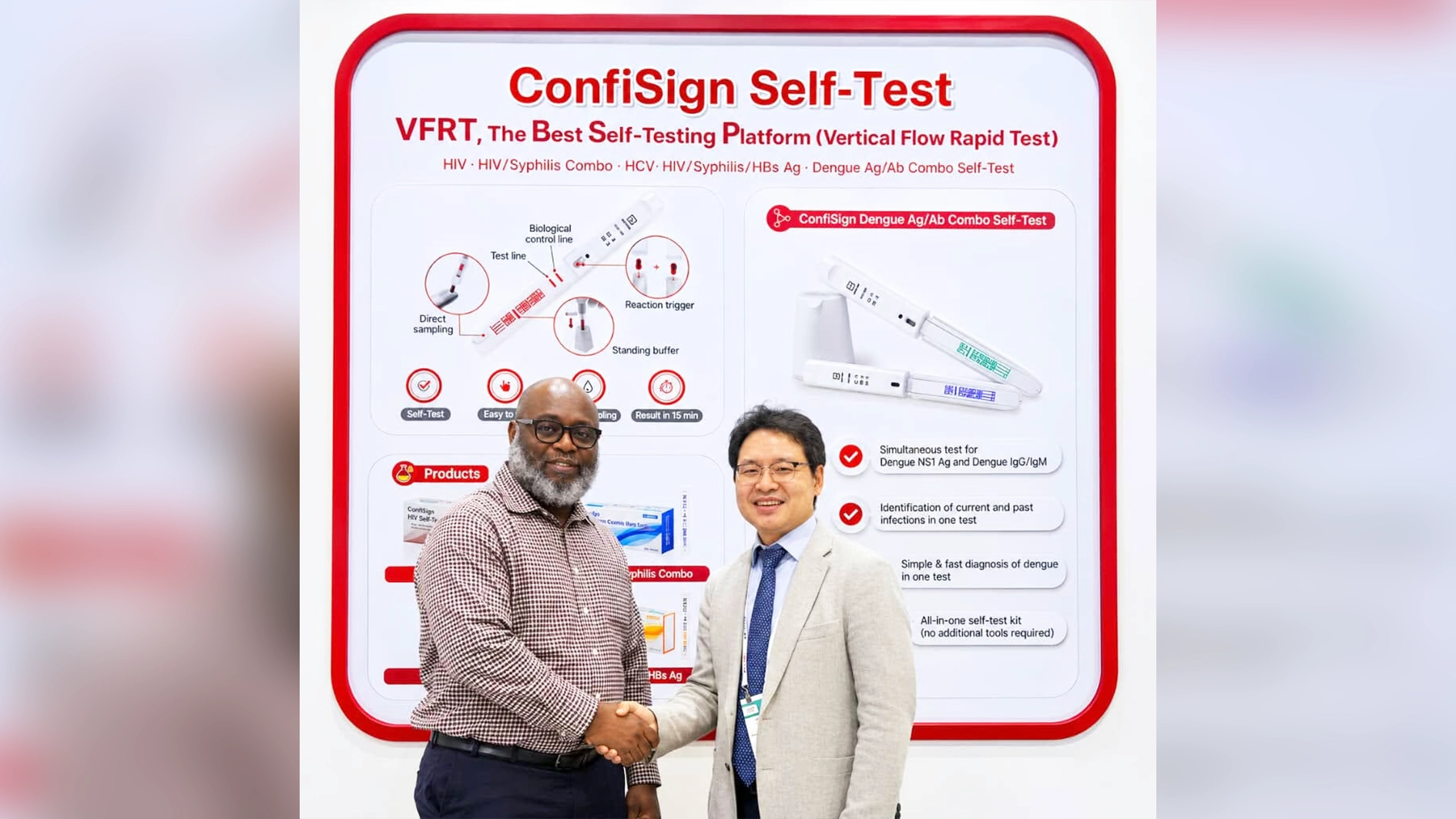
A Nigerian diagnostics manufacturer, Ash Biomedical Diagnostics Limited, has partnered with South Korea-based GenBody Inc. to introduce and locally manufacture the ConfiSign HIV Self-Test, in a move aimed at strengthening Nigeria’s diagnostic manufacturing capacity and expanding access to HIV testing.
Under the partnership, Ash Biomedical will serve as GenBody’s strategic partner for the local manufacturing and distribution of the product in Nigeria once its manufacturing facility in Idu, Abuja, is completed.
The company said the ConfiSign HIV Self-Test is among a limited number of globally approved products of its kind, with Nigeria potentially serving as a production and distribution base for the wider West African market.
The partnership will involve technology transfer and training, providing Ash Biomedical with access to international expertise and technical capacity to support local production.
The development comes amid growing calls for increased domestic manufacturing of essential healthcare products to reduce dependence on imports and strengthen Nigeria’s healthcare supply chain.
The HIV self-test is designed to allow individuals to check their HIV status privately and conveniently, potentially addressing some of the barriers that discourage people from accessing conventional testing services.
Chief Executive Officer and Managing Director of Ash Biomedical Diagnostics, Adetoyese Shodeinde, said the partnership went beyond introducing a new diagnostic product into the Nigerian market.
He said it reflected growing confidence in the capacity of Nigerian companies to deliver quality healthcare solutions while building local manufacturing capabilities.
“For us, this partnership is about more than bringing a new product into Nigeria. It is about building confidence in what Nigerian companies can deliver in healthcare,” Shodeinde said.
“We want Nigerians to know that quality, reliability and innovation can be part of the healthcare solutions available to them, while also building the local capacity to manufacture and support these solutions here in Nigeria.”
On the manufacturing component, Ash Biomedical said its diagnostics production facility in Idu, Abuja, had entered the final phase of development.
It said the facility’s structure had been completed, while production equipment was being installed and cleanroom development was underway.
The company said commissioning was targeted for the first quarter of 2027.
The facility is expected to support its long-term ambition of expanding local production of rapid diagnostic products and reducing reliance on imported test kits.
Ash Biomedical said it had supplied 15 million test kits over 15 years through more than 66 government and institutional contracts across 27 states, with its products reaching all 36 states of the federation.
It added that independent hospital evaluations involving APIN Reference Laboratory, NISA Premier, Garki Hospital, Police Clinics and the National Hospital, Abuja, recorded 100 per cent concordance between its rapid-test results and reference laboratory results across infectious diseases, pregnancy and malaria testing.
Shodeinde said the company’s experience in the Nigerian diagnostic market had provided a foundation for the new partnership.
“We have spent years building the systems, products and relationships that give us the confidence to take this next step,” he said.
“Our responsibility now is to continue earning the trust of the Nigerian healthcare system and, most importantly, the people whose lives depend on accurate and timely diagnosis.”