 Follow Us on Google News



 Follow Us on Google Discover
Germany, Europe’s largest economy, is confronting an ageing population and a growing shortage of skilled workers, forcing the country to look beyond its borders for talents to sustain key industries and economic growth. Nigeria, by contrast, has one of the world’s largest and fastest-growing youth populations, yet struggles to translate this demographic advantage into productive employment. Against this backdrop, NGOZI EGENUKA who was in Germany, examines the country’s response to its workforce challenge through education, vocational training, labour-market reforms and migration policies. Her findings offer important lessons for Nigeria on how to equip its young population with market-relevant skills, create pathways to decent employment and position the country to benefit from the rapidly changing global world of work.
Nigeria currently sits on one of the greatest advantages in the world today. It is not only the abundance of natural resources that gives the country an edge, but also its young and energetic population.
According to data from the International Labour Organisation (ILO), Nigeria ranks first in Africa and approximately 12th globally when measuring the absolute size of its youth workforce, with a labour force of about 73 million people.
Between 3.5 million and four million young Nigerians enter the labour market every year. Of this number, about 1.7 million are graduates from universities and polytechnics, while thousands of young people search for opportunities every year. Yet, despite this enormous human resource advantage, Nigeria continues to struggle with the challenge of providing employment for its teeming youths.
Young Nigerians are frequently told that there are no jobs available in the professions they studied and that they should consider learning a skill. While acquiring practical skills is important, the bigger question remains: why has a population of this size not translated into an equally large number of opportunities?
While Nigeria has not figured out how to fill this vacuum, Germany is searching for enough workers to sustain its economy as a result of its ageing population. The country has built a system where practical skills are not viewed as inferior alternatives to academic qualifications. Technical skills are highly valued and considered essential part of the economy. This difference in perception has significant consequences for both countries.

Germany’s workforce dilemma
According to Statista, Germany is increasingly relying on skilled migration because the number of people available to work is expected to decline significantly in the coming decades. Nigeria, meanwhile, has one of the largest pool of young people globally, but is still working to convert that demographic advantage into economic opportunities.
The lesson from Germany is not simply about migration. It is about how a country prepares its people, connects education with industry, values technical skills and builds systems that allow individuals to contribute meaningfully to the economy.
To worsen the situation, the country’s fertility rate has also remained low, with approximately 1.3 children per woman, a figure that reflects a long-term demographic shift as reported by German Federal Statistical Office (Destatis). Kipp explained that Germany’s current workforce is about 45 million people. Without net migration, projections suggest that this figure could reduce significantly by 2060.
Again, the challenge is not simply having fewer people. It is having fewer people with the specific skills required to keep important sectors running. Areas facing shortages include healthcare, education, engineering, skilled trades, energy, construction and information technology. This is a cheery news for foreigners, including Nigerians who have such skill-sets. Unfortunately, not every applicant gets the opportunity.
A consultant at the Thuringian Agency for Skilled Personnel Marketing, Maximilian Schlüter, explained it better. “Germany’s labour shortage does not mean every foreign applicant automatically has an opportunity waiting. Migration has to be based on matching skills with actual economic needs,” he said.
The outcome of this philosophy is that Germany operates on an approach that is built around structured migration rather than simply bringing in people. Before the updated Skilled Immigration Act, there was just one way to migrate which was through a recognised qualification, meaning that one needed to possess a vocational or University degree that was recognised in Germany. However, with the new Act, there are three pillars for skilled labour migration. They are: qualification pillar, which allows one migrate to Germany based on the fellows credentials; two, experience pillar, that allows someone who doesn’t have a German recognised qualification but has worked for a long time have a path to migrate and lastly, the potential pillar, which means that even if a person doesn’t currently have an employer in Germany, such a person can travel and search for a job in Germany.
To get the blue card, which is for university degree holders, one need to have an employment contract which meets a certain salary threshold. Interestingly, the threshold has been lowered to allow more migration. On the experience pillar, someone who wants to migrate and work in Germany needs to prove that he has a state-recognised degree in his home country, that he has worked for at least two years in that profession and has had a salary threshold of 3,800 Euros. This, however, doesn’t work in all professions.
For example, sensitive sectors like medical and electrical fields require qualified German-standard certifications to be eligible for work.
Underscoring the exigency of the times, such eligibility processes, which used to be complex and time-consuming and had to be obtained before one travels to Germany, have now eased up. It is now possible to start the process while already in Germany. The implication is that an applicant may have an employer who allows him or her to come to Germany with a recognition partnership agreement. Under this arrangement, the employer supports the procedure such that the person can start work even outside the fellow’s core professional competence until the recognition process is completed. Despite the allures of these offers, international recruitment comes with a lot of challenges with language barrier, which is a major drawback.
Language at the foundation of German migration
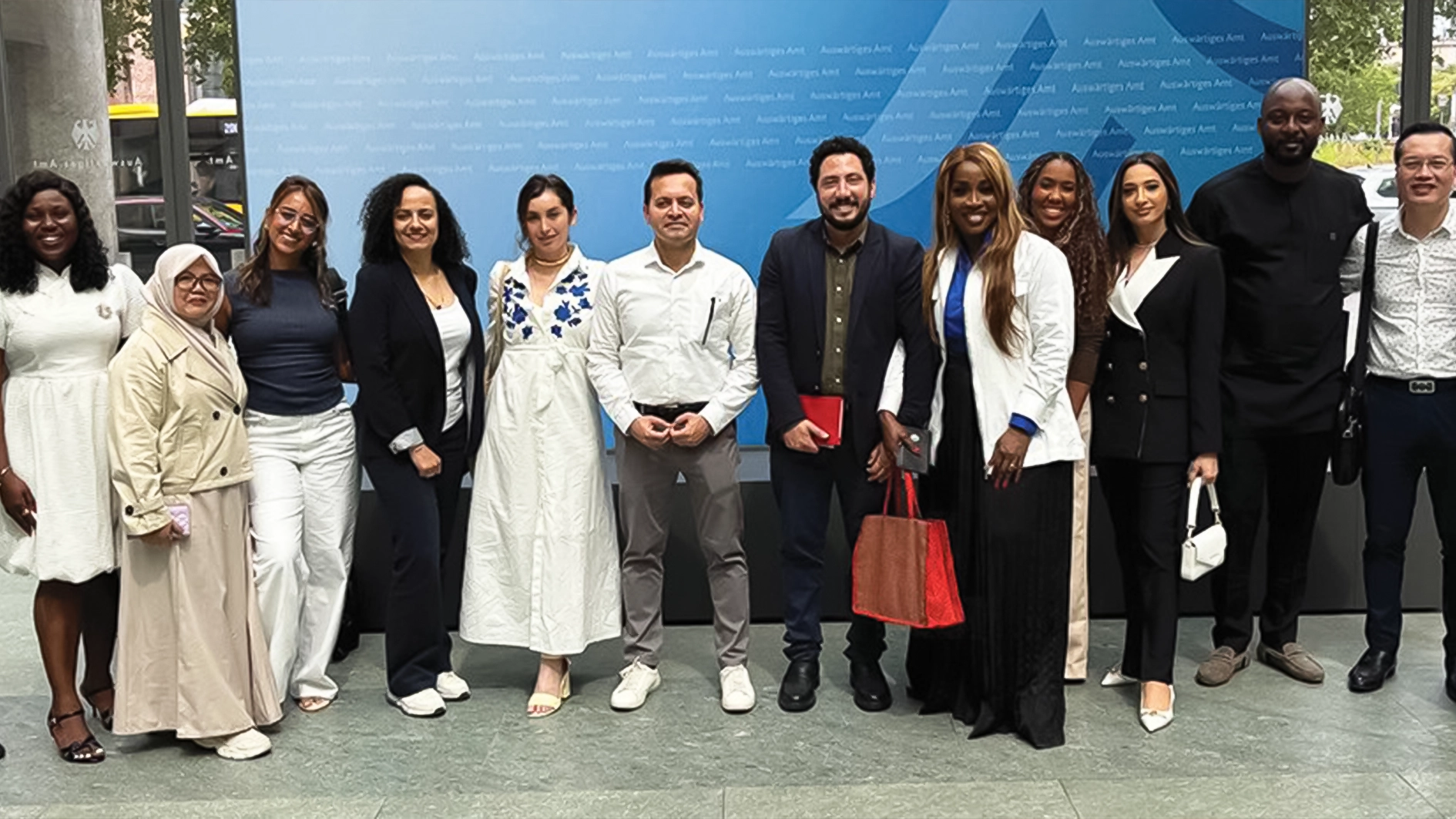
Across the institutions visited by The Guardian, and even among migrant workers, one message was consistently repeated – learning German before travelling significantly improves the chances of success.
Language is not only about securing employment. It is also about integration into society, understanding workplace culture and reducing dependence on others. For Nigerians interested in Germany, learning the language before leaving the country is the first consideration. Although some new migration pathways have reduced language requirements at the entry stage, practical experience shows that people with stronger German language skills have better outcomes.
Formal recognition is A2 for German language as this can get you approval to migrate to Germany, but most employers want foreigners with at least B1 level. Although this level of understanding is still insufficient, faster opportunities are accessible to people with B2 level. Experts noted that individuals who arrive without language skills often spend valuable time trying to learn German, while also searching for employment. Because some job-search pathways have limited periods, this can reduce their chances of finding suitable work. The recommendation was therefore simple: preparation should begin at home.
Germany’s search for skilled workers not for everyone
Germany’s growing demand for workers has created opportunities, but officials repeatedly emphasised that migration must be based on skills, preparation and realistic expectations. Germany is not simply looking for people to fill any available position. It is looking for people whose qualifications match areas where the economy has genuine needs.
The most frequently mentioned sectors include healthcare, nursing, engineering, construction, energy, information technology, electrical professions, transport, manufacturing and skilled trades. However, there is an important distinction between needing workers and having vacancies available for every applicant. This is because some industries receive enough applications domestically, while others continue to struggle to find qualified professionals. This is why Germany, under the Skilled Immigration Act, has moved away from an older system where employers had to first prove that no German or European worker was available before considering someone from outside Europe.
That requirement changed as Germany recognised that demographic changes had created a different reality.
The previous system created delays because companies had to complete lengthy processes before recruiting internationally. Today, the approach is more focused on making it easier for employers to access global talent while still ensuring that workers have the necessary skills.
But challenges remain. For companies, recruiting from abroad involves additional costs and responsibilities. A company does not only have to find a qualified worker. It may also need to support relocation, accommodation, paperwork and integration. Housing, especially in cities such as Berlin, has become a major challenge. Companies explained that even when they find international workers, accommodation can become a barrier because there are not enough affordable apartments available, even for residents.
Fighting misinformation around migration
One of the strongest messages from Germany’s migration officials was the need to address misinformation.
Special Representative for Visa Digitisation and Skilled Labour Immigration, German Federal Foreign Office, Dr Martin Bergfelder, explained that as interest in moving abroad increases, many prospective migrants depend on unofficial agents who promise guaranteed jobs, guaranteed visas or shortcuts. He warned that many of these promises are unrealistic. People, he said, are sometimes encouraged to apply for jobs that do not match Germany’s actual labour demand or are asked to pay large amounts of money for
services that do not guarantee results.
Some prospective migrants are promised instant jobs, jobs that do not exist or are encouraged to pursue professions where demand is limited. Others receive inaccurate information about salaries. For example, some people expect that obtaining a degree automatically means earning the same salaries as experienced professionals working in major international companies. However, Germany’s labour market is largely driven by small and medium-sized enterprises (SMEs).
Although large companies attract attention globally, a significant portion of Germans are employed by SMEs. These businesses may offer stable employment and career growth, but salaries are often different from the figures people see from multinational corporations. For example, entry salary is usually between €40,000 to €50,000 gross yearly and after-tax deductions and other obligations, net is usually around €25,500 to €33,000 per year. Understanding this reality before migration is important. Migration decisions based on unrealistic expectations can create frustration for both workers and employers.
Bergfelder urged prospective migrants to rely on official information channels. One of these platforms is: Make it in Germany, the government’s official information portal for skilled migration. The platform provides information on employment opportunities, visa requirements, recognition of qualifications, language learning and life in Germany. Nigeria is among the countries with highest interest in Germany’s skilled migration opportunities, ranking fifth among countries accessing the platform.
The German vocational training model
The German dual vocational education and training system is one of the country’s strongest tools for preparing young people for employment. The system combines classroom learning with practical workplace experience. Students spend part of their time in vocational schools and the majority of their training period inside companies. The model creates a direct connection between education and industry needs. Unlike systems where vocational education is often viewed as a second choice for students who cannot pursue university education, Germany considers it an equally respected pathway.
The German system currently has about 330 recognised dual training profiles covering different areas of work. These include professions in manufacturing, healthcare, commerce, agriculture, crafts, technology and other sectors.
Each training profile has nationally recognised standards defining the skills trainees must acquire, duration of training, examination requirements and responsibilities of companies and vocational schools. Companies play a central role. They provide workplace training and pay apprentices, while the government supports vocational schools.
For Nigeria, this raises an important question: Can the country build a system where technical skills, craftsmanship and vocational careers receive the same respect as university degrees? This would require a lot of awareness and policy change in a country where HND and OND holders are constantly discriminated against, even as they have a better holistic training due to the practicality of their programme than university graduates.
Nigeria has however begun making efforts in this direction. The Technical and Vocational Education and Training (TVET) sector is expanding as the country attempts to address youth unemployment, which remains above 40 per cent among young people according to available labour market estimates. Nigeria’s Minister of Education, Dr Maruf Tunji Alausa, said the Federal Government in 2025, has launched programmes aimed at training 1.3 million young people through more than 1,600 centres, with an initial cohort of about 260,000 participants across 28 skill areas, including areas such as GSM repairs, tiling, agriculture and other technical skills. However, the challenge is not only in training people. The bigger challenge is connecting skills with actual economic opportunities. Germany’s experience shows that vocational education works best when employers, government institutions and training providers operate together.
Germany’s approach to entrepreneurship and business continuity
Across different sectors in Germany, there was a strong culture of preserving skills, companies and family enterprises across generations. Managing Director, Menzel Elektromotoren, Mathis Menzel, said 80 per cent of trainees in Germany work for family owned businesses. He said these are the businesses that educate and employ people in Germany, adding that a huge part of the population in Germany work for these family-owned small and Medium sized companies with less than 500 employees.
In Germany, a family name can often represent decades or even centuries of expertise in a specific craft or profession. For example, Müller is an occupational name for someone who operates a grain mill, Schneider, a tailor; Schmidt, a blacksmith or metalworker, while Fischer is a fisherman. On sustaining family-owned businesses, he said low debts produce healthy businesses. Menzel explained that family businesses were able to thrive during COVID-19 because they owned their property and equipment. “For example, during the pandemic, you could see big layoffs in America but not in Germany because they considered that if they did that, they wouldn’t find replacements in six months to come. So, you can think differently if you don’t have to report every quarter to investors,” he said. Menzel said there are businesses that have lived up to 400 years.
According to him, a company is not always viewed as something to replace with a new idea. It can be something to develop, improve and pass on. This differs from a common perception in Nigeria, where entrepreneurship is often associated with creating something new. Many young Nigerians aspire to establish their own businesses rather than continue or expand existing family enterprises.
However, Germany’s experience shows the economic value of preserving institutional knowledge. A craft, company or skill developed by one generation can become an asset for future generations. For Nigeria, the question now becomes whether existing businesses can also be strengthened so that knowledge, experience and opportunities are not lost between generations.
Germany’s own challenges: Bureaucracy and housing
The fact-finding mission also showed that Germany is dealing with its own internal challenges. The country may need workers, but bringing those workers in is not always simple. Bureaucracy remains one of the issues discussed by several institutions. Processes involving visas, recognition of qualifications and administrative approvals can take time. Others are housing, especially in major cities, and visa delays or challenges. Bergfelder, responding to these challenges, explained that Germany now has digital systems where people can take advantage of in applying for visas, a feat that was not existing three years ago. “It is still improving, but has helped to decrease waiting and processing time. It also helps applicants find the exact avenues that suit them so they can apply for the right visa and provide all necessary documents before getting an appointment. That way, it screens out the unqualified, and creates opportunities for those who merit it. For students, we have identified their peak moments, which is in summer and put extra capacity to help reduce waiting time,” he said.
Yet, the effort to attract skilled workers sits alongside another challenge: access to visas. The visa issued to me for the visit was tied specifically to the event I was attending, and this was not an experience unique to me. Further research suggested that such restrictions also reflect the wider Schengen visa framework and practices in other countries. While visa rules serve administrative and immigration-control purposes, they can create a tension in Germany’s ambition to attract international talent. If Germany wants to present itself as open to skilled workers, its visa processes and entry conditions must also support that objective rather than make access difficult for people it hopes to attract.
One thing that stood out was the direct communication style often associated with Germans. This quality is sometimes misunderstood as being rude, but it appeared more as a willingness to openly discuss problems. When officials were asked difficult questions or when challenges were raised, they acknowledged them, explained existing efforts and discussed areas that still need improvement.
This approach is valuable because progress requires recognising what is not working. A society cannot fix problems it refuses to discuss. For Nigeria, this presents a broader reflection. Development requires institutions and citizens who can openly identify challenges, debate solutions and demand improvements.
When problems are ignored or explained away, dysfunctional systems can continue for years. The willingness to acknowledge weaknesses is one of the foundations of continuous improvement.

