 Follow Us on Google News


 Follow Us on Google Discover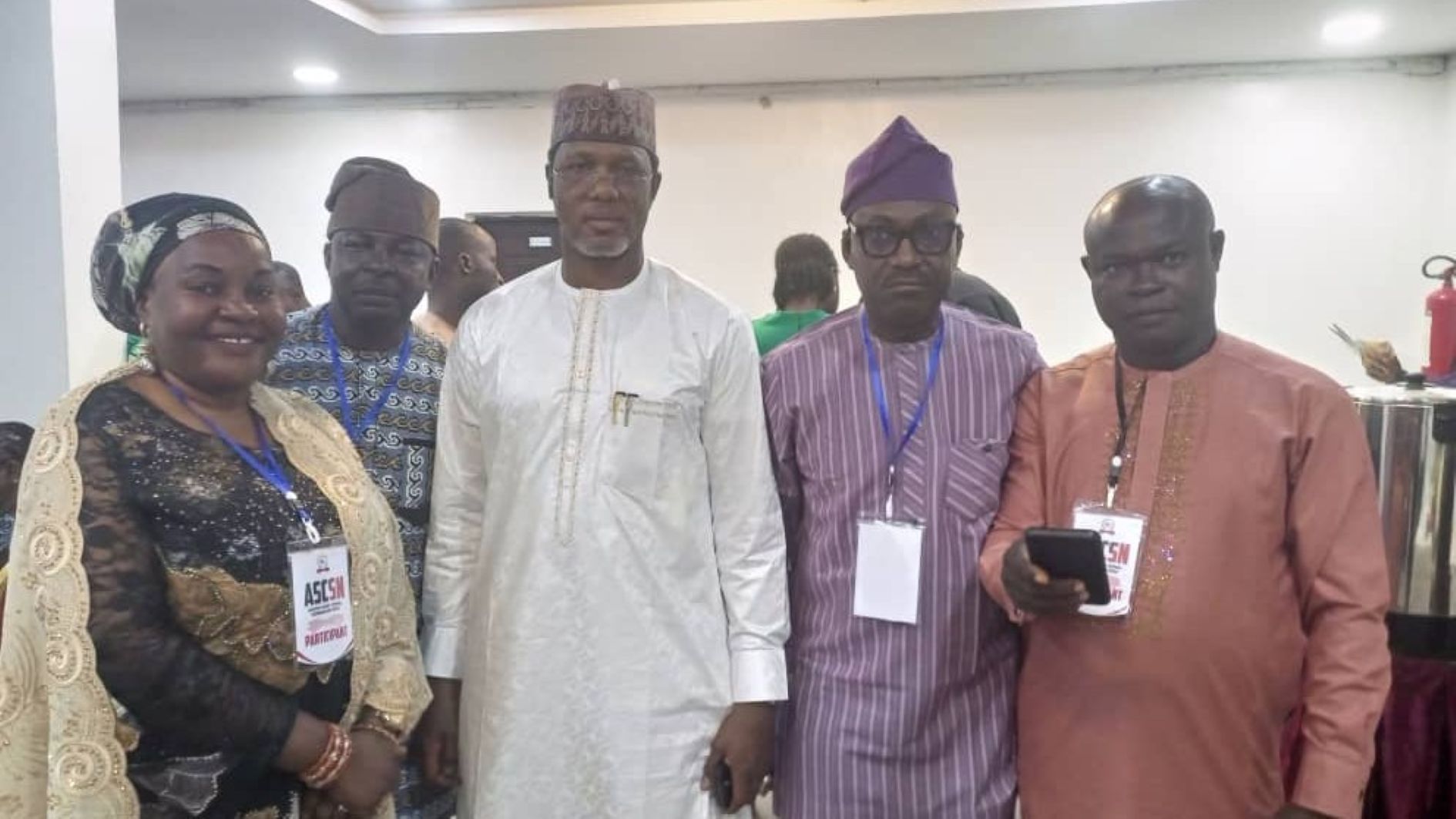
The Federal Government and organised labour have called for a new approach to industrial relations anchored on dialogue, collaboration, workers’ inclusion and mutual respect, saying confrontation should no longer be the first option for resolving workplace disputes.
The call was made at the South-West Zonal Workshop of the Association of Senior Civil Servants of Nigeria (ASCSN), held in Lagos.
National President of ASCSN, Shehu Mohammed, said changing realities in the public service required labour to move beyond reactive confrontation and embrace data-driven advocacy, collective bargaining, early dialogue and strategic engagement.
Mohammed said sustainable progress for Nigerian workers could no longer be achieved solely through industrial friction, stressing that critical labour issues should increasingly be resolved at the negotiating table.
He urged union leaders to approach management deadlocks with institutional solutions rather than immediate ultimatums, while developing modern negotiation skills capable of producing mutually beneficial outcomes for government and workers.
According to him, the shift should focus on three key areas: recognising the link between a strong public service and improved workers’ welfare, engaging government authorities early before disputes escalate, and equipping workers with modern administrative skills.

Representing the Minister of Labour and Employment, the Zonal Director/Controller, South-West, Federal Ministry of Labour and Employment, Mienye Badejo, said collaboration was essential to achieving industrial peace, improved productivity and decent jobs.
Badejo said the ministry’s mandate was to promote industrial peace through dialogue, urging ASCSN to lead a new era of partnership rather than relying primarily on protests.
She noted that industrial confrontation and strikes could have wider consequences for workers’ earnings, government revenue and service delivery, particularly at a time of economic reforms and increasing global competition.
The ministry, she said, was strengthening its role as a bridge between labour and management through mediator training, early-warning mechanisms within Ministries, Departments and Agencies, and enforcement of workplace compliance.
Badejo, however, urged unions to bring grievances to the negotiating table early, armed with facts, research and practical proposals.
Similarly, Chairman of the Trade Union Congress of Nigeria (TUC), Lagos State Council, Abiodun Aladetan, said collaboration with government must be based on good faith, respect for agreements and workers’ participation in decisions affecting their livelihoods.
Aladetan stressed that labour’s willingness to collaborate should not be mistaken for surrendering its voice or abandoning its responsibility to defend workers’ interests.
He said the government must ensure that agreements are honoured, welfare issues receive urgent attention, and workers are included when policies affecting their livelihoods are formulated.
“Collaboration is a two-way commitment. It must show how agreements are honoured, how welfare matters are treated with urgency, and how workers are carried along, not confronted, when decisions affecting their livelihood are made,” he said.
The TUC chairman urged labour leaders across the South-West to make dialogue their first option while remaining firm in protecting their members’ legitimate interests.
He also called on participants to ensure that the workshop translated into practical changes in their respective workplaces rather than becoming a mere talk-shop.
In his welcome address, Chairman of ASCSN, Lagos State Council, Rahmon Balogun, said collaboration did not mean compromising organised labour’s principles or responsibilities.
He said dialogue, negotiation and mutual respect provided a more sustainable pathway for resolving disagreements while promoting a productive and efficient public service.
Balogun said the workshop was designed to equip union leaders with new perspectives and practical strategies for managing industrial relations and strengthening their capacity to represent workers effectively, especially as the call for another negotiation of a new national minimum wage begins.

