 Get Guardian on Google
Alexandra Bardon, in The Intersection of Art and Technology in Visual Culture, noted, “Art and technology have long influenced one another, but never has their intersection been as transformative as it is today. In the digital age, the fusion of technology and art is reshaping visual culture in unprecedented ways — altering how we create, perceive, and experience artistic expression. As technological advancements accelerate, the landscape of visual arts is continually evolving while opening new horizons for creativity and cultural discourse.”
The growing influence of artificial intelligence (AI) and technology on visual arts was the subject of discussion at this year’s Society for Art Collection (Sartcol colloquium), which held at the Alliance Française, in ikoyi, Lagos, on October 31.
Themed, Art Collecting and Technology: Innovation Meets Legacy, the conversation explored issues that were germane to the growth of art in Nigeria, with stakeholders calling for a stronger art market structure in the country.
The intense and engaging session opened new vistas on how innovation could support the growth of the Nigerian art sector while protecting its heritage.
The President and Chairman of Sartcol’s Governing Board, Prof. Okey Anueyiagu, said the theme reflected the realities of the modern world, where technology has become an important part of art collection and preservation.
“Last year, we reflected on preservation and best practices in documenting collections. In our time, technology has become inseparable from this responsibility,” he said.

Early experiments, in the 60s, artists such as Frieder Nake and Harold Cohen began integrating computers into their creative processes, with Cohen developing the drawing programme “AARON.”
By the 90s, the internet enabled artists hadto share their work globally, leading to the emergence of net art and interactive online installations.
Integration of artificial intelligence (21st century) – Artists have incorporated AI into their work, allowing for new forms of collaboration between human creativity and digital creativity through machine learning.
Emergence of NFT art and blockchain technology – The development of non-fungible tokens (NFTs) has transformed the commercialization and authentication of digital art. This creative tech has provided artists with new revenue streams and addressed issues of ownership.
Anueyiagu noted that digital provenance, blockchain authentication, AI-driven cataloguing and virtual exhibitions were expanding the possibilities of art ownership and appreciation while helping to protect shared heritage.
The Director-General of the National Council for Arts and Culture (NCAC), Obi Asika, who joined the event virtually, commended the organisers and expressed the council’s support for the initiative.
He disclosed that Nigeria had an enormous national art collection built over 30 to 40 years, much of which was held by the National Gallery of Art and stored in Abuja.
According to him, the government, through the Ministry of Finance Incorporated (MOFI) and the Minister’s Office, has begun a process to establish a national intellectual property (IP) registry. The process also includes the valuation of the country’s heritage and national art collections.
Asika said the development, alongside the implementation of the IP framework and the IP monetisation pilot report by KPMG, would help Nigeria build a structured art and intellectual property market.
He explained that valuable intellectual property, including art, music, literature and other creative works, could be valued and used as collateral to support production and the creation of new works.
The keynote speaker and founder of Art Exchange, Robert Mbonu, called for Nigeria to develop a professional art market structure similar to those in major art markets such as the United States, the United Kingdom and China.
He said these countries had established systems and indices for rating artists based on the value of their works, adding that Nigeria needed to adopt similar practices one of which is the AE Index Series, which tracks the value of Nigerian artists, both living and deceased.
Mbonu said that the global art market is almost 70 billion dollars a year, but Nigeria is just a little player in that sector. He raised the need to build and support the infrastructure for financing, insurance and deepening this art market.
He identified authentication and provenance, intermediaries and venues, regulatory and legal frameworks, logistics and preservation, and financial and valuation tools as key components of a professional art market.
These include standardised registries, scientific testing, documented ownership histories, galleries, auction houses, dealers, art fairs and digital platforms.
He also highlighted the need for clear contracts, consignment agreements, artist resale rights, anti-money laundering compliance, specialised art shipping, climate-controlled storage, security, restoration services, price indices, auction records, art funds, insurance valuation and critical appraisal networks.
According to him, AI can generate images at remarkable speed but lacks the human understanding of emotions, intentions and deeper meanings that inspire artistic expression.
Speaking with The Guardian, Head of Operations for the Society, Yacoub Adeleke explained that the organisation aims to broaden the public view of art beyond just the artwork and its creator. “This vision drives the Colloquium’s multidisciplinary themes, which bring together diverse professionals to view art as an interconnected ecosystem,” he said.
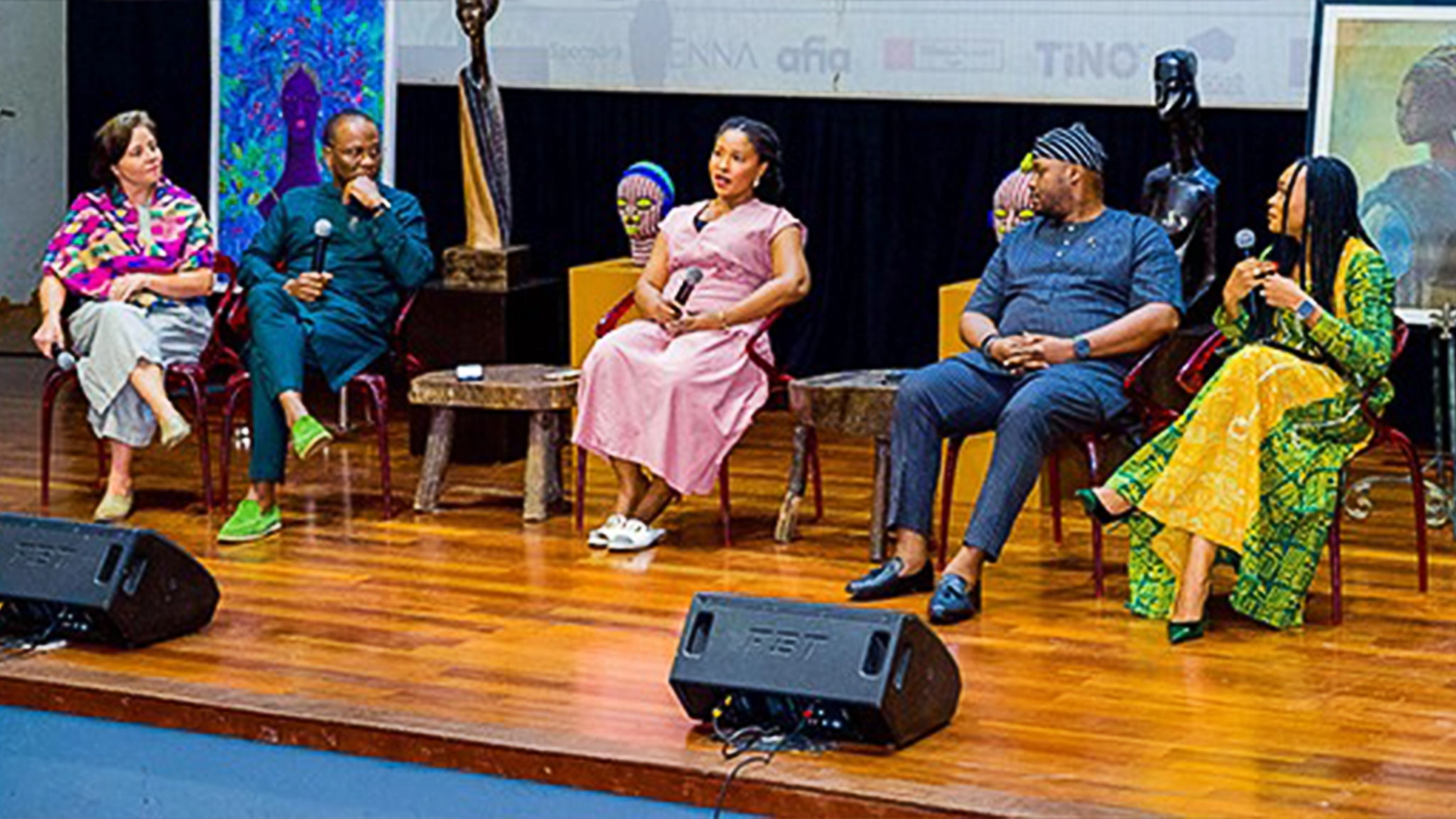
The colloquium also featured a panel discussion moderated by Ngozi Akinyele, Group Executive and Chief Marketing and Communications Officer at Coronation. The panel included Dr. Nadine Siegert, Director of Goethe-Institut Nigeria; Niyi Adenubi, Executive Director, Commercial, VFD Group Plc; Ada Orajiaku, founder of Atsur Technology, an art and blockchain company; and Okechukwu Ekweanya, legal practitioner and partner at Kenna.
On preservation of legacy, the panelists raised the need to deepen heritage such that for each work, each collection, there’s the possibility to invite at least 10 — to not only value the art, but also to produce knowledge that can travel.
They also looked at how to ensure that African stories are properly told, and “that in 10 years’ time, we can actually really stop saying that African stories or African art is not being told or documented in the professional way that preserves value.”