 Follow Us on Google News


 Follow Us on Google Discover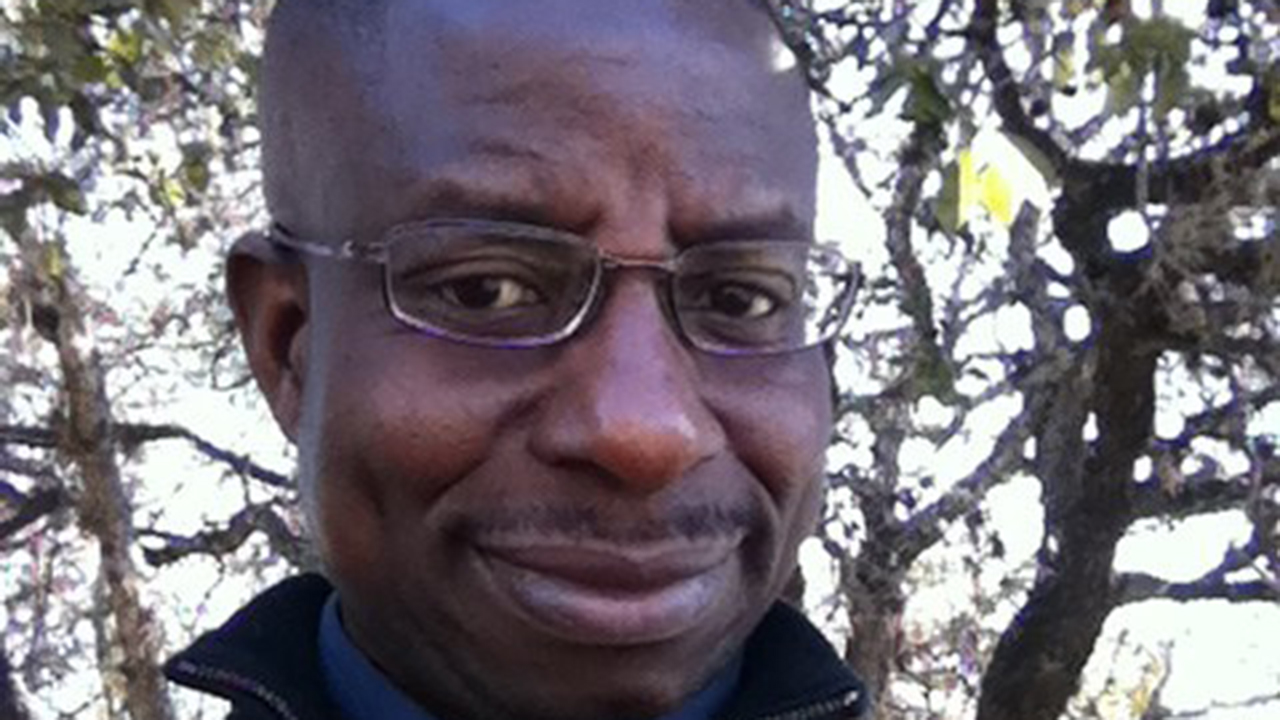
On Friday, October 9, the grand finale of 2026 Nigeria Prize for Literature held at the Eko Hotels and Suites, Lagos. At the event, the poet Ogaga Ifowodo won $100,000 Literature Prize; filmmakers Peter Oke and Feranmi Abiola shared $20,000 Creative Arts Prize.
Ifowodo won the prize for his collection, Why Does God Need a Gun?, The collection was selected from 223 entries.
Announcing the Literature winner, Chairman of the Advisory Board for The Nigeria Prize for Literature, Professor Akachi Adimora-Ezeigbo, described Why Does God Need a Gun? as a sensitive portrayal of religious and political violence in Nigeria, told through the voice of an imagined victim.
She commended the three shortlisted collections for their technical skill, confidence and mature use of language, noting the powerful conversation across the works.
“Equally compelling is the conversation that unfolds across the three books. Though distinct in voice and style, they engage with related concerns: questions of identity and belonging; the promises and disappointments of nationhood; the consequences of extremism and displacement; and the enduring impact of conflict on individuals and communities. These are works deeply rooted in the Nigerian experience, yet they reach far beyond our borders,” she says.
In the inaugural edition of The Nigeria Prize for Creative Arts, Beyond Tarkwa Bay by Oke and Mara Mania by Abiola emerged joint winners from 98 submissions, sharing the $20,000 prize. In his remarks, Managing Director and Chief Executive Officer of NLNG, Adeleye Falade, said The Nigeria Prizes were established to acknowledge outstanding achievement and encourage scientific innovation and literary excellence that enrich society and improve lives.

He noted that the Science and Innovation prize has recognised groundbreaking contributions across critical fields including health, agriculture, engineering, energy, technology, climate resilience and sustainable development.
On The Nigeria Prize for Literature, Falade said it has grown to become one of Africa’s most prestigious literary honours, providing a platform for some of the continent’s finest literary voices.
“Through this prize, Nigerian writers have demonstrated that our stories are far more than accounts of where we come from. They contribute meaningfully to global conversations about identity, resilience and our shared humanity,” he said.
“Together, The Nigeria Prizes have become enduring national institutions and powerful reminders of what is possible when excellence is recognised, rewarded and encouraged,” Falade reveals.
He commended the finalists and winners, noting that every finalist represents discipline and dedication, while every winner represents the triumph of perseverance.
“As we honour this year’s laureates, we also hope to inspire the next generation of scientists, writers and creatives whose ideas will solve tomorrow’s challenges, tell tomorrow’s stories and shape tomorrow’s future,” he adds.
Ifowodo’s entry, Why Does God Need a Gun?, is principally conceived in paradox consummated by religious imperatives. The poet questions morlityof thosethinking they can protect God.The first part of this collection, a series of 26 poems, titled, From the Forest of a Million Demon, answers the existential question . This part reflects on everything from vulnerability to God, etc. “It’s about: God, are you even still there at all? Why do you allow human beings to take your name in vain?”
Ifowodo affirms, “Leah Sharibu Lives is a celebration of that.”
Sharibu, one of the schoolgirls kidnapped from the Government Girls Science and Technical College, Dapchi, Yobe State, in 2018 is the persona through which the poems are interrogated.
“Leah Sharibu becomes a composite figure for all the victims of the scourge of religious terrorism that we are witnessing. And the whole idea of the terrorists’ action is to erase the other, is to deny agency to the other, is to turn, in particular, the girl child and women into non-beings. They actually boasted about making her a slave for the rest of her life,” Ifowodo says.
He notes, “So, the question is: why would God Almighty—the Omnipotent, Omniscient, Omnipresent—why would things made out of clayHe made think they need to protect Him? That is a preoccupation in the collection. Thinking about all the recent activities, especially in the post-Al-Qaeda 9/11 events that are terrorising the world. So, that’s where the question comes from.”
He adds, “initially, they gave Sharibu the option of renouncing her faith. We have not heard a single word from her ever since she was captured. Nobody has seen her. But for those girls who were released, some of them gave the testimony that she refused to renounce her faith.”
Renowned for delivering well crafted poetry, he affirms without hesitation that craft is essential for him. “As a writer, the message is secondary, because there’s nothing that we’re going to write about today—wars, intolerance, love, grief, whatever it is—that has not been there from the beginning of existence. So, it is the how; that’s where the art comes in, even if you are working with wood as a sculptor. So, art is first and foremost. The medium disciplines the message,” Ifowodo says.
Then to the second part, where it goes beyond Nigeria, to Gaza, to the Middle East, to the fatwa pronounced on Salman Rushdie, you know, in another instance of religious intolerance and fundamentalism, of fanaticism, and which was reenacted recently.
“This was when, many years after the original fatwa by Ayatollah Khomeini, now in New York, another fanatic, a young fanatic, who probably has not even read anything written by Salman Rushdie, sought to blind him by plucking out his two eyes. Got one eye,” he quips.
Ifowodo continues, “this reminds me so much of Nelson Mandela, who, as you know, was offered conditional release several times, and each time turned it down until there was complete liberation for the whole of South Africa.
“Of course, Mandela was a full-grown man, already world-known. But here is a little girl, a little girl in school, a teenager, who still had the courage and the astonishing bravery to reject freedom in defence of her belief.
“At a point, I said that this person whom they intend to turn into a slave must be given a voice; must be made to speak; must be made to speak in a book. They forbid the book. Her testimony, her personhood, her womanhood.
By now she’s a woman, but she must be celebrated by way of commemorating her in poetry.”
Ifowodo says, “in all my works—this is my sixth collection—the message is secondary”.
It is the art, the medium through which you deliver the message, that comes first. If the art fails, the message fails.”

