 Follow Us on Google News
 Follow Us on Google Discover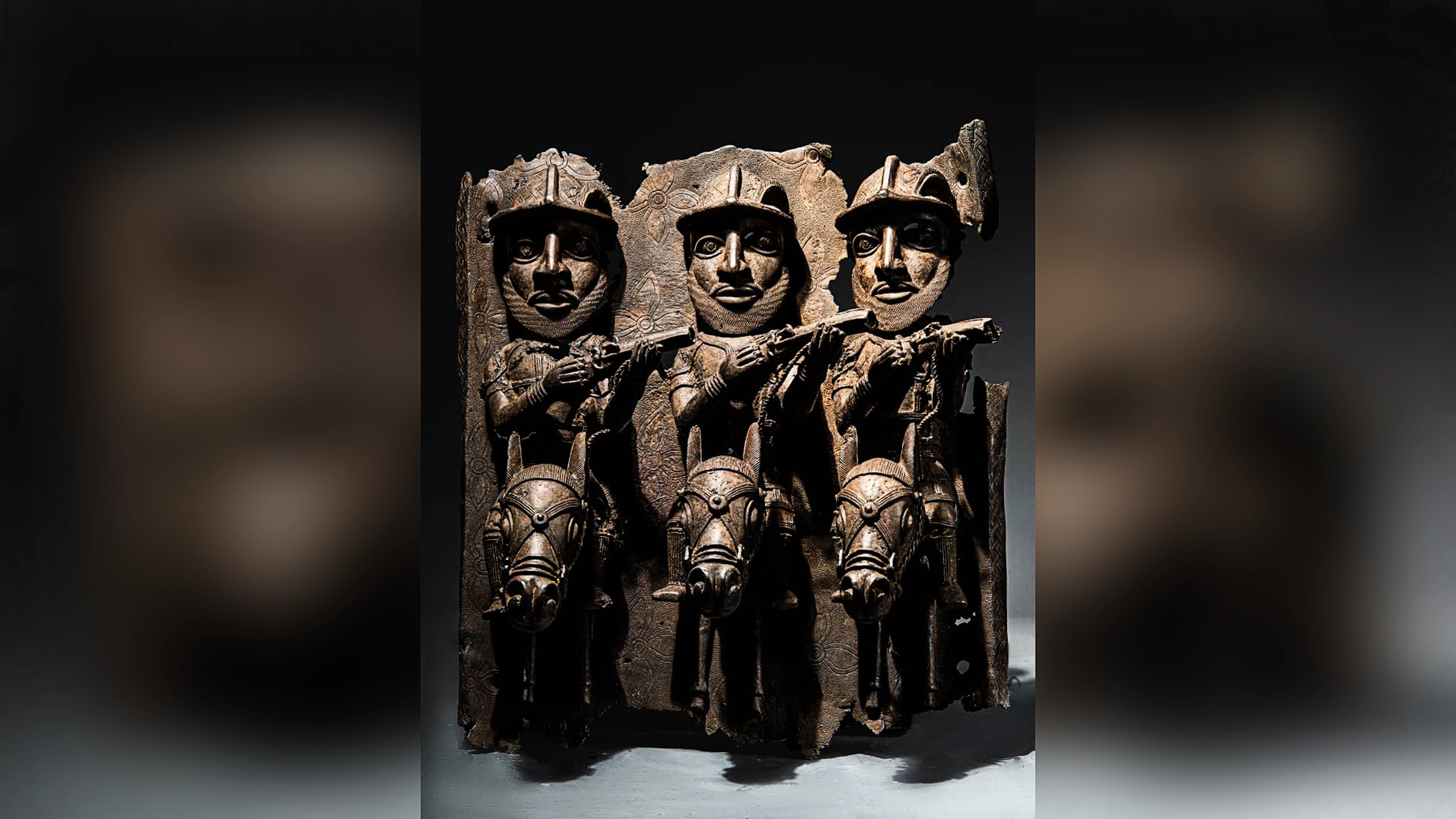
Diplomatic niceties apart, the dignitaries gathered at the Nigerian Embassy in Lisbon as the country marked its 66th Independence anniversary on October 1 were regaled with an exhibition that extended the narrative around the bond between the two countries a little further. No doubt, the event hosted by Ambassador Erelu Angela Adebayo was a celebration of her country’s over six decades of nationhood.
Still, as part of the reception, an exhibition organised by the Ndikama Museum, featuring iconic Benin bronze sculptures and running until October 8, lifts the veil on a time when the Benin Kingdom, now subsumed into the geographical expression called Nigeria, rubbed shoulders with the Portuguese. It is this earlier encounter across the Atlantic, between the Portuguese and the court of Benin, that the exhibition, titled Benin-Portugal: Encounters, Art & Cultural Exchange, sets out to revisit.
And this was long before Nigeria came into being. Accounts of the Portuguese reaching the court of Benin towards the end of Oba Ozolua’s reign, and more so during the reign of his son, Oba Esigie, disclose that they met a kingdom with its own system of government, diplomacy, commerce and warfare, and with an artistic tradition sophisticated enough to document the encounter itself.
Through them, brass and copper, coral, firearms and other European-manufactured goods found their way into Benin. In the opposite direction, pepper, ivory, textiles and objects made by Benin craftsmen moved towards Portugal. Then diplomats, merchants, missionaries and soldiers moved between Portugal and West Africa. And accounts of Portuguese soldiers fighting alongside Benin forces during Esigie’s reign, when the kingdom was consolidating and expanding its power, were rife.
Perhaps, this is what makes the exhibition compelling. For while it is a historical fact that the Portuguese did appear in Benin’s art, they did not do so as some intrusive decorative footnote to an otherwise unchanged visual tradition. In royal reliefs and sculpture, Portuguese figures are depicted alongside Obas, warriors and officials, and beside animals whose meanings extend well beyond their physical forms.
So, the depiction of a Portuguese person in Benin art is not simply the representation of a foreigner. It could also be seen as a way of showing how far the Oba’s power and influence reached. The same can be said of some of the animals shown in Benin art. The leopard was closely linked with the Oba and royal power. The elephant stood for strength and the power of chiefs. The crocodile and other water creatures were linked to the deity Olokun, who was associated with the sea, wealth and prosperity.
Then there was Queen Idia, the mother of Oba Esigie. Benin history remembers her as a powerful political figure and warrior. She was also traditionally regarded as the first Iyoba, or Queen Mother. Her story shows that the life of the Benin court was not only about male rulers and their wars. Women could also have great political influence.
The works on display at the exhibition eloquently tell the story of the encounter between Benin and Portugal. In one, the Oba stands among Portuguese visitors and Benin warriors. In another, Portuguese figures appear in hunting scenes, on bangles and knives, and on other everyday objects. And as a reminder that the relationship was not only about trade, there are also images of soldiers in the works.
The artists were therefore doing more than making things to decorate palaces and other places. They were also recording people and events that were important to the kingdom.
The relationship also impacted religion and language. Portuguese missionaries brought Christianity to Benin, while some Portuguese words entered local speech. There are accounts of Portuguese being spoken at the Benin court, and the exhibition points to the presence of a Portuguese Bible there before the British invasion.
Then came the British invasion of Benin City in 1897, during which thousands of royal and sacred objects were looted from the palace, many of them later ending up in museums and private collections far from Benin. Since then, any discussion of Benin art has revolved around that event.
That said, for an exhibition focusing on this important chapter of Nigeria’s history, the exhibition deserved more than a passing appearance alongside the diplomatic business of October 1. Indeed, eight days hardly suffices. Nor does an Independence Day reception provide the kind of setting in which visitors are likely to linger long enough to contemplate this group of historically important objects.
That is where the organisers could use the support of institutional partners. An exhibition covering such a wide subject needed more time, wider publicity and a setting where the works could receive proper attention.

