 Follow Us on Google News



 Follow Us on Google Discover
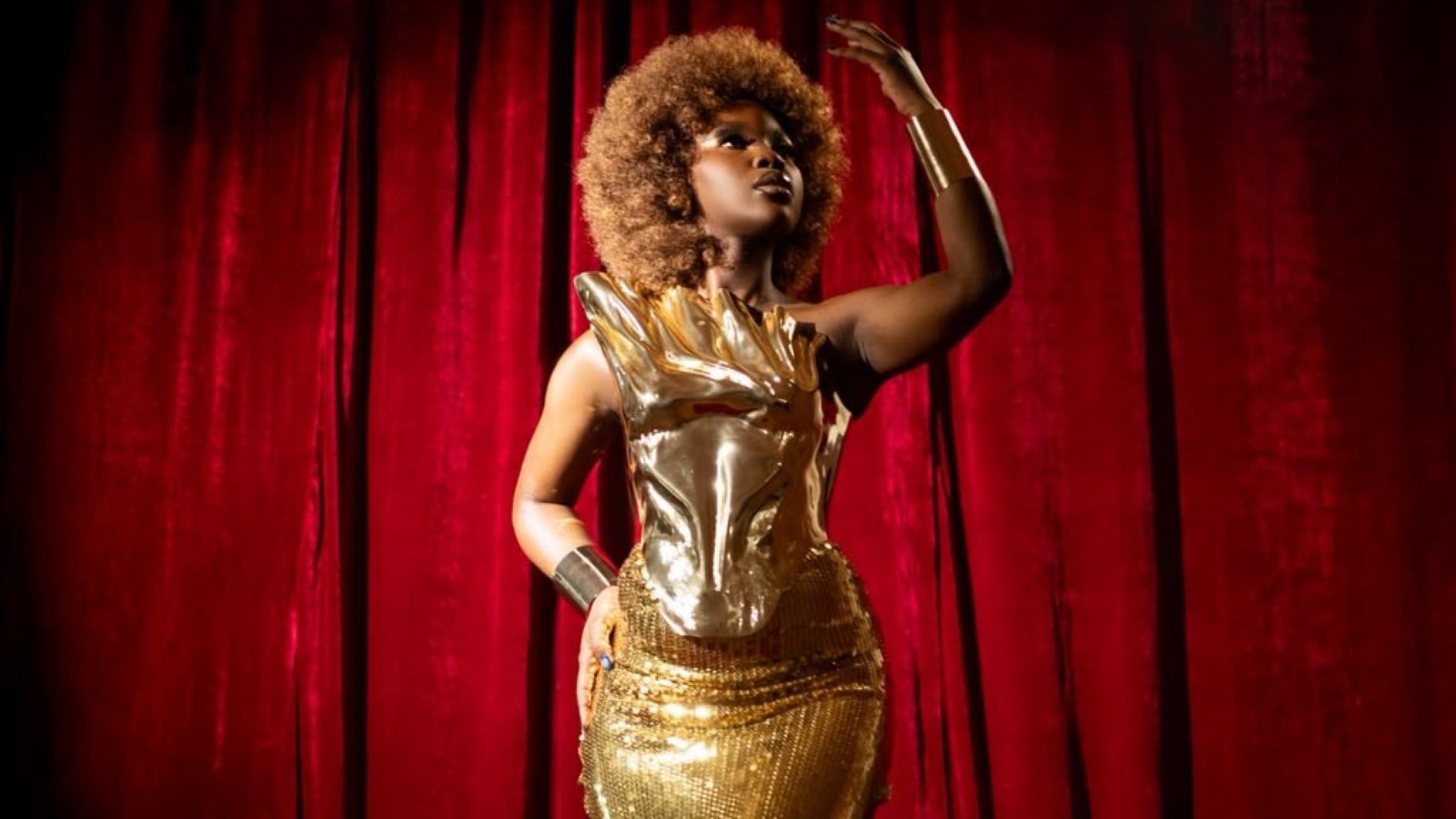
There is something particularly fascinating about Osogbo, the Osun State capital, whose artistic history remains deeply intertwined with Yoruba spirituality, indigenous aesthetics and cultural preservation. Beyond its famous sacred groves and the enduring legacies of the Osogbo art movement, the city has nurtured generations of artists whose creative expressions continue to interrogate the relationship between ancestral knowledge and contemporary life.
For Nigerian singer, songwriter and producer Teledalase, this cultural environment was also the landscape of her childhood, where music, art and spirituality were inseparable from everyday living.
Born into a family of artists, Teledalase grew up absorbing the peculiar rhythms of Osogbo, developing an early fascination with music and the possibilities of storytelling through song. Her artistry has since evolved into an intriguing exploration of Yoruba folklore, spirituality, language and identity, often delivered through contemporary arrangements that preserve the emotional character of their indigenous influences.
Her contributions to the soundtrack of Kunle Afolayan’s Anikulapo: Rise of the Spectre, particularly songs such as “Oyeku,” “Aje” and “Odun Nba Ku,” introduced another dimension to her musicality, demonstrating her ability to translate Yoruba cultural narratives into evocative cinematic compositions. Elsewhere, songs such as “Sango, Igi Nla” reveal her fascination with indigenous proverbs and their relevance to contemporary experiences.
For Teledalase, music has become an extension of a much broader artistic calling, one that also accommodates writing, painting and animation. In this conversation with Guardian Music, she reflects on her upbringing in Osogbo, the creative process behind her recordings, her experience working with Kunle Afolayan, and her ambition to preserve Yoruba language and cultural knowledge through art.
You grew up in Osogbo, a city with a very strong relationship with Yoruba spirituality, art and tradition. How much of the artist you are today was formed by that environment?
A great deal, because of a couple of factors. Osogbo is such a special place; it’s palpable as soon as you step in. This is a place that has preserved our culture. Therefore, it was conducive for my parents to grow and thrive as artists. Consequently, my siblings and I were influenced by our parents’ practices, work and lifestyle in Osogbo. It was a place where people of all religions shared the same space, radio station, home and ancestry with little to no friction.

What specifically made you choose music as your medium of expression?
I didn’t consciously choose music as a medium. Music has just always been there. I retained music quite easily, and so it became an outlet for me to understand the world. I was the child who woke up the family every morning with some songs I made up the nights before. I was the student in class belting songs in the classroom. The student who loved to lead praise and worship in the assembly. I must say, music is one of the most acceptable mediums for telling different stories, even the most difficult ones.
Your music carries Yoruba culture very deliberately, but it never feels like you are trying to recreate traditional music wholesale. How do you find that balance between cultural inheritance and contemporary production?
I find balance by learning and practising mindfulness. My music is going to come out the way it wants to. I have an Adamo song that I haven’t released. It’ll probably sell well if it were house music. But I don’t feel compelled to modify the packaging of my songs. I am mindful and open to being corrected, especially while making music referencing the Orishas and Yoruba ancient knowledge. I don’t want to treat these things as disposable or negligible.
“Sango, Igi Nla” draws from this idea of an enduring tree that even Sango cannot defeat. What drew you towards that saying, and what were you personally trying to communicate through the song?
I memorised this adage when I was a child. I am a collector of òwe Yorùbá (Yoruba proverbs). I was drawn to it because I was amazed that something is resistant to Sango. And so I have referenced this saying during tough times. When an overtly racist person tries to be condescending towards me. Or when life gets hard. So I guess I am hoping that listeners feel strengthened.
You’ve spoken about stepping away from music for a period. What happened during that time, and what eventually brought you back?
In summary, the channel that I was using to distribute my music was clogged. So I couldn’t release anything. As you can imagine, it was an extremely painful experience for me. I addressed things and got the channel unclogged. So technically, I never left completely. I just had to fix some things so that my music could reach people who need it at a pace of my preference.
You are a singer, songwriter and producer, so you have considerably more control over the final shape of your music than many vocalists do. What does a Teledalase record usually look like from the first idea to the finished song?
I honestly don’t have a structure or formula. Once I have a topic, my mind creates a story from it. Then I just sing the words that fit. Sometimes, a song would come to me while I’m driving. So I’ll just record it on my voice memo. I have a gazillion recordings on my phone because of this.
Songs like “Sango, Igi Nla,” “The Bad Wife” and “Happiness” all came to me when I was on the road somewhere. I have always used GarageBand; that is what I used for the production of “Oyeku,” “Aje” and “Odun Nba Ku” for the Anikulapo soundtrack. If I’m unable to produce the beat, then I collaborate or delegate. I’m still learning how to mix and master, so I usually delegate that part to an expert.
Working on the Anikulapo: Rise of the Spectre soundtrack placed your music within a much larger Yoruba visual and cultural world. What did that experience teach you about your own songwriting and the possibilities of telling African stories through music?
I learned a lot. I unlocked my abilities exponentially. After the success of the soundtrack, I asked Kunle Afolayan why he took a chance on me even though my résumé as a producer, singer and songwriter was limited. He said he just knew based on the few songs I had released prior. It highlighted that, contrary to what some record labels were telling me, the market for authentic Yoruba stories existed.
You’ve built a catalogue around spirituality, love, identity and Yoruba culture while gradually reaching listeners outside Nigeria. What is the vision for Teledalase?
My calling is to create: music, writing, paintings, animations, etc. My vision for Teledalase is to continue to make art, highlight what being Yoruba is to me, and preserve the Yoruba language through music. I want my art to reach others in meaningful ways. I hope that in centuries to come, my music is still applicable and useful to at least one person. That is the legacy I want.

