 Follow Us on Google News


 Follow Us on Google Discover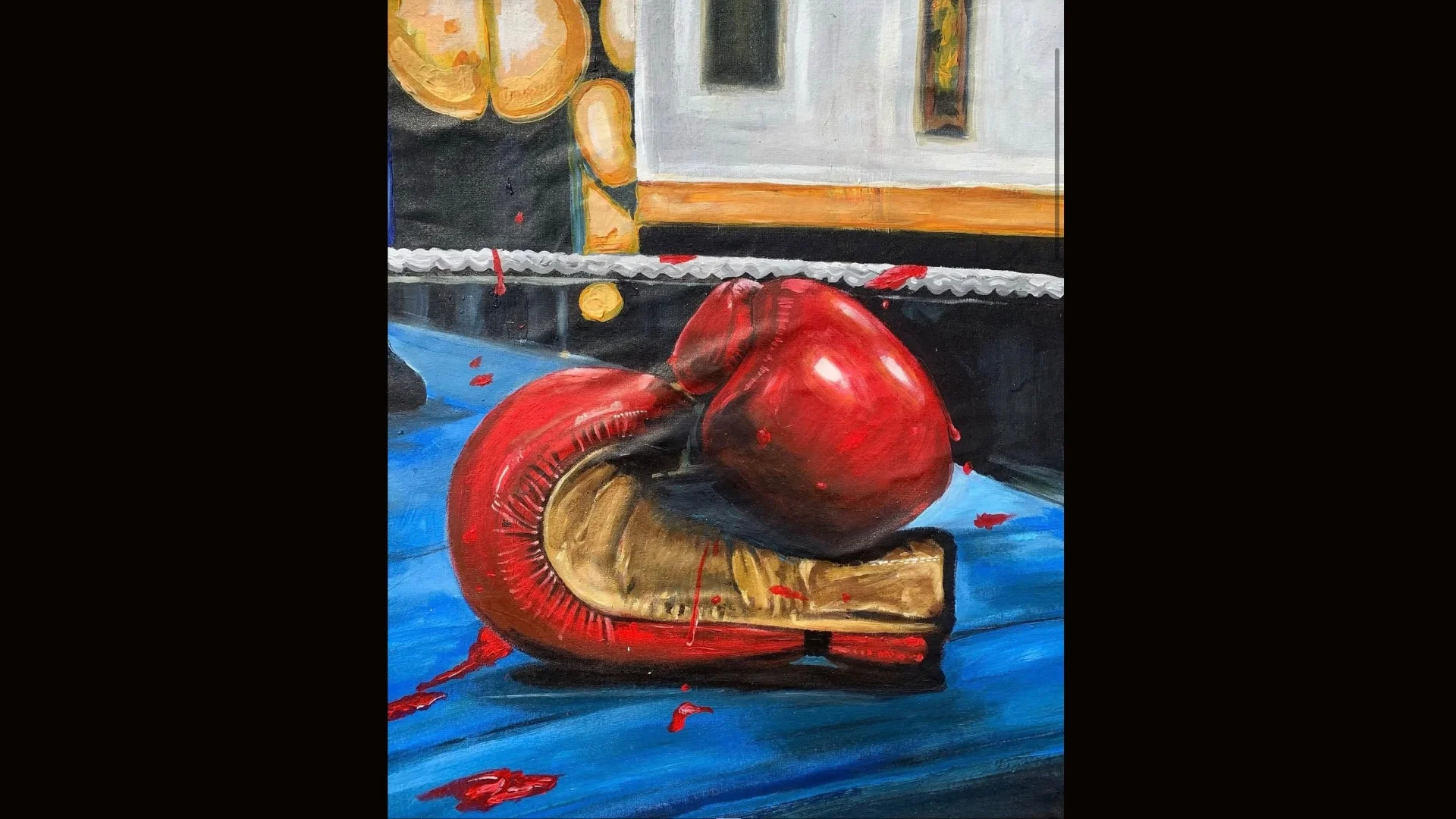
There is a particular kind of exhaustion that is difficult to photograph because it does not necessarily announce itself through collapse. It exists in the pause before the next attempt, in the silence after prolonged struggle, in the moment when someone who has spent years moving forward finally wonders whether they still have the strength to continue.
Darlington Tochukwu Raymond’s The Cost of Counts enters precisely into that space.
Rather than presenting resilience as an uncomplicated virtue, Raymond interrogates one of its most celebrated assumptions: that continuing to fight is always evidence of strength. Through the image of boxing gloves at rest, the artist creates a meditation on endurance, fatigue, expectation and the often invisible price of perseverance.
The boxing glove is an immediately recognisable symbol. It evokes competition, discipline, aggression, determination and survival. But in Raymond’s treatment, the gloves are not raised. They are not striking. They are resting.
That distinction transforms the entire meaning of the image.
When Strength Looks Like Rest

The most compelling feature of The Cost of Counts is its refusal to glorify struggle without examining its consequences.
We live within cultures that frequently reward the language of endurance. Keep going. Don’t quit. Push harder. Fight until you win. These messages can be empowering, but Raymond asks us to consider what happens when they become expectations rather than encouragement.
At what point does perseverance cease to be resilience and become depletion?
This question gives the work its emotional force.
The gloves carry the visual history of fighting, yet their resting position introduces an unexpected vulnerability. They appear capable of another round, but they are not currently participating in one. The absence of action becomes the action.
In this sense, Raymond’s subject is not really boxing.
It is the human cost of constantly having to fight.
The Invisible Scorecard
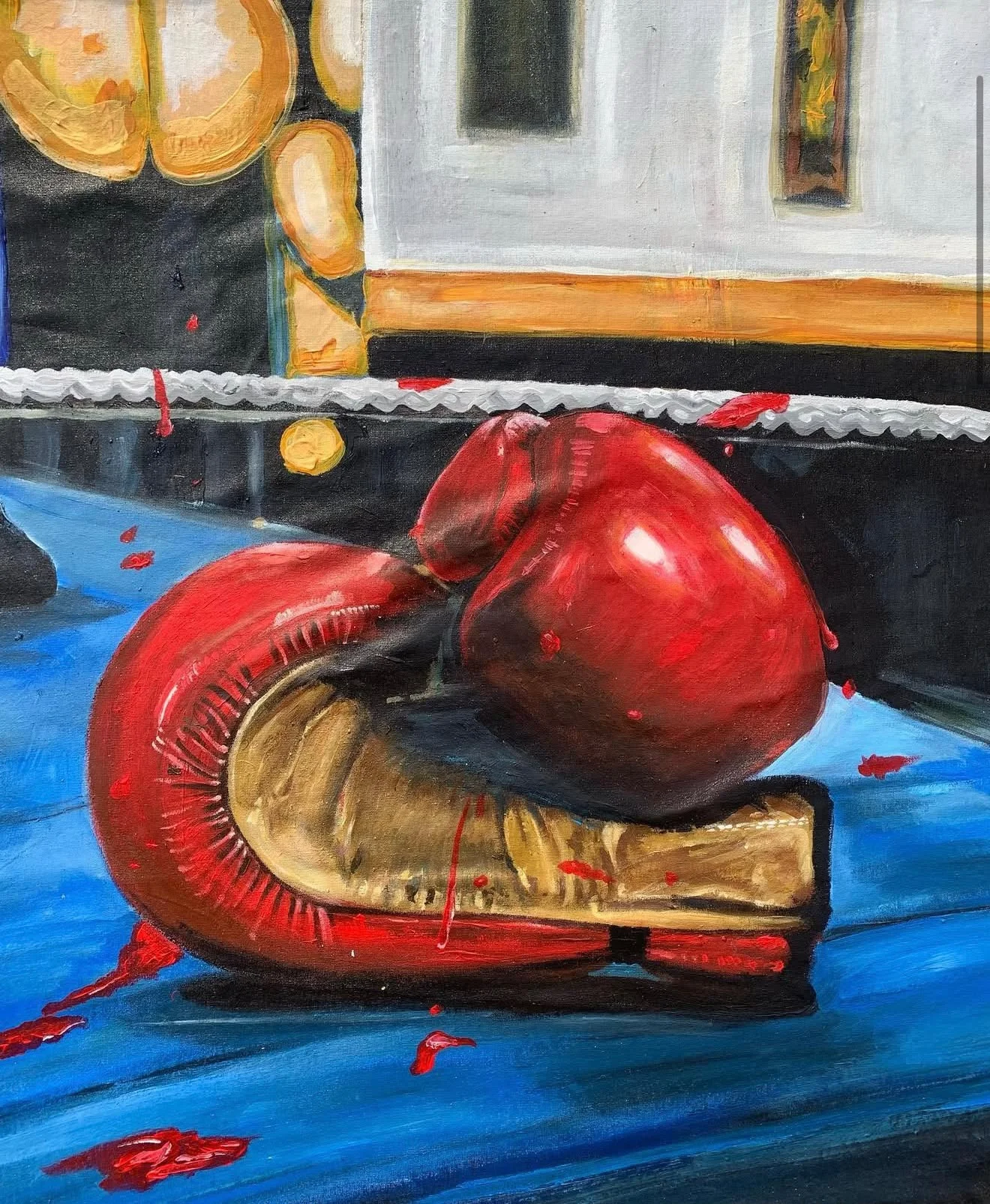
The title, The Cost of Counts, introduces another layer of interpretation.
A boxing match is measured through counts, rounds, punches, points and ultimately victory or defeat. Numbers determine progress. They tell us who is ahead and who is falling behind.
But human exhaustion cannot always be quantified so neatly.
How many disappointments can a person absorb? How many times can someone start again? How many battles can one fight before the accumulation begins to change them?
The title therefore feels deliberately ambiguous. The “counts” can be understood literally within the language of boxing, but they can also suggest the endless measurements through which contemporary life evaluates achievement—money, career milestones, social status, productivity, recognition and success.
We are constantly counting.
And Raymond asks what those counts might be costing us.
The Fighter Behind the Gloves
One of the strengths of the work is that the artist does not need to depict a visibly defeated boxer.
There is no dramatic fall.
No audience.
No triumphant opponent.
Instead, the gloves become a kind of psychological self-portrait.
They embody the person who has continued to show up even when showing up has become difficult. They represent the instinct to keep fighting, while simultaneously acknowledging that the fighter may need permission to stop.
View this post on Instagram
This makes the work relatable beyond the sporting metaphor.
The boxer could be an artist struggling to sustain a career. A professional attempting to meet impossible expectations. A parent carrying responsibilities without pause. A young person trying repeatedly to create a better life. Or simply anyone who has reached the uncomfortable point of asking, “How much more can I give?”
The absence of a specific identity allows the viewer to inhabit the metaphor.
Against the Romance of Resilience
Contemporary culture has developed an almost romantic relationship with resilience. Stories of people overcoming adversity are celebrated, and rightly so. But there is a danger in making resilience the only acceptable response to difficulty.
Raymond’s work complicates that narrative.
It suggests that there should also be dignity in acknowledging exhaustion.
That is an important distinction. Rest is not necessarily surrender. Pausing does not automatically mean failure. And recognising one’s limits does not erase everything that has already been accomplished.
In fact, The Cost of Counts proposes something more radical: perhaps knowing when to stop is itself a form of strength.
The resting gloves consequently become more than symbols of fatigue. They become symbols of self-awareness.
A Personal Feeling Made Collective
Raymond’s description of the work reveals that it emerged from a period when he personally questioned the limits of endurance, but he also recognised the same feeling in conversations with friends.
This movement from the personal to the collective is important.
The work begins as an internal struggle but becomes a shared contemporary experience. The exhaustion Raymond describes is not necessarily unique to one person. It is embedded in the pressures of a culture that often measures worth by output and persistence.
There is an expectation to keep producing, keep improving, keep competing and keep moving.
The Cost of Counts asks what happens when the individual behind those achievements becomes exhausted by the very process of achieving them.
The Power of an Unfinished Fight
Perhaps the most affecting quality of the work is that it does not present a conclusion.
The gloves are resting, but the fight has not necessarily ended.
This ambiguity is crucial.
The artist does not tell us whether the fighter will return for another round. That decision remains suspended. The pause could become recovery. It could become withdrawal. It could even become the beginning of a different kind of fight.
By refusing to resolve the moment, Raymond allows the viewer to bring their own experiences into it.
For some, the gloves may represent burnout.
For others, survival.
For another viewer, they may represent the courage to walk away from something that has demanded too much.
A Different Definition of Winning
Ultimately, The Cost of Counts challenges the viewer to reconsider what victory means.
If winning always requires another round, another sacrifice and another demonstration of endurance, then perhaps the definition of success needs to expand.
Sometimes the achievement is continuing.
Sometimes it is recovering.
Sometimes it is admitting that enough has been given.
And sometimes, as Raymond’s resting gloves quietly suggest, the bravest thing a fighter can do is lower their hands.
That is where the artwork finds its greatest power—not in the violence of the boxing metaphor, but in the stillness that follows it.
The Cost of Counts reminds us that behind every story of perseverance is a person who has had to pay for that perseverance with something.
The question is not simply whether we can keep fighting.
It is whether we have considered what the fight is costing us.

