 Follow Us on Google News


 Follow Us on Google Discover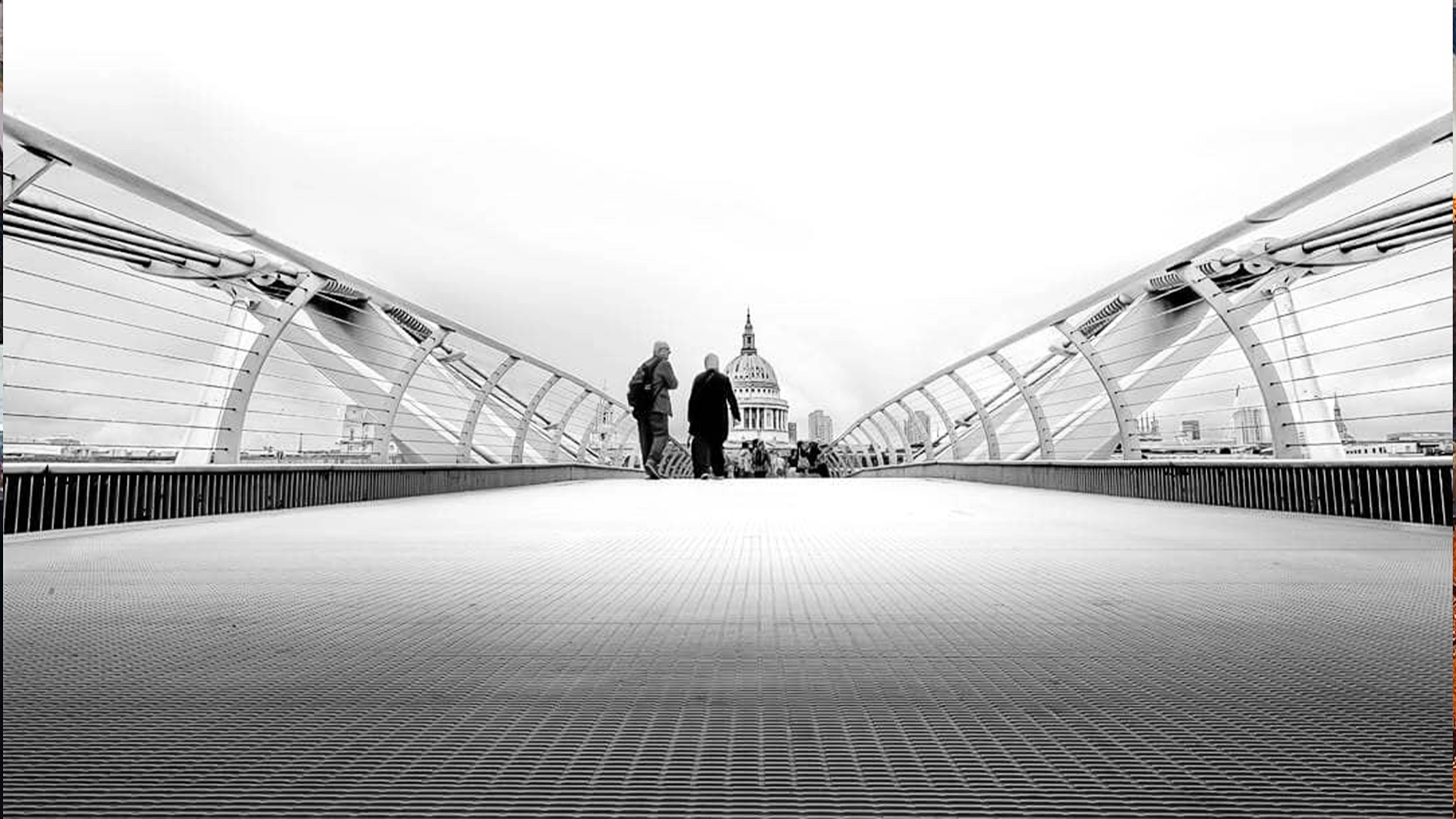
UK-based documentary and fine art photographer Aduragbemi Okeyemi approaches black-and-white photography as an intentional artistic language.
In his body of work, What Eye See, the Kent-based artist draws attention to everyday architecture, cityscape, people and the urban environment, reconfiguring these familiar subjects through the disciplined language of monochrome photography.
The visual narrative essentially asks a simple but profound question: what happens when we are encouraged to look again?
With colour removed, Aduragbemi’s images place composition at the centre of the viewer’s experience. Lines, texture, light and shadow become the principal actors.
The photographs demonstrate an attentive understanding of how these fundamental elements can transform ordinary scenes into something visually compelling.
At the heart of What Eye See is an engagement with the essential elements of black-and-white photography: composition, texture, light, shadow and line.
Devoid of colour, the photographs place greater emphasis on form, tonal contrast and atmosphere, encouraging viewers to pay closer attention to details that might otherwise melt into the background. Surface becomes structure; shadow becomes form; architecture becomes geometry.

Conceptually, What Eye See distinguishes itself through its intentional play on words. By replacing the familiar phrase “What I See” with “What Eye See,” Aduragbemi shifts the emphasis from the photographer as an individual observer to the very act of seeing. The “eye” becomes both subject and instrument.
The photographs are therefore not simply declarations of the photographer’s vision; they are invitations to look again and differently.
A building is no longer merely a building. A street becomes more than a route between destinations. Light falling across a surface, the texture of an ageing structure, or the geometry of an architectural form can become the principal subject.
Aduragbemi’s artistic expression lies in making the familiar sufficiently unfamiliar to encourage viewers to reconsider what they think they already know. This approach places What Eye See within the enduring tradition of documentary photography while simultaneously pushing it towards a more contemplative understanding of the medium.
Documentary photography has traditionally been concerned with recording what exists. Aduragbemi, however, appears equally interested in how what exists can be perceived.
His commitment to black-and-white photography reinforces this position. Rather than treating monochrome as a nostalgic reference to an earlier photographic tradition, he employs it as an active contemporary tool—one capable of distilling an image to its essential visual components.
From my perspective, What Eye See is less concerned with telling the viewer what to see than with encouraging the viewer to look again. It’s strength lies not merely in the things on Aduragbemi’s photographs, but in the way he invites us to reconsider them.
Within the world of Aduragbemi’s documentary and fine art photography, seeing is not a passive act. It becomes an encounter—an active engagement between the eye, the image and the world it represents.

