
 Get Guardian on Google
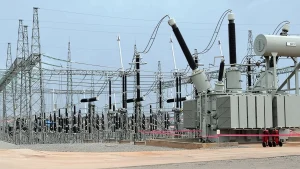
Africa’s’s blended finance market has grown fivefold to about $10 billion over the past decade, but the expansion has not been enough to address the continent’s infrastructure financing needs, S&P Global Ratings has said.
The ratings agency said the market remained too small and fragmented to attract the scale of institutional investment required to bridge Africa’s infrastructure gap, urging governments and development finance institutions to pool projects into larger investment platforms.
In a report released at the S&P Global Africa Summit 2026, it cited the African Development Bank’s estimate that Africa faces a yearly infrastructure financing gap of between $60 billion and $100 billion. The funding challenge is being compounded by declining development assistance, with official development assistance to sub-Saharan Africa falling by 26 per cent in 2025. The Organisation for Economic Co-operation and Development (OECD) projects a further 12 per cent decline in 2026.
Access to blended finance is also concentrated in a few markets. Nigeria, Ghana, Côte d’Ivoire and Senegal account for between 75 and 80 per cent of the continent’s activity, leaving other African countries with limited access to the financing model.
S&P identified the small size of individual transactions as a major obstacle to attracting institutional investors. While many institutional investors prefer debt issuances of at least $100 million, typical African blended finance transactions range from $10 million to $100 million, with a median size of between $35 million and $55 million.
The problem is compounded by limited credit ratings. Few transactions carry international ratings, while many asset managers restrict their exposure to unrated or non-investment-grade assets to between five and 10 per cent of their portfolios.

To address these constraints, S&P recommended pooling smaller projects into larger investment vehicles with standardised financing terms. According to the agency, this would reduce the cost of originating transactions, improve investment scale and provide institutional investors with a more regular pipeline of projects.
It cited the $1.5 billion Africa Infrastructure Financing Facility (AIFF), launched in February, alongside the Lobito Corridor and Mission 300, as examples of platforms that could help mobilise larger pools of capital.
However, currency risk remained another challenge, particularly in markets such as Nigeria and Ghana, where project revenues are often indexed to the dollar.
S&P warned that this could increase costs for consumers, especially where local incomes are earned in domestic currencies.
The agency pointed to InfraCredit Nigeria’s guarantees on $280 million in local-currency bonds as an example of efforts to deepen domestic capital markets and reduce currency mismatches.
The guarantees represent about 15 per cent of Nigeria’s outstanding corporate bonds, although S&P said the scale remained relatively small.
On investment risk, the agency noted that Africa’s average corporate default rate of 5.4 per cent is partly offset by a recovery rate of 78 per cent, resulting in an expected annual loss of about 1.3 per cent.
It said expanding blended finance would require stronger legal and regulatory frameworks, deeper local capital markets and more effective project preparation to make investments attractive to private capital.