
 Get Guardian on Google
Mrs Juliet Akin-Allen, a frozen food operator at the Eshidana Market, Okerube in Abaranje area of Lagos, and other traders in that line of business have been crying in silence over the negative impact of epileptic power supply on their trade.
While she had struggled over the years to stay afloat after recurring incidences of spoilage that had almost led her to bankruptcy, Akin-Allen kept hope alive, hoping that one day she’ll get a new business that’ll make her to finally quit the frozen food business she had engaged-in for 10 years.
“The electricity situation in this area has been very poor in recent time. At times when we discover that the frozen foods are getting to the point of spoilage, we give them out and at times, we sell them at cheaper rates, instead of recording total losses. At times we spend up to N9, 000 daily to fuel generators to ensure that the fishes, chickens are turkey are in good condition. If you spend that kind of money from your profit daily, it amounts to going home empty handed.”
Another trader, Mrs Florin Osagie, the owner of Floxy Spice Delight, also had a bitter experience from the epileptic power situation on her business. “At times, when power is restored in the morning, within minutes it will be taken off till night and that’s how we have been enduring the unpalatable situation. We depend solely on generating sets buying as much as 10 litres a day, depending on how light is available.”
Just like Akin-Allen, Osagie narrated how losses incurred on weekly basis has seriously impacted her business and also made her to lose some of her loyal customers. “There was a woman who bought chicken, on getting home, she returned the goods and demanded a refund, which seems to be a difficult problem in business. There are many cases like that too.”
These are two of the numerous sweet-bitter experiences of young women and youths engaging in food, cold-storage and agriculture related businesses in the country. But with the emergence of Energizing Women and Youth in Agri-Food Systems (EWAS) – an initiative designed to integrate technologies into agriculture and empower young women in rural areas, the story of these traders have changed from losses to profits.
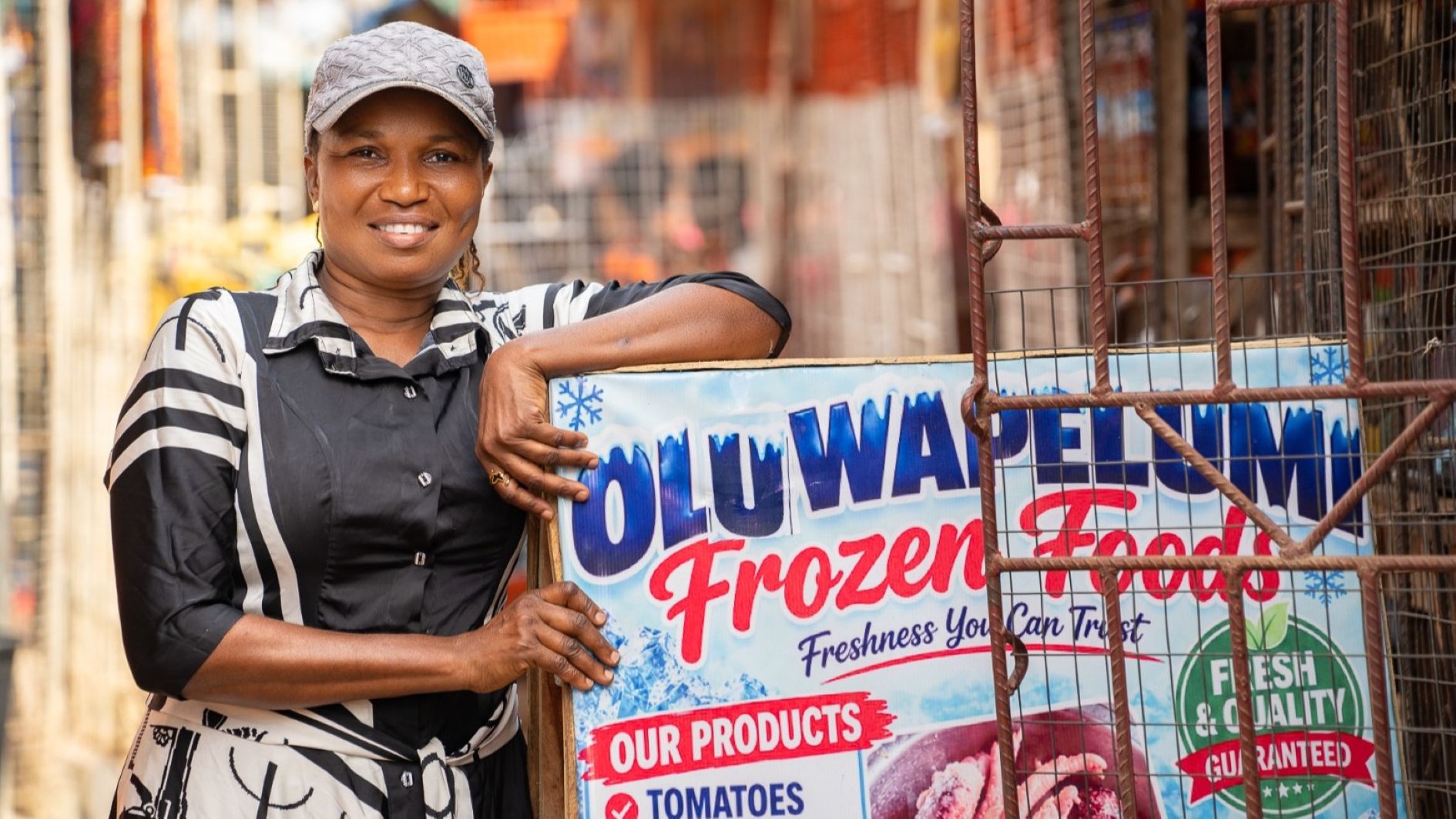
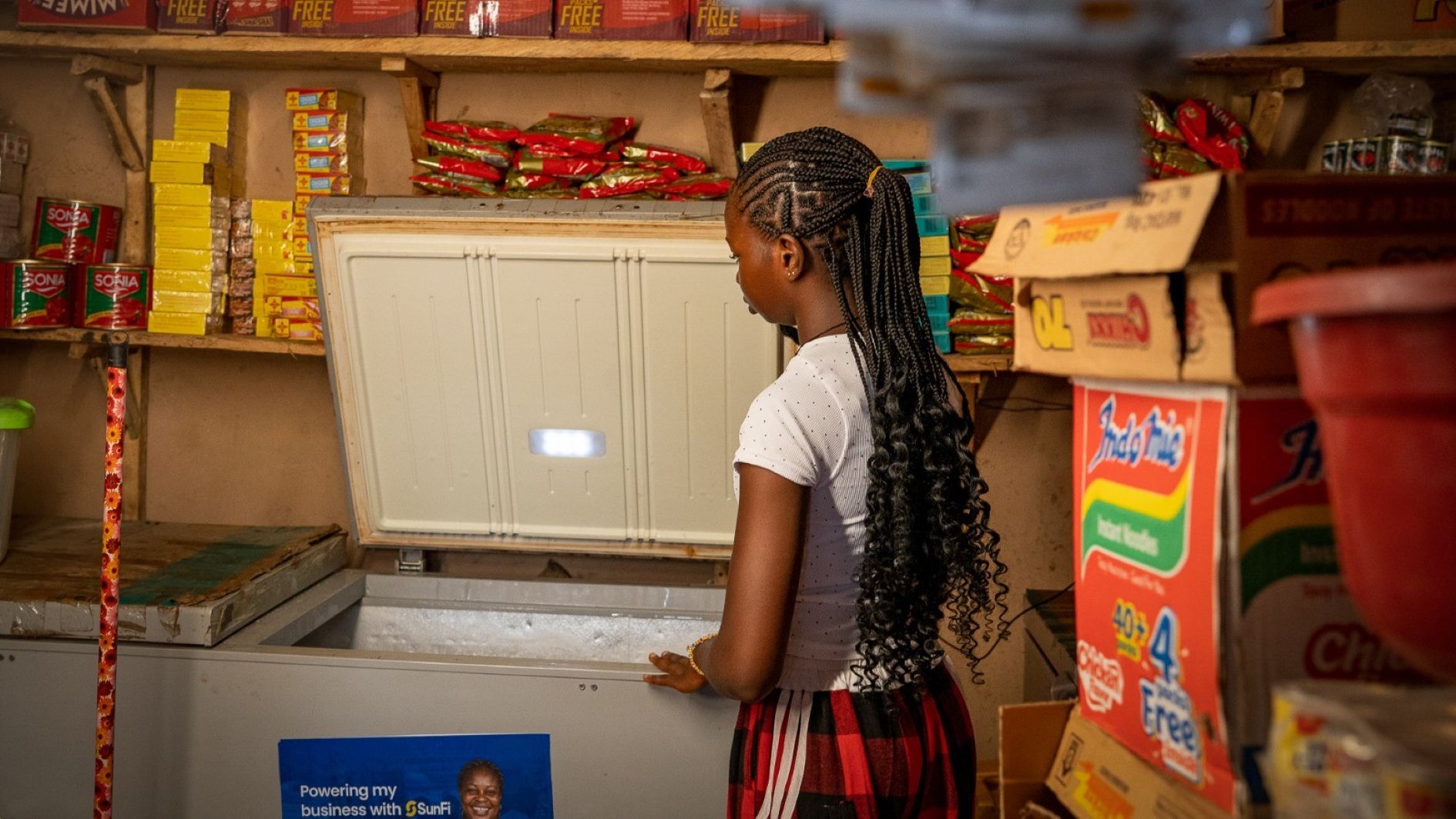
Now, Akin-Allen expresses a different experience. She has experienced a great turnaround in her business since she acquired a solar power initiative. The patronage has also increased as customers come from far and near because there’s assurance that there’ll be fresh frozen foods in her shop.
“For now, I have been able to save the money spent on fuel as my profit, since the solar solution has provided constant power supply and it is cheaper. The repayment plans are also very flexible.”
While also giving her testimony, Osagie said: “But since the solar solution was introduced, it’s been a wonderful story. We acquired the freezer and solar panel. Our goods, which usually get spoiled before the intervention, are now in good condition, the refrigerators working perfectly and the chickens looking very attractive to the customers.
“We are enjoying good patronage on daily basis, seeing new customers. Before we usually buy small quantity for the fear of irregular electricity, but now I usually stock more than enough.”
EWAS is a three-year strategic partnership between the Global Energy Alliance for People and Planet and the Mastercard Foundation. Operating across Ethiopia and Nigeria from 2024 through 2027, it integrates clean productive use of energy (PUE) technologies, such as solar irrigation, walk-in cold storage, solar milling and chest freezers, directly into agricultural value chains.
This initiative, aimed at enabling 17,000 jobs, especially for young women in Ethiopia and Nigeria, moves beyond traditional aid by treating renewable energy as a foundational productive asset for industrialisation.
EWAS seeks to improve access to green energy, promote the productive use of energy technologies, and provide training to help young women increase their incomes. By integrating these technologies into agriculture, the programme aims to empower young women in rural areas.
The programme, working with a consortium of partners including Rocky Mountain Institute (RMI) in Nigeria, and local businesses, is structured to deliver measurable progress across three high-impact areas – Gender-inclusive job creation.
The initiative is designed to create 17,000 jobs, specifically targeting young women in Nigeria and Ethiopia to help close the persistent gender earnings gap in rural economies; Technological scaling: By integrating solar-powered irrigation and walk-in cold storage, the programme stabilises value chains in poultry, horticulture, and milling; and De-risking finance: Utilising the Productive Use Financing Facility (PUFF), the programme provides results-based subsidies and capacity-building grants to make green technologies affordable for communities, and small and medium enterprises (SMEs) such as farmers.
In Lagos, the initiative operates across 16 peri-urban communities, concentrated mainly in Alimosho (Ayobo, Ikotun, Egbeda), as well as Ikorodu and Ojo. So far, 88 of 90 target systems have been deployed, with 85 installed. From this, 68 systems went to women (77%).
Also, 350 of 637 phase jobs created, including 25 master agents, 29 sub-agents, 21 installers (8 women), three female project staff, loaders, and logistics staff. Aside the fact that the initiative focuses on Lagos traders running their businesses on solar power, another success story of the initiative is the fact that it is the female folks that are installing these solar system, thereby breaking into a male-dominated trade.
The Manager of the EWAS programme in Nigeria, Farouk Magaji Bello, said the aim of the programme is to give young women the necessary support that will improve their livelihood, in order to earn more income for improved livelihood.
Bello said the programme, which began in 2024, targets women and youth entrepreneurs and cooperatives across agri-food value chains.
Studies conducted as part of the programme found that a vast majority of women micro-entrepreneurs trade in perishables, meat, fish, and cold drinks, where lack of reliable cold chain power was the primary bottleneck to profitability. The idea is to work with local partners such as SunFi to support these young entrepreneurs to grow and improve their livelihoods.
To improve their lives in agriculture, food preservation, and other areas. SunFi is also one of the local partners distributing chest freezers that are powered by solar. “As you can see, many women sell perishable food, cold drinks, meat, and fish; they need these chest freezers to improve their business and power their businesses to make a lot of money. So, the idea here with SunFi is for us to encourage them, give them grants to support these young women, and give favourable repayment plans.
“There are three components of the programme: we have the grant component, which is being implemented by RMI; we have the venture building component, being implemented by AllOn, and finally the productive finance facility, which is being delivered by Clasp.
“We are not adopting a blanket approach like many grant programmes that decide what participants need. We work with individuals and see their needs. Some have chest freezers connected to the national grid but there is power, while some of them don’t have chest freezers, but they need it and also power.”
Bello noted that the intervention is not just to support the participants; it is also making sure that they live comfortably, earn incomes that actually improve their lives. “We have created jobs for over 1,013 youths (mostly women) across the country; we are working with six partners in Nigeria; we have deployed over 200 pieces of equipment of various sizes; this is just one part of the programme.
“In Enugu, we have a community where we created about 575 jobs, where there is a cold room and 15 greenhouses. Each of the greenhouses is owned and managed by young women in cooperatives who are trained on how to grow bell pepper with hybrid seeds – soilless farming; it’s a crop that earns good money. And we are already seeing our participants earning much higher income from this compared to what they earned in the past. So, we operate with different models.
“In Lagos, the programme seeks to work with young women in our local markets with existing businesses, but in the North we are about distributing solar-powered irrigation pumps, threshers and other agro-processing equipment to young farmers who will not just do rain-fed farming but irrigation farming; we focus on agriculture because it is Nigeria’s primary economic sector and a leading driver of employment and food production.
“At the Global Energy Alliance for People and Planet (GEA), our work centres on the vital nexus between energy and agriculture, delivering clean energy solutions that empower agricultural enterprises to thrive, create sustainable jobs, and improve livelihoods.”
The Gender Expert and Project Lead for EWAS at SunFi, Ijeoma Adigo, explained that the company, a clean energy company focused on expanding access to affordable and reliable solar energy solutions, had already enrolled 90 participants in Lagos.
She emphasised the importance of the intervention, given Nigeria’s unreliable and inadequate power supply, noting that access to affordable and reliable electricity was essential for businesses to operate sustainably.
“The intervention is important because of the persistent power supply challenges in the country. Through this initiative, we are empowering businesses with more reliable and affordable electricity, helping them reduce their dependence on expensive generator fuel and maintain business operations at lower costs. Ultimately, we want to ensure that businesses have access to the power they need to thrive.
“Our focus is on women in the agri-food sector, particularly those operating within the cold food chain, including businesses that sell frozen foods and drinks. Without reliable electricity, these businesses risk losing their products to spoilage, which directly affects their income and livelihoods. By providing access to solar energy, we are helping to reduce food waste, preserve product quality and support more stable and predictable incomes.
“Initially, we encountered some resistance due to misconceptions about the cost and durability of solar equipment. However, through engagement and education, we have gradually built trust. Participants are now more confident in the effectiveness and affordability of solar energy and its potential to improve their businesses.”
She further explained that SunFi had made the transition more accessible by subsidising initial payment requirements, easing collateral requirements and offering the equipment at competitive prices.
“We have structured the repayment plans around the participants’ earning and spending patterns, giving them the flexibility to choose between daily, weekly and monthly payments. We have found that weekly and monthly repayment options have recorded the highest uptake. This flexibility allows participants to manage their repayments in a way that aligns with their business cash flow.”