Get Guardian on Google
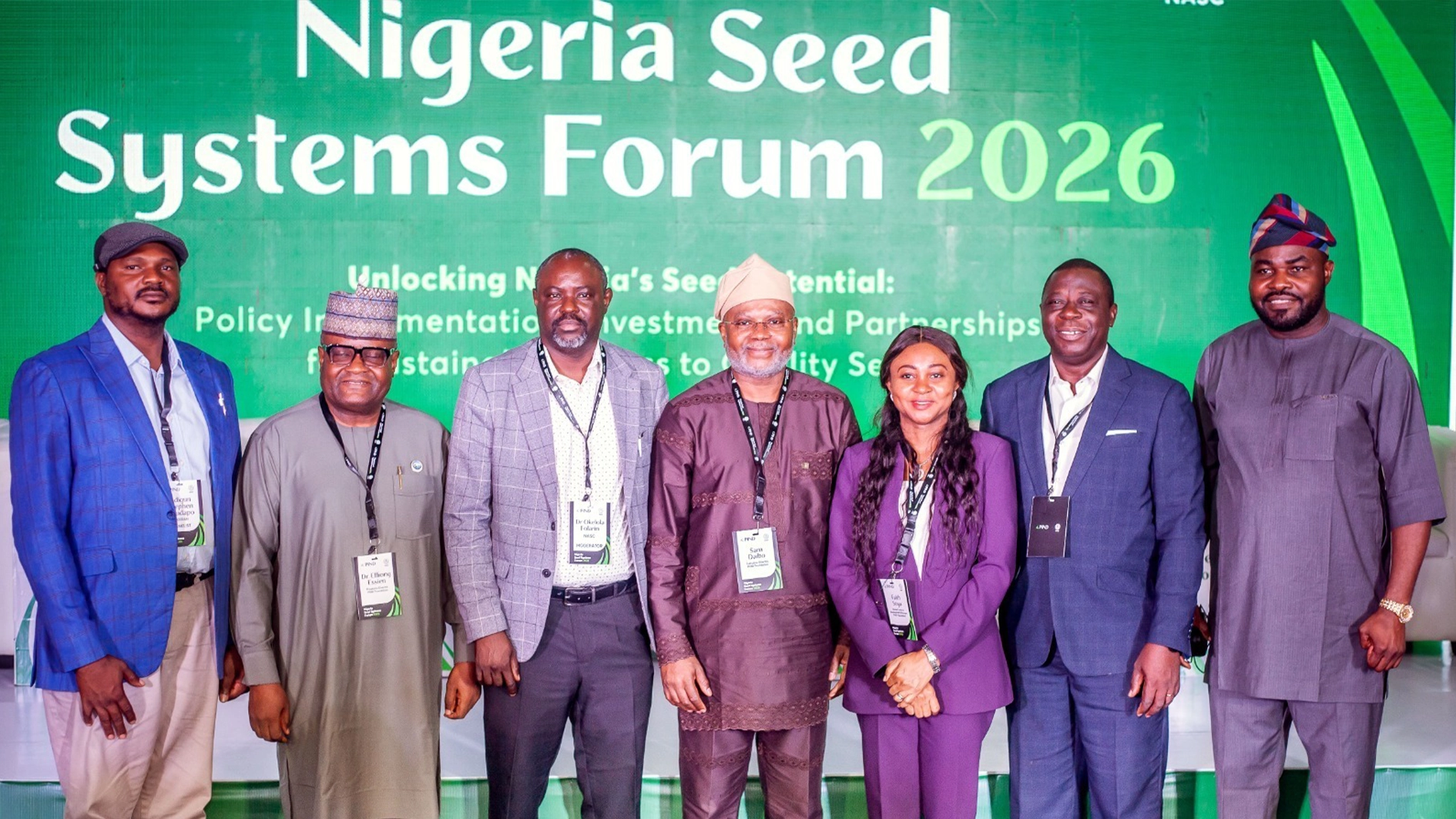
Stakeholders across Nigeria’s seed industry have agreed on a coordinated action agenda to strengthen certification, expand domestic seed production, unlock finance and bring quality seed closer to farmers following the Nigeria Seed Systems Forum 2026, jointly convened by the Foundation for Partnership Initiatives in the Niger Delta (PIND) and the National Agricultural Seeds Council (NASC).
The two-day Forum, held November 10–11 in Abuja under the theme “Unlocking Nigeria’s Seed Potential: Policy Implementation, Investment and Partnerships for Sustainable Access to Quality Seed,” brought together regulators, researchers, seed companies, financial institutions, agro-dealers, extension providers, farmers’ organisations and development partners.
The forum concluded with a communiqué outlining priority actions, responsible institutions and timelines across regulation, research commercialisation, finance, distribution and digital traceability.
Participants acknowledged progress in electronic seed certification, Plant Variety Protection, decentralised quality assurance and community-based seed production.
However, high costs, limited finance, inconsistent quality, weak last-mile distribution and research-to-market gaps remain barriers to farmer access and industry growth.
Director-General, NASC, Fatuhu Muhammed, who as represented by the Director of Plant Protection, Dr Okelola Folarin, said farmers judge the strength of a seed system by whether they can obtain trusted seed at the right time and at a viable cost.
“The value of this Forum is that regulators, researchers, producers, financiers and distributors have moved beyond separate conversations to agree on practical responsibilities and a common direction,” he said.
Muhammed called for more domestic investment in the seed system in Nigeria, particularly research and development, to reduce dependence on importation. “It boils down to investment.
PIND Executive Director, Mr Sam Ogbemi Daibo, said the Forum had moved the sector from repeatedly identifying problems to assigning responsibility for solutions.
He said a promising variety that remains in a research station cannot raise a farmer’s yield, while certified seed that does not reach the last mile cannot improve livelihoods.
According to him, the real test is whether the priorities agreed at the forum translate into stronger enterprises, credible markets and dependable access for farmers.
The Executive Secretary of the Seed Entrepreneurs Association of Nigeria (SEEDAN), Stephen Adigun, called for affordable financing suited to the seasonal needs of seed enterprises.
IDH Country Director, Prof. Enola Fabusoro, emphasised capacity development, improved seed handling and stronger partnerships to turn the Forum’s recommendations into results.
During the Nigeria Seed Systems Forum 2026, participants examined how to remove certification bottlenecks without weakening standards, improve coordination between regulators and producers, and move breeder and foundation seed into commercial supply through licensing, technology transfer and public-private partnerships.
They also called for stronger links among researchers, breeders and seed companies to commercialise improved varieties, alongside effective implementation of the National Seed Policy, stronger enforcement against counterfeit seed and improved quality assurance.
Financiers and seed enterprises considered financing models suited to the seasonal nature of seed businesses, including guarantees, insurance and technical support to make more enterprises investment-ready.
Agro-dealers, extension providers, farmers’ representatives and technology companies also proposed measures to improve affordability, demand planning, farmer information and traceability.
PIND, NASC adopt action plan to reform Nigeria’s seed system, boost farmers’ access