 Follow Us on Google News


 Follow Us on Google Discover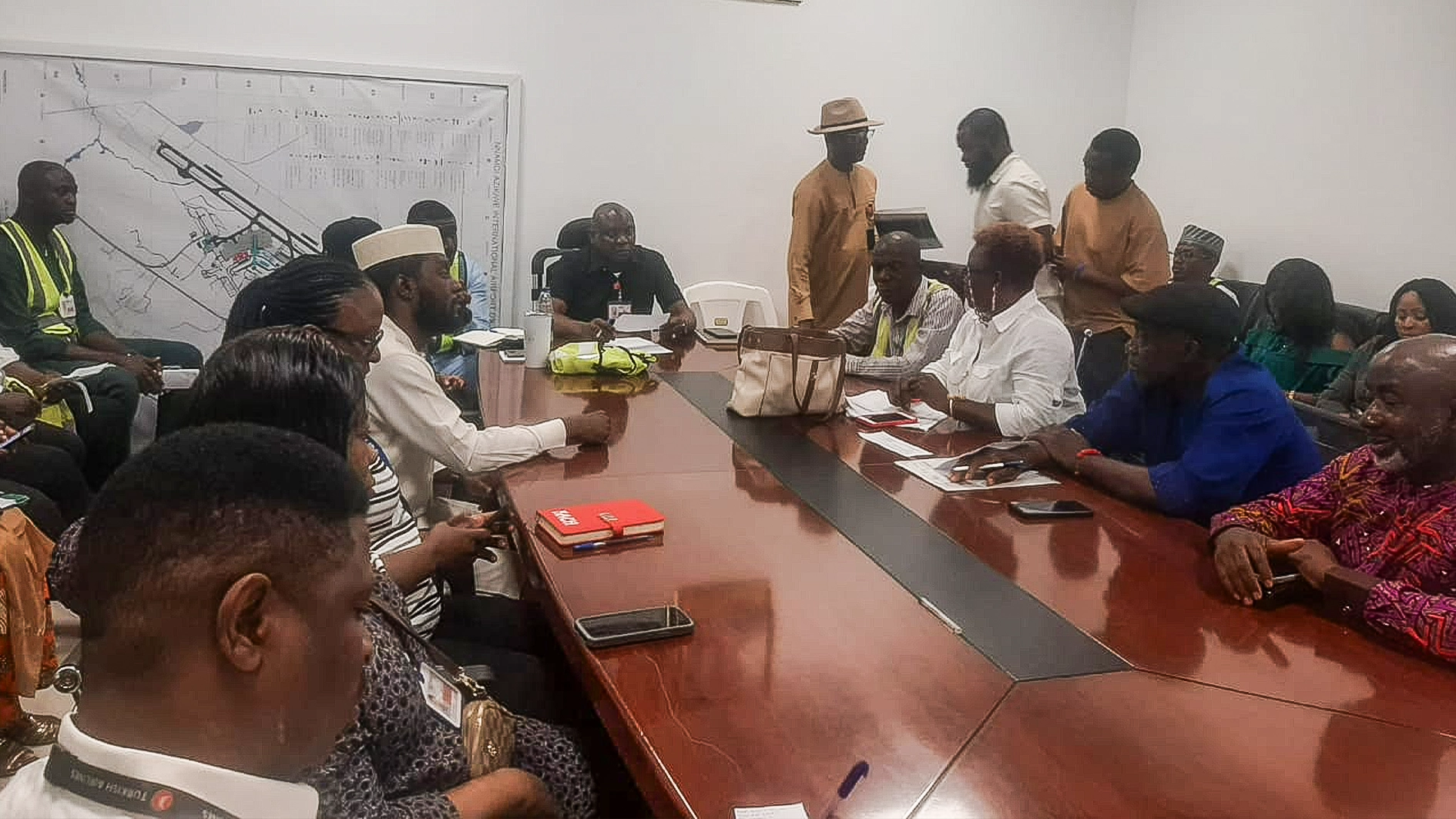
For persons with disabilities, getting on a flight in Nigeria can begin as a journey of hope and end as a test of endurance.
A passenger may have a priority status, a valid ticket and every right to board like any other traveller, yet still find himself waiting helplessly for assistance.
That was the experience narrated by Dr Adebukola Adebayo, a blind World Bank consultant, at a stakeholders’ meeting on aviation accessibility in Abuja.
Adebayo told aviation authorities and disability advocates that, despite being accorded priority as a passenger with a disability, he was left underneath an aircraft for about 30 minutes while travelling through the airport.
His experience offered a sobering illustration of the gap between Nigeria’s commitment to disability inclusion and the reality encountered by passengers who need assistance.
It was against this backdrop that the Federal Airports Authority of Nigeria and stakeholders in the aviation sector met with Project Elevate, the National Aviation Accessibility Initiative, at the Nnamdi Azikiwe International Airport, Abuja, on Wednesday.

The meeting was not merely about ramps, lifts or wheelchairs. At its heart was a more fundamental question: Can Nigeria’s airports guarantee persons with disabilities the same dignity, independence and access enjoyed by other travellers?
For Comrade Abiodun Ozurumba, Team Lead of Project Elevate, popularly known as Fantastic Bibi, the answer requires more than the installation of physical infrastructure.
She identified the attitude of some ground-handling personnel as one of the barriers confronting disabled passengers. She also pointed to non-functional lifts, steep or obstructed ramps and inadequate communication facilities for Deaf travellers.
The concerns reveal that accessibility is not simply an architectural issue. It is also about how passengers are treated, how information is communicated and whether airport procedures recognise the diverse needs of travellers.
Adebayo’s account raised another concern: the assumption that blind passengers cannot travel independently.
He disclosed that some airlines insist that blind passengers must travel with an aide, regardless of whether the individual is capable of making the journey independently.
For disability advocates, such practices raise questions about whether assistance is being provided to empower passengers or becoming a condition that limits their independence.
Adebayo therefore proposed the development of a procedural aviation accessibility handbook that would clearly explain the services available to persons with disabilities and how they can obtain them.
He also called for disability identification cards to be issued by the National Commission for Persons with Disabilities to prevent impersonation and ensure that assistance is directed to genuine beneficiaries.
The accessibility problem becomes even more pronounced for Deaf passengers.
Architect Ismail Muhammed, representing the President of the National Association of the Deaf, Alhaji Haruna, said some Deaf travellers had missed flights because boarding announcements were communicated through public address systems without adequate visual alternatives.
An announcement that is perfectly audible to one passenger can therefore be completely inaccessible to another.
Muhammed urged airport authorities to combine audio announcements with visual display systems and sign-language interpreters, particularly for important boarding and flight information.
The proposal gained immediate practical backing when Project Elevate announced plans to donate a 70-inch digital display screen to FAAN for installation at a strategic location in the airport.
The meeting also exposed a more complicated picture.
While disability advocates highlighted gaps in accessibility, airport and ground-handling operators pointed to measures already introduced at the Abuja airport.
Precision Aviation Handling Company Limited said it provides designated drop-off points, trolley services, priority processing by Customs and Immigration, automated entrance doors and newly acquired cabin wheelchairs.
Skyway Aviation Handling Company PLC said four staircase climbers had been deployed at the airport to assist passengers with disabilities during boarding and disembarkation.
The Domestic Terminal Manager, Bashir Amir, also said newly installed lifts and escalators were operational, while accessible toilet facilities had been provided.
Yet the very fact that stakeholders are still discussing blocked ramps, inaccessible communication, malfunctioning facilities and poor assistance suggests that infrastructure alone cannot solve the problem.
Another concern raised at the meeting was the handling of passengers with reduced mobility and serious medical conditions.
Oladimeji Sheriff, Manager of Primary Health Care, said some critically ill passengers arrive at the airport without valid Fit-to-Fly certificates, resulting in delays or denial of boarding.
He also explained that relatives sometimes take passengers to check-in, complete the process and proceed to the departure hall without informing the airline or ground-handling company that the passenger requires special assistance.
By the time airport personnel become aware of the situation, valuable time may have been lost.
The proposal for closer communication between airlines, ground handlers and the National Commission for Persons with Disabilities, including the possibility of a dedicated WhatsApp line for advance notification, therefore points to an important lesson: accessibility begins before a passenger reaches the boarding gate.
The Abuja meeting ultimately exposed two realities existing side by side.
One is the progress: new lifts, escalators, accessible toilets, wheelchair equipment, staircase climbers, priority services and proposed visual information systems.
The other is the experience of passengers like Adebayo, whose account demonstrates that a facility can exist on paper while accessibility remains uncertain in practice.
The challenge for FAAN and other aviation stakeholders is therefore to turn accessibility from a collection of facilities and policies into a dependable passenger experience.
Project Elevate’s engagement with FAAN could become significant if the commitments made at the meeting translate into measurable changes across Nigeria’s airports.
For millions of Nigerians living with disabilities, the issue is ultimately bigger than boarding a plane.
It is about being able to travel without having to negotiate barriers that other passengers never have to think about.
And perhaps the most revealing question from the Abuja meeting is this:
If a passenger can buy a ticket, secure priority status and still be left waiting for assistance, how accessible is the journey really?

