
 Get Guardian on Google
President Bola Tinubu has hailed Nigeria’s gross external reserves increase, which he said rose to $55.07 billion in October 2026, while stressing the need to shift the economy towards local manufacturing, value addition and export-led growth.
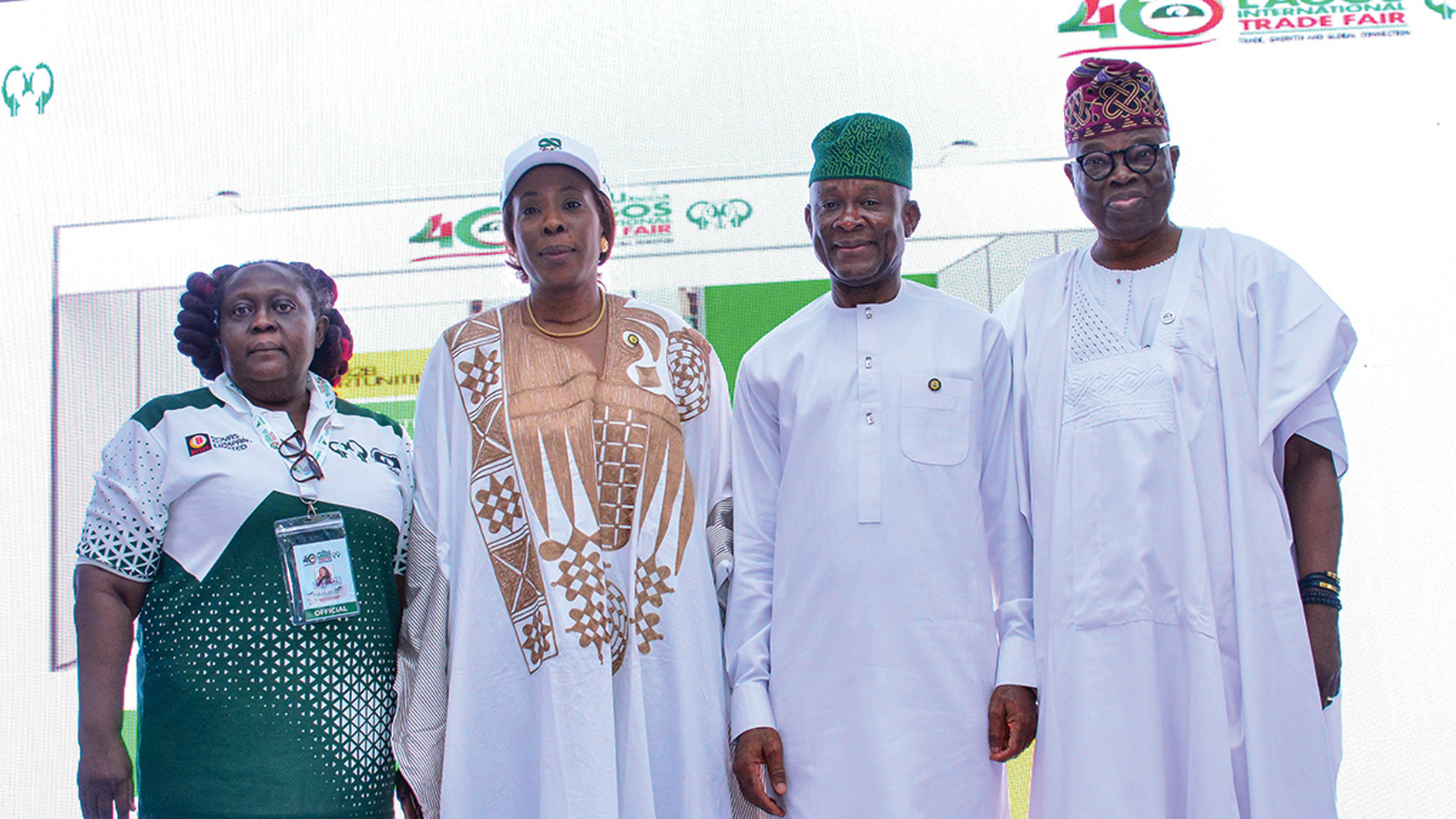
Tinubu, who disclosed this at the opening of the 40th Lagos International Trade Fair at Tafawa Balewa Square, Lagos, said his economic reforms are beginning to deliver results.
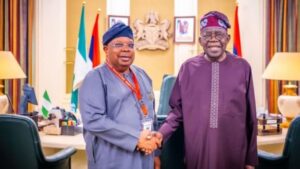
Tinubu, who was the Special Guest of Honour and represented by the Minister of State for Industry, Trade and Investment, John Owan Enoh, noted that non-oil exports exceeded $6.1 billion in 2025, while capital importation reached approximately $21 billion, reflecting improving investor confidence and expanding opportunities for Nigerian producers. He stressed that the focus now is on translating economic stability into prosperity through trade, industrial development and stronger global connections.
Addressing the theme: ‘Trade, Growth and Global Connection’, he said Nigeria must reduce its dependence on a single commodity by strengthening non-oil exports and positioning local businesses to benefit from the African Continental Free Trade Area (AfCFTA).
He identified improved product standards, efficient ports, faster customs clearance and fewer trade barriers as critical to making Nigerian products competitive across African markets.
The President also said the National Industrial Policy (NIP) is set for implementation, which will strengthen manufacturing, deepen local value chains and transform raw materials into finished products.

He revealed that the Ministry of Industry, Trade and Investment and its agencies supported over 115,000 micro, small and medium-sized enterprises in 2025, promising further efforts to improve access to finance, electricity and markets.
He added that his government is aligning industrial, trade and investment policies around priority sectors, including agro-processing, textiles and garments, automotive components, pharmaceuticals and creative industries.
The fair, which pulled exhibitors and visitors from over 20 countries, features a dedicated Africa Hall, supported by Afreximbank and ECOWAS, as well as more than 100 Japanese exhibitors through the Japan External Trade Organisation (JETRO).
Also speaking, the Lagos State Government highlighted its industrialisation and export-readiness programmes as part of efforts to position the state as a manufacturing and commercial gateway to African markets.
Commissioner for Commerce, Cooperatives, Trade and Investment, Folashade Ambrose-Medebem, who represented Governor Babajide Sanwo-Olu, said the state is strengthening infrastructure, industrial capacity and business support systems to attract investment and expand exports.
She disclosed that the Lagos State Export Readiness Programme, implemented in partnership with Afreximbank and ImpactHer, has supported 253 small and medium-sized enterprises to prepare for international markets, while 20 Trade Champions showcased Made-in-Lagos products at the Intra-African Trade Fair.
President of the Lagos Chamber of Commerce and Industry (LCCI), Leye Kupoluyi, said this year’s edition has provided an ample opportunity for intra-African business partnerships and market expansion.
He, however, urged the government to address the numerous and persistent constraints facing businesses, particularly unreliable electricity supply, high logistics costs, limited access to finance, and regulatory uncertainties.
Kupoluyi said they also introduced business-to-business and business-to-government engagement platforms to help exhibitors secure buyers, distributorship agreements and investment partnerships.