
 Get Guardian on Google
Twenty-seven Nigerian universities have secured places in the 2027 Times Higher Education (THE) Interdisciplinary Science Rankings, the highest number since the global ranking was introduced, with Covenant University retaining its position as Africa’s best-performing institution.
The latest ranking, released on Wednesday, represents a 50 per cent increase from the 18 Nigerian universities listed in the 2026 edition and 19 in the inaugural 2025 edition.
Chairman of the Nigerian Tertiary Education Ranking Advisory Committee (NiTERAC), Prof. Emeritus Peter Okebukola, disclosed this in a statement in Abuja, describing the development as a significant improvement in Nigeria’s participation in global university rankings.
He said an additional seven Nigerian universities were awarded Reporter status after submitting data, bringing the total number of participating institutions to 34, compared with 30 in 2026 and 27 in 2025.
With the latest figures, Nigeria has moved from 16th to 11th position globally in terms of the number of ranked universities, retaining its second position in Africa behind Egypt, which has 37 institutions.
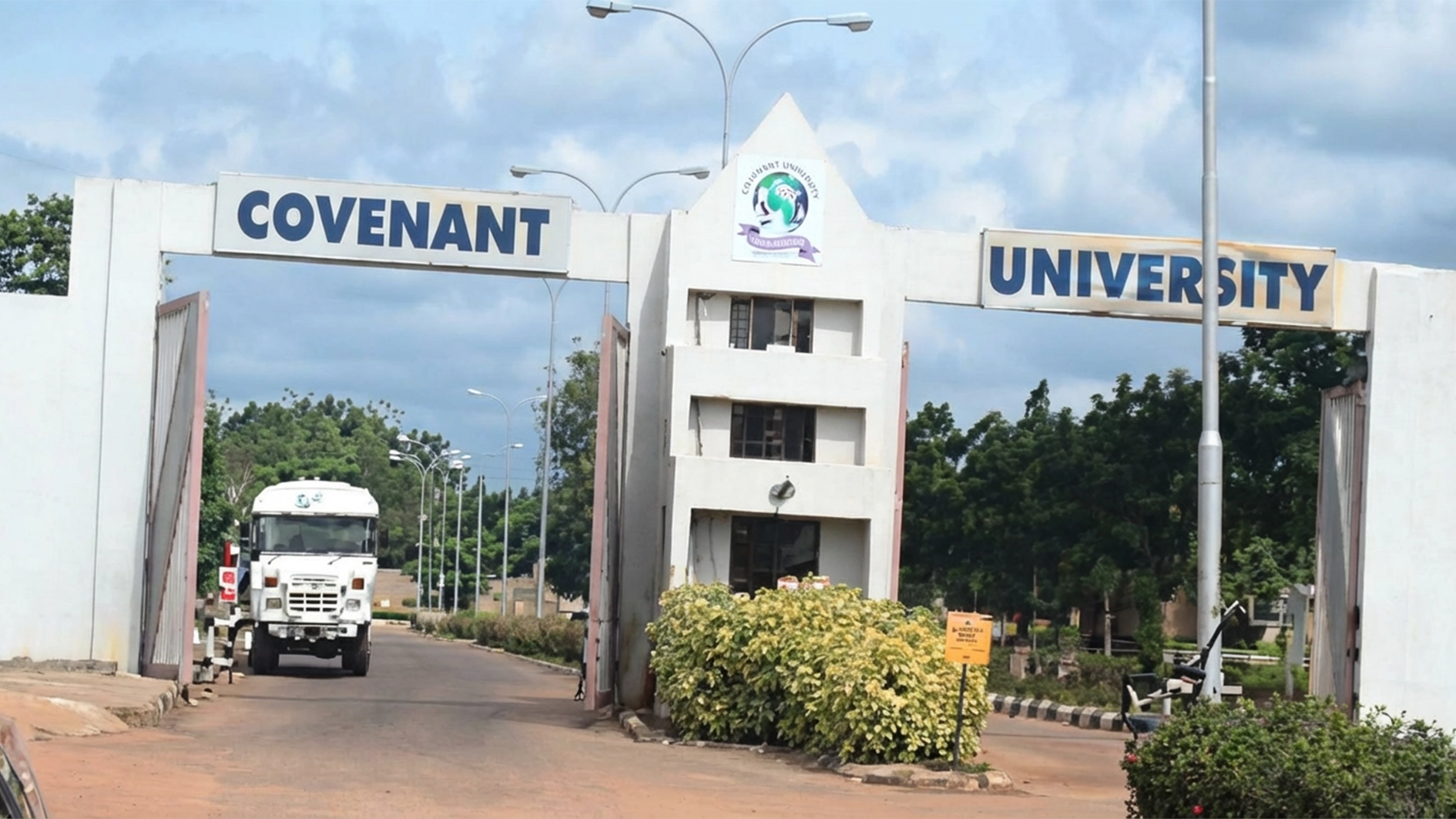
Covenant University, Ota, emerged Nigeria’s leading institution, securing a joint 49th position globally and first place in Africa, ahead of Egypt’s Cairo University, which placed joint 52nd.
The university has maintained its position among the world’s top 50 for the second consecutive year, having moved from 73rd in 2025 to 49th in 2026.
Landmark University, Omu-Aran, followed as Nigeria’s second-best institution, placing in the 251–300 band.
Ahmadu Bello University, Zaria, and the University of Ilorin occupied the 351–400 band, while the University of Calabar, University of Lagos and University of Nigeria, Nsukka, were placed in the 401–500 band.
Ladoke Akintola University of Technology, Obafemi Awolowo University and the University of Benin completed Nigeria’s top 10, placing in the 501–600 band.
Okebukola particularly highlighted the performance of Ahmadu Bello University and the University of Calabar, which recorded significant improvements in the latest ranking.
According to him, ABU moved from the 601–800 band in 2026 to the 351–400 band, while the University of Calabar advanced from the 601–800 band to the 401–500 category.
Eight universities also made their debut in the ranking. They are the Federal University of Technology, Minna; Michael Okpara University of Agriculture, Umudike; Joseph Sarwuan Tarka University, Makurdi; University of Jos; Rivers State University; Babcock University; Bells University of Technology; and Nile University of Nigeria.
Osun State University also returned to the ranking after missing the previous edition.
Of the 27 Nigerian universities ranked, 14 are federal institutions, seven are state-owned, while six are privately owned.
Despite the increase in participation, Okebukola cautioned against celebrating the figures without addressing the decline recorded by some Nigerian universities in the upper ranking categories.
He said the number of universities in the top 300 dropped from five in the previous edition to two, while those in the top 500 declined from eight to seven.
“We have good reason to be encouraged. More Nigerian universities are stepping forward to be measured against the best in the world, and one of our own has kept the first position in Africa,” he said.
“The results also carry a lesson. As the field has grown from 749 universities in 2025 to 1,058 this year, competition has become keener and several of our established participants have slipped.
“Our task is to match wider participation with stronger performance.”
The ranking, produced by THE in association with Schmidt Science Fellows, assessed 1,058 universities across 102 countries and territories.
It measures how effectively universities fund, support and deliver research across scientific disciplines, using 11 indicators grouped into inputs, process and outputs, which account for 19 per cent, 16 per cent and 65 per cent of the assessment respectively.
The Massachusetts Institute of Technology retained the global first position for the third consecutive year.
Identifying areas requiring urgent attention, the NiTERAC chairman said many Nigerian universities performed poorly in research funding and institutional support for interdisciplinary science.
He explained that the inputs category measures funding for interdisciplinary research, while the process category assesses dedicated facilities, administrative support and promotion policies that recognise research across different disciplines.
“These are matters within the reach of every university management. Full reporting of research grants and income from industry, and clear institutional policies on interdisciplinary research, can lift a university by one or two bands within a single edition, as this year’s results have shown,” he said.
Okebukola commended the Minister of Education, Dr Tunji Alausa, for prioritising the global standing of Nigerian tertiary institutions and establishing NiTERAC to drive improvements in the sector.
He disclosed that the committee had submitted a comprehensive report on the latest ranking, alongside recommendations, to the minister.
He added that NiTERAC, through the League of Directors of Academic Planning and the Virtual Institute for Capacity Building in Higher Education, would support participating universities and prospective entrants in preparing stronger submissions for the 2028 edition.
The chairman also urged research-intensive universities yet to participate in the exercise to join future editions.
He further disclosed that the 2026 national ranking of universities, polytechnics and colleges of education was nearing completion, with the results scheduled for unveiling at a national conference on December 15.
According to him, the national ranking initiative is expected to strengthen data management and healthy competition among Nigerian tertiary institutions, ultimately improving their performance in international assessments.
Meanwhile, six Nigerian universities were placed in the 601–800 band. They are Delta State University, Abraka; Federal University of Agriculture, Abeokuta; Federal University of Technology, Minna; Federal University of Technology, Owerri; Lagos State University; and Michael Okpara University of Agriculture, Umudike.
Another 11 institutions occupied the 801–1000 band. They are Akwa Ibom State University; Babcock University; Bells University of Technology; Bowen University; Ekiti State University; Federal University Oye-Ekiti; Joseph Sarwuan Tarka University; Nile University of Nigeria; Osun State University; Rivers State University; and University of Jos.