 Follow Us on Google News


 Follow Us on Google Discover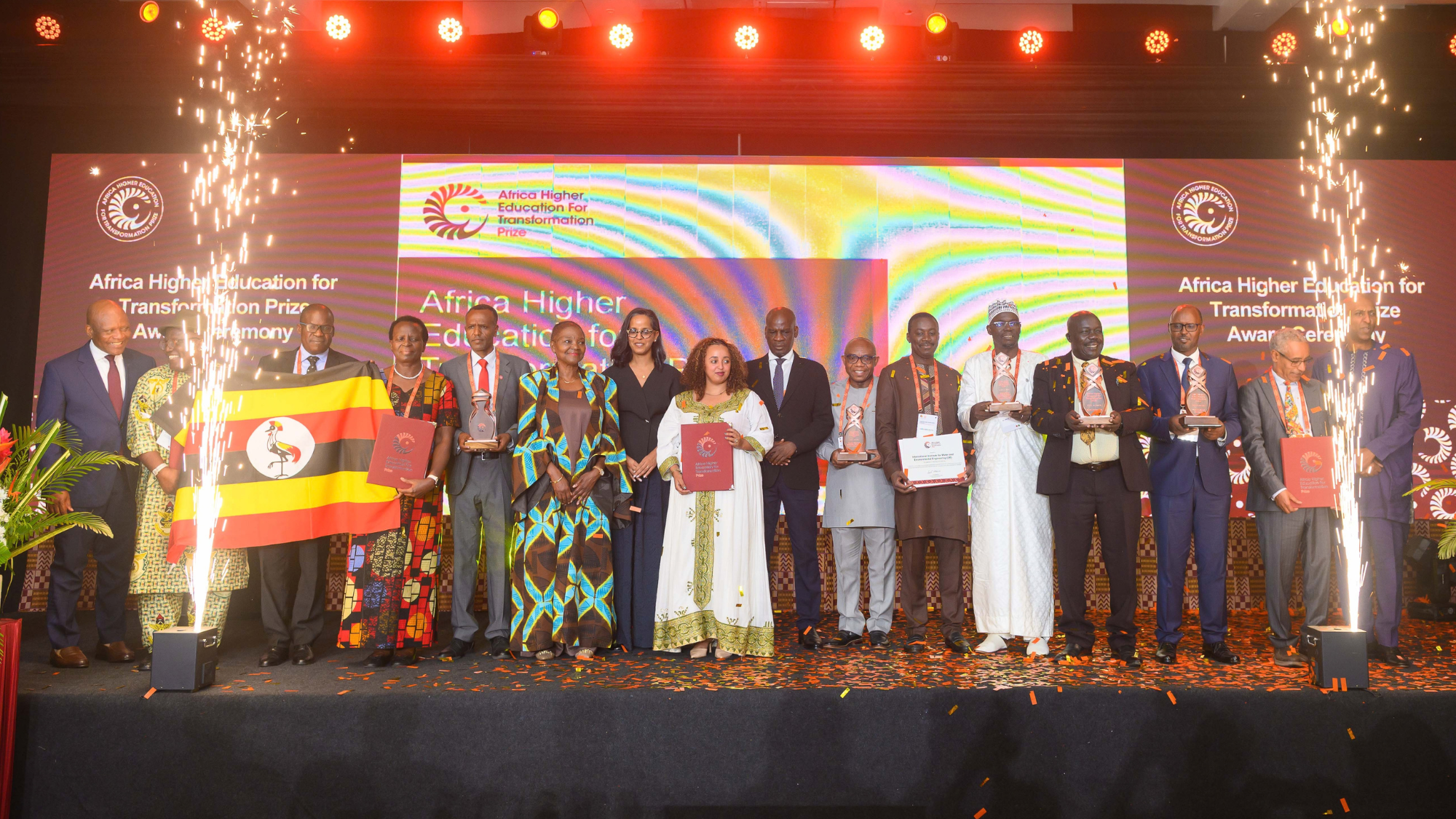
•••Decry 0.8% of GDP spend on higher education, 0.5% on R&D
African leaders, higher education institutions, governments, industry and development partners have called for far-reaching reforms in the continent’s higher education system, saying stronger links between universities, industry, research and investment are critical to unlocking Africa’s human capital and economic potential.
The call was made in Accra, Ghana, during the inaugural Higher Education Transformation Convening hosted by the Mastercard Foundation, which brought together representatives of higher education institutions, the African Union, government ministries, financial institutions, industry and young people.
The gathering, held under the theme, “Reimagining Higher Education for Africa’s Human Capital Development,” also featured the inaugural Africa Higher Education for Transformation (AHEFT) Prize award ceremony, which recognised institutions implementing sustained, institution-wide transformation.
Participants said African universities must evolve beyond their traditional roles to become stronger drivers of research, innovation, employment and economic development.
They identified curriculum reform, stronger private-sector partnerships, skills development for emerging technologies, improved research capacity, and greater mobility of students and academics across borders as key changes required.

President and Chief Executive Officer, Mastercard Foundation, Sewit Ahderom, said higher education transformation should be measured by its wider impact on young people and the economy. “Transformation is not just a better university. It is a university that makes the whole economy around it work better for young people,” she said.
She said curricula should be developed in collaboration with employers to ensure that what students learn reflects labour-market needs, while qualifications should demonstrate what graduates can do rather than simply how long they spend in school.
Ahderom also called for institutions to equip young people to understand and lead technologies reshaping African economies, while ensuring that research moves beyond university campuses into industry, government and communities. They also focused on directing research, innovation and skills development towards areas where Africa has strategic comparative advantage and the greatest potential for impact.
Participants further stressed the need to strengthen partnerships between universities and the private sector to align talent development and applied research with changing workforce requirements.
Participants called for their experiences and aspirations to be incorporated into decisions affecting education, employment and opportunities, insisting that they should be active partners in shaping the systems that affect their lives.
Executive Director, Higher Education and Strategic Initiatives at the Foundation, Dr. John Nkengasong, said Africa’s young and growing population represented a major opportunity that could only be realised if the continent developed institutions capable of retaining talent, driving innovation and creating pathways to dignified work. He described higher education transformation as an economic imperative requiring governments, universities, industry, investors and development partners to work together.
“No one institution can do this alone, but through the power of partnerships, this transformation is achievable,” he said.
The discussions are aligned with the African Union’s Decade of Education and Skills Development (2025–2034), which calls for stronger education systems, improved learning outcomes and skills development in line with Africa’s long-term development priorities, including Agenda 2063.
Director, African Union Department of Education, Science, Technology and Innovation, Professor Saidou Madougou, said Africa needed to treat higher education as a strategic investment in its future.
According to Madougou, higher education spending across the continent averages less than 0.8 per cent of GDP, while research and development receives less than 0.5 per cent of national budgets. He called for stronger collaboration among African universities, greater faculty and student mobility and systems that would allow talent, knowledge and innovation to move more freely across borders.
Meanwhile, the inaugural AHEFT Prize recognised five institutions for their efforts in transforming teaching and learning, research and innovation, student transitions to employment and health outcomes.
The 2026 laureates are Addis Ababa University, Ethiopia; International Institute for Water and Environmental Engineering (2iE), Burkina Faso; Kwame Nkrumah University of Science and Technology (KNUST), Ghana; Muni University, Uganda; and University of Rwanda.
The prize is backed by a $500 million commitment and is expected to recognise at least 150 institutions across Africa over the next decade. Each winning institution will receive $3 million to scale initiatives aimed at expanding education opportunities for young people across the continent.
Chair of the AHEFT Jury, Susan Chomba, said the applications showed a strong appetite among African institutions for changes in the way students learn and prepare for the world of work. She said the institutions also demonstrated new approaches to engaging with industry, strengthening research and innovation and responding to local challenges.
Speakers called for higher education institutions, governments, industry, investors and development partners to identify system-level changes they can collectively advance by 2028.
Participants said stronger connections between education, employment, research and investment would be necessary to equip more young Africans to learn, earn and lead. The laureates also used the occasion to highlight their respective approaches to higher education transformation.
Director General of 2iE, Professor El Hadji Bamba Diaw, said the award represented recognition of efforts to provide young Africans with inclusive, high-quality scientific and technical education aligned with community needs.

