 Follow Us on Google News
 Follow Us on Google Discover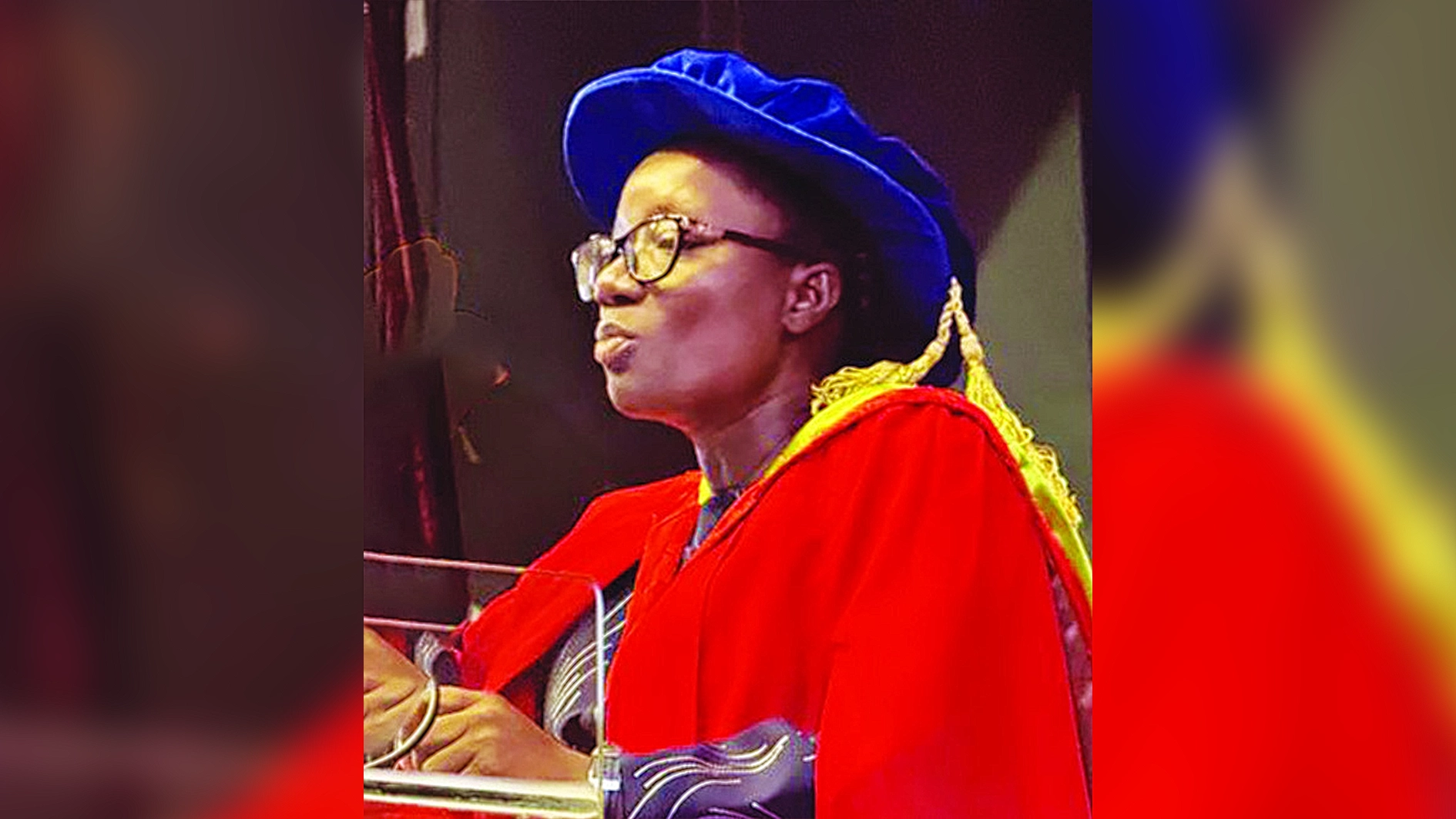
Prof. Olufunke Adeboye of the Department of History and Strategic Studies at the University of Lagos (UNILAG) has urged historians to occupy what she termed the “in-between” space connecting secular and sacred realities.
Adeboye, while delivering her inaugural lecture titled ‘Secular and sacred paradigms,’ said that history is most insightful when it crosses boundaries and reveals connections among people, ideas and institutions.
She explained that “secular” and “sacred” in the lecture title did not refer to secularism or religious decline, but to the two broad intellectual landscapes that have shaped her research over the years, from studies of political and commercial elites to the historical practice of religion and its societal influence.
Advocating a broader view of social history, the professor said attention should also be given to the lives and responsibilities of elites, not only to “history from below”.
She cited the distorted history of Efunsetan Aniwura as an example that has warped public views on female leadership in Yoruba and Nigerian society.
Adeboye further introduced the concept of personal social responsibility, arguing that the Yoruba tradition of individual responsibility to society predates modern ideas of corporate social responsibility and remains relevant for promoting balance and leadership.

On African historiography, she called for the use of indigenous concepts to interpret African experiences rather than relying solely on external frameworks.
She also examined the role of African Pentecostalism in development, noting that its engagement with education, healthcare and economic empowerment grew largely out of local realities.
The professor highlighted her work on how Nigerian Pentecostal movements transformed public spaces into worship centres, a study that has drawn international collaboration with scholars in architecture and environmental studies.
She also spoke about the use of private diaries as historical sources, saying they reveal how individuals negotiated identity and can be linked to psychology and neuroscience.
Concluding, Adeboye said history remains essential for understanding present-day politics, social practices and cultural assumptions, and for charting pathways for the future.

