 Follow Us on Google News


 Follow Us on Google Discover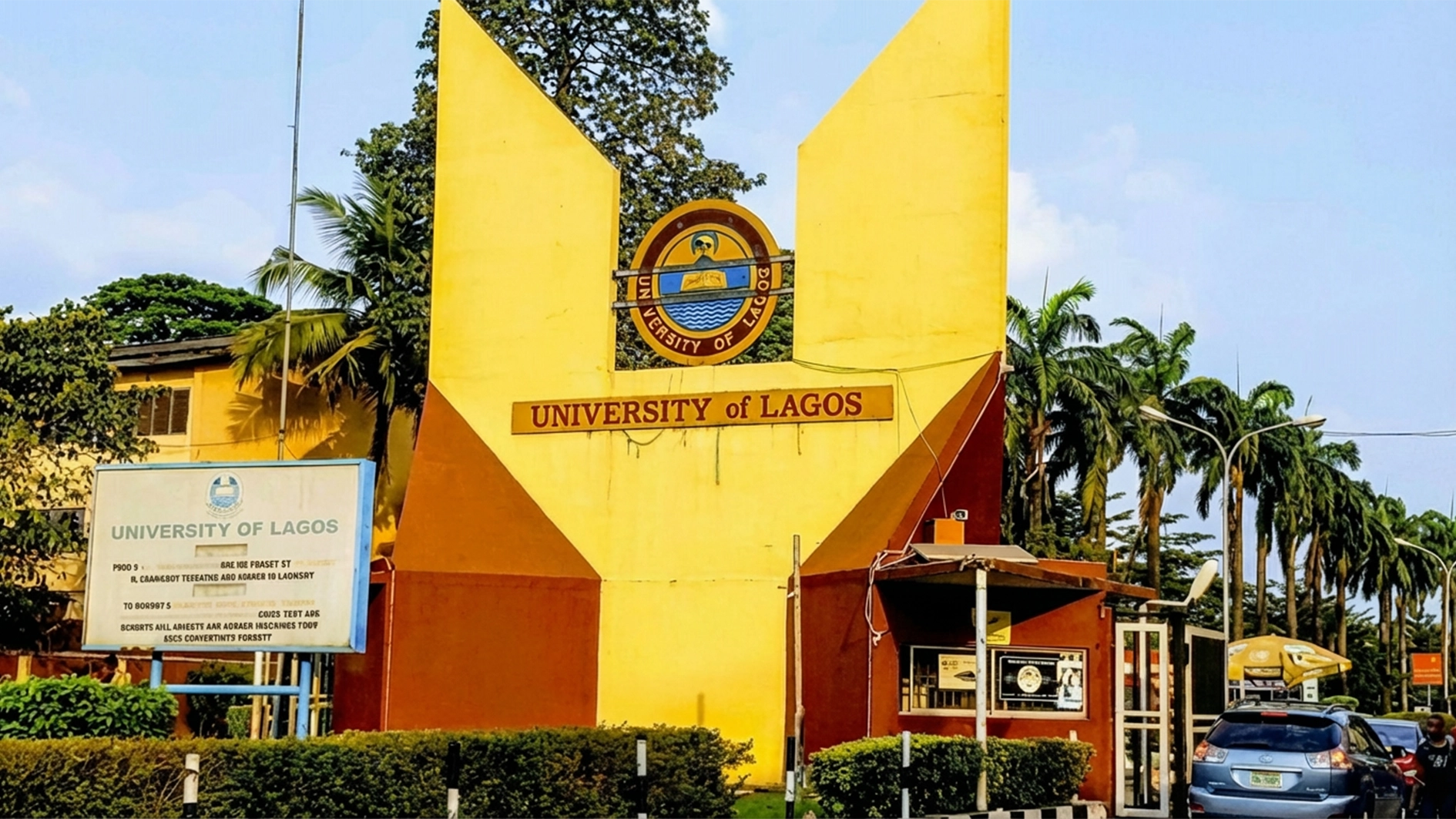
The University of Lagos (UNILAG) has integrated climate change education into 55 academic courses across 12 faculties, with the institution moving to extend the model to universities across South-West Nigeria as part of efforts to equip graduates with the knowledge and skills to address environmental challenges in their professions.
Vice-Chancellor of UNILAG, Prof. Folasade Ogunsola, said the initiative was a response to the growing impact of climate change on Nigeria and other countries in the Global South, stressing that universities must work together to drive climate literacy and shape national responses.
This was at the Inter-University Dialogue on Climate Curriculum Development with the theme “Scaling Climate Literacy-An Inter-University Dialogue for Curriculum Transformation in Southwest Nigeria.”
The Dialogue organised by Institute of Nigeria-China Development Studies (INCDS)-UNILAG in partnership with Pulitzer Centre had 10 universities represented to scale climate literacy.
“Many countries in the Global South are already feeling the negative impact of climate change, and we are seeing it in our different states. Climate change does not recognise borders, which is why we must collaborate to ensure our decisions work mutually across the continent and globally,” she said.
Ogunsola said the university’s efforts began in 2024 when the INCDS launched a structured campaign to promote climate education across the institution. She noted that with support from the Pulitzer Center, the institute developed a climate literacy toolkit in 2025 and institutionalised climate education across the university.

According to her, 68 lecturers have been trained on the climate literacy toolkit, while climate-related content has been integrated into 55 courses across 12 faculties, demonstrating that climate education can be embedded in disciplines ranging from law and engineering to medicine, business, the sciences and the arts.
She added that the university had also established a network of climate change ambassadors to sustain the initiative, with all activities aligned to the National Universities Commission’s Core Curriculum and Minimum Academic Standards (CCMAS).
“These achievements have positioned the University of Lagos as a national leader in climate-responsive higher education. We are not here today to celebrate what UNILAG has done; we are here to share the model with other universities because that is the true significance of this initiative,” she said.
The Vice-Chancellor said the current phase of the project seeks to scale the curriculum model across universities in Lagos, Ogun, Oyo, Osun, Ondo and Ekiti states, establish a South-West Climate Literacy Educators Network, launch Version Two of the Climate Literacy Toolkit, and secure commitments from participating institutions to pilot climate-infused courses.
She said the model had shown that climate concepts could be incorporated into existing courses without major curriculum changes.
“You can infuse climate issues into existing courses, adapt assignments to include climate dimensions and still retain the same assessment weight and learning outcomes. It is seamless, practical and achievable,” she said.
Ogunsola stressed that climate change had become an existential threat, citing flooding, desertification, contamination of water sources and changing rainfall patterns as evidence that urgent action was required.
Earlier, Director of Quality Assurance and SERVICOM (QA&S) and Pioneer Director of INCDS-UNILAG, Prof. Olufemi Muibi Saibu, said the initiative was designed to embed climate consciousness into university education rather than treating it as a subject exclusive to environmental sciences.
According to him, the university spent two years reviewing its curriculum to align with the CCMAS, incorporating climate change learning objectives and practical illustrations into existing courses without altering the National Universities Commission (NUC)-approved framework.
“We realised that unless we become conscious about the environment, engineers, architects and urban planners will continue to approve projects the way they always have, and we will keep experiencing the problems we have today. The problem cannot be solved from the end; it has to be tackled from the root,” Saibu said.
He explained that the university had developed a climate literacy toolkit for lecturers and expressed hope that every Nigerian university graduate would become a climate change ambassador capable of incorporating environmental sustainability into professional decisions.
Saibu disclosed that the outcome of the curriculum review would be presented to NUC while the university engages institutions across the South-West before expanding the initiative to polytechnics and colleges of education.
Also speaking, Deputy Director of Academic Planning, UNILAG, Dr. Olasunmbo Olusanya, described the project as a paradigm shift from treating climate education as an environmental science issue to making it a universal cross-disciplinary competency.
In her presentation on “Climate Literacy as a Quality Assurance Metric-Aligning Regional Curricula with CCMAS,” She said the goal is to integrate the UNILAG climate literacy toolkit into the CCMAS framework and establish a standardised quality assurance protocol across higher institutions in South-West Nigeria.
“The crux of what we want to do is to move climate education from an environmental science isolate to a universal cross-disciplinary competency,” she said.
Olusanya explained that universities must prepare graduates for a climate-altered economy by embedding climate knowledge into every discipline rather than paying lip service to environmental issues.
She noted that institutional quality assurance directorates and academic planning units would monitor implementation through measurable learning outcomes, curriculum audits and compliance with CCMAS.
She cited examples of climate integration into constitutional law, supply chain management, epidemiology and civil engineering, while adding that lecturers would receive climate literacy toolkits, local datasets, case studies and assessment rubrics before compliance measures are enforced.
According to her, the initiative also aims to establish a South-West inter-university climate curriculum network to facilitate benchmarking, peer learning and continuous quality improvement.
“We are no longer just graduating students to get jobs. We are engineering the survival and resilience of our nation. The time for memos is over; the time for audit is now,” she said.
Education Manager for Africa at the Pulitzer Center, Eric Selemani, said the dialogue reflected a commitment to reimagining education to prepare students for the realities of climate change, misinformation, public health crises and social inequality.
Selemani said journalism should serve as a teaching tool, enabling students to analyse evidence, distinguish facts from misinformation and connect local experiences with global challenges.
“Journalism does not end with publication, every story has the potential to become a lesson, shape policy conversations and encourage critical thinking,” he said.
He commended UNILAG for integrating climate literacy into 55 courses across multiple disciplines, describing the initiative as evidence that climate education can be embedded beyond environmental sciences.
“When journalism informs education, education inspires action, and societies become more resilient and better prepared for the future,” Selemani added.

