 Follow Us on Google News
 Follow Us on Google Discover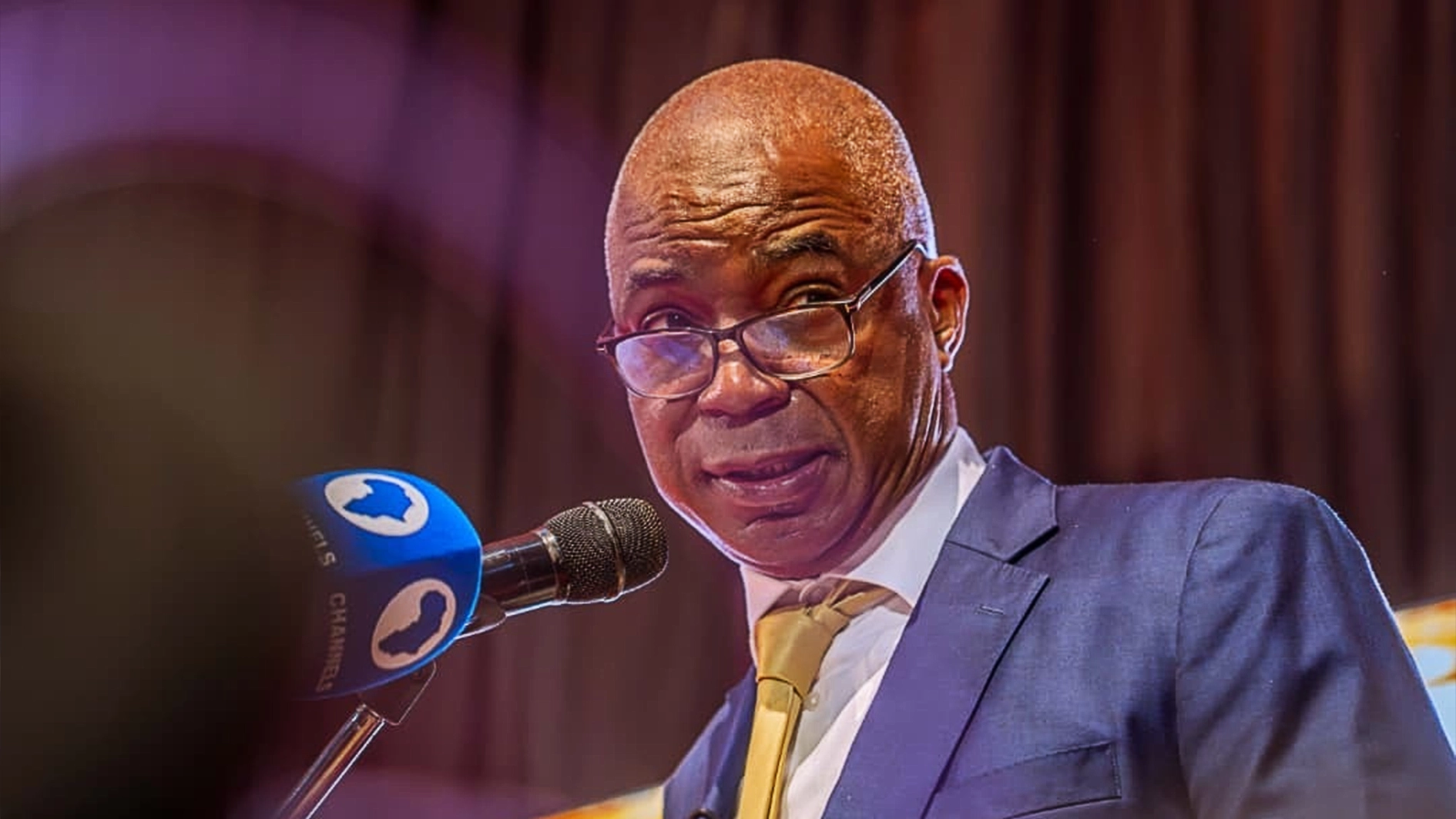
The Chancellor of Ekiti State University (EKSU), Dr. Tunji Olowolafe, has highlighted the urgent need to translate Ekiti State’s strong academic and knowledge base into sustainable wealth creation and economic prosperity.
Olowolafe, who delivered the lead paper at the Ekiti at 30 Future Summit in Ado Ekiti yesterday, said the state must take the provision of reliable power, practical vocational skills and direct connections to industrial supply chains and global markets if it is to secure a brighter future.
In his paper titled “The Path to Ekiti’s Greatness: Opportunities, Choices, and Imperatives for the Next 30 Years,” the Are-Ekiti-born academic acknowledged the contributions of past governors, leaders and other stakeholders to the development of the state over the past three decades, particularly the significant progress recorded in the education sector.
He, however, stressed that the future of the state would increasingly depend on its ability to harness emerging technologies such as artificial intelligence, robotics, biotechnology, automation and new energy systems, which he said were rapidly transforming how humanity learns, works, produces and trades.
The Medical Doctor-Turned-Industrialist noted that digital advancement had become imperative if education was to translate into wealth, citing the Ekiti Knowledge Zone as a major technology-driven initiative capable of connecting the state to the global economy.
He said: “On the digital side, the Ekiti Knowledge Zone is now under way. Conceived under former Governor Kayode Fayemi and being implemented by His Excellency, Governor Biodun Oyebanji, once complete, it will give our young people a place to build technology ventures without leaving Ekiti, serving clients in Lagos, London and Singapore, and bringing that income home to Ekiti. That is how education becomes wealth.”

The health care investor proposed the introduction of functional energy support across the 177 wards in the state to strengthen schools, healthcare facilities and businesses while stimulating industrial development.
“I propose an immediate, ward-by-ward technical audit to establish local micro-grids powered by renewable energy in each ward. In many wards, a solar micro-grid of 300 to 500 kilowatts can power a school, a health centre and a cluster of workshops and small businesses. These projects are bankable and within the state’s execution capacity. Support from the Rural Electrification Agency (REA) will accelerate this effort,” he stated.
He observed the six technical colleges already established by the state would not be sufficient to meet the growing demand for technical education among young people across the 16 local government areas, calling for the expansion of the institutions, modernisation of their curricula and the importation of technical expertise from countries with advanced vocational education systems.
“We must expand this capacity by modernising the curriculum and directly hiring master vocational instructors from nations with elite technical education systems, such as Switzerland, Germany, Canada and South Africa, to train our faculty and connect our colleges digitally to clients and employers everywhere,” he said.
He also identified the establishment of the Ekiti Agro-Allied International Cargo Airport as evidence of the benefits of continuity of vision by successive administrations, but stressed that good road networks were necessary to complement such infrastructure and accelerate the state’s journey towards industrialisation.
Olowolafe advocated greater engagement between government and the people in identifying and addressing priority needs, citing the establishment of the Gbemisola Olowolafe Memorial Community Secondary School in his hometown of Are-Ekiti as an example of what could be achieved through effective stakeholder engagement.
He said the ambition was to develop the school into a world-class institution with 600 students, offering education grounded in science, technology, languages, arts and sports, adding that an ICT centre, GOMTECH, located adjacent to the school, offers courses in artificial intelligence, coding, graphic design and Mandarin.
The renowned entrepreneur and Chairman of the Tunji Olowolafe Foundation also challenged scientists and skilled artisans to develop solar-powered cocoa-drying equipment to modernise and accelerate the processing of cocoa, which he described as a major source of wealth and foreign exchange if properly harnessed.
Olowolafe pledged to partner with the state government to establish upgraded, modern and solar-powered ICT centres in the six government technical colleges in the state, bring foreign expertise into vocational training and leverage partnerships with international mining schools to develop the Geology Department of EKSU into a world-class institution within five years.
Earlier in his keynote address at the summit, the Governor, Mr. Biodun Oyebanji, said the time had come for Ekiti State to move beyond semantics and endless chains of analysis to converting its opportunities into tangible prosperity.
Acknowledging that significant work remained to be done in critical areas, Oyebanji said the state must step up its efforts to become a fountain of innovation and productivity, moving beyond conventional approaches to knowledge and development.
He described the Ekiti Knowledge Zone as a major vision capable of breaking international barriers in the transfer of knowledge, technology, and business opportunities, while positioning the state to participate more actively in the global economy.

