 Follow Us on Google News
 Follow Us on Google Discover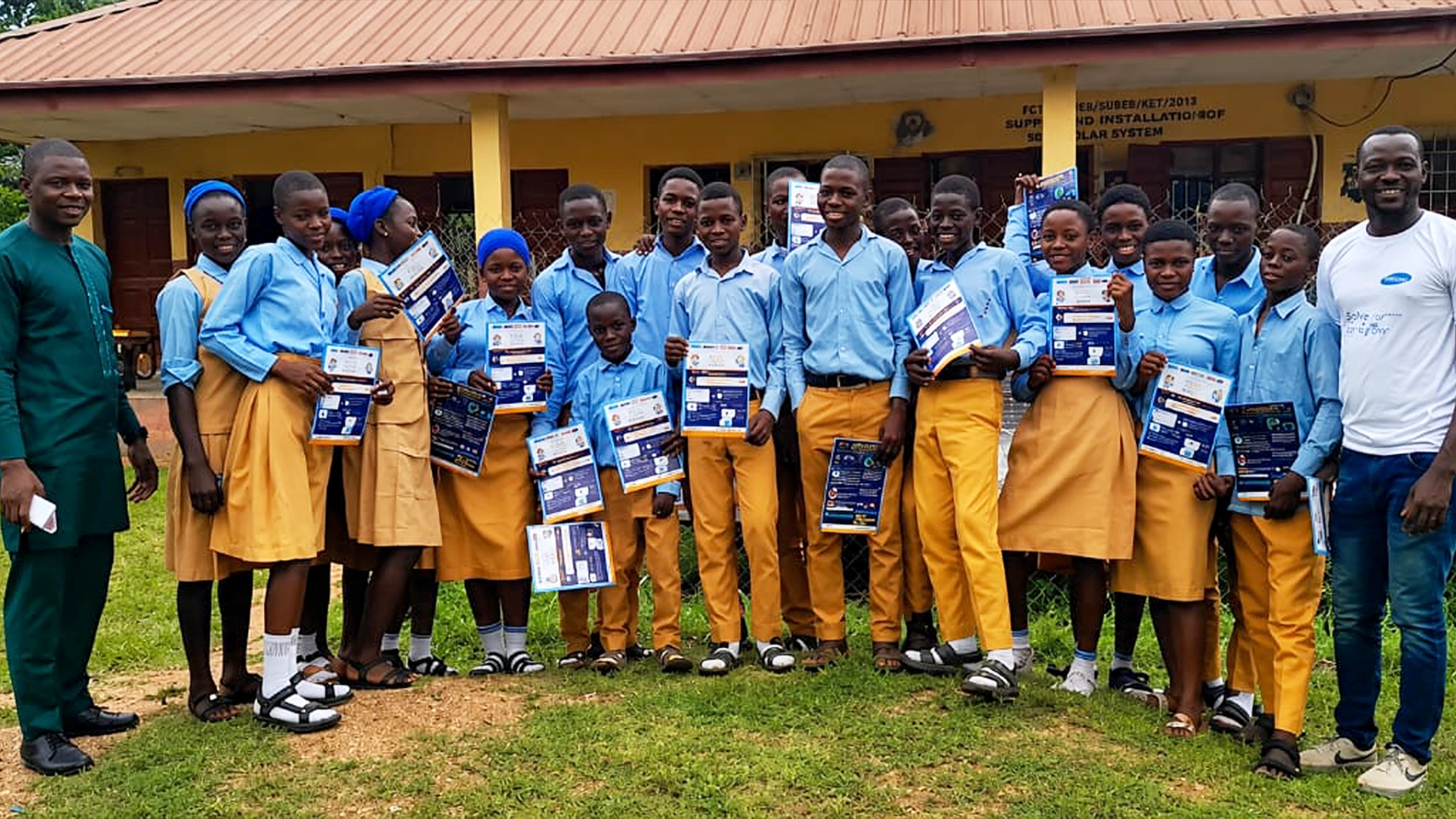
Over the past two years, a partnership between OIC Foundation, led by Sunday Omolewu, and the Scratch Foundation has brought creative coding education to more than 5,000 students and trained over 150 teachers in more than 60 schools across six Nigerian states.
This represents the first phase of a programme that is now expanding, with ambitions to reach learners and educators across Nigeria and beyond.
The initiative, delivered through the Scratch Education Collaborative (SEC), was built around a simple idea: teach programming through things students already know.
Rather than relying on generic tutorials, Sunday and his team designed lessons around Nigerian culture, including traditional clothing, landmarks and tourist attractions, to make coding feel familiar rather than foreign.
Two learner guides anchor the programme: Fulani Women Dress-Up and Create Your Dream Tourist Centre in Nigeria.
Both guides allow students to build interactive Scratch projects using characters, settings and stories drawn from their own communities.

The team also created additional Scratch characters and digital assets designed to reflect Nigerian learners’ everyday experiences.
For many students, the projects turned an unfamiliar subject into something personal.
“I never knew I could use a computer to design the traditional clothes my mother wears. Making the Fulani Women Dress-Up project didn’t feel like a difficult computer class; it felt like bringing my own home to life on a screen. Now I know coding belongs to us too.”
— Adetola, Komu Grammar School, Oyo State
Connectivity was the biggest obstacle. To get around it, the team installed offline versions of Scratch directly on school computers and stored digital copies of the guides locally. Printed versions were distributed as learning cards, so students and teachers could take part without needing an internet connection at all.
“Before Mr Sunday and his team came, our computer room was just a room with dark screens because we had no internet. But with the offline cards, I coded my own dream tour of Yankari Game Reserve! I don’t need the internet to be a programmer anymore.”
— Ahmed, Muslim Community Grammar School, Ogun State
Teachers said the change in engagement was just as noticeable from the front of the classroom.
“Teaching abstract coding concepts used to be a struggle. But when the students saw Nigerian landmarks and familiar stories, the lightbulbs just went on. Cultural relevance isn’t just nice to have — it completely shattered the learning barrier for these children.”
— Mr Isa, United Grammar School, Minna, Niger State
More than 150 teachers were trained during the programme, helping to extend its impact beyond the students directly engaged. The teachers were introduced to Scratch, the culturally relevant learner guides and the programme’s offline delivery model.
They were also equipped with the knowledge and resources needed to continue delivering creative coding activities in their own schools. This was especially important in communities where limited internet access, inadequate digital infrastructure and a shortage of trained computing educators could prevent students from developing digital skills.
That confidence has translated into sustainability. Several teachers said they now feel equipped to run coding sessions independently, without depending on outside support to continue.
“Honestly, I used to find teaching computer science intimidating because of our lack of resources. But these localised guides make it so easy. Even without data, my students are hooked. I am fully confident that I can run these Scratch clubs by myself next term without waiting for outside help.”
— Miss Adeniya, Anglican Basic School, Osogbo, Osun State
The training of teachers has also created opportunities for the programme to continue beyond the initial workshops. By giving educators access to reusable guides, offline Scratch resources and practical teaching approaches, the initiative has enabled schools to introduce new groups of students to creative coding over time.
The programme is currently continuing across six Nigerian states, with participating educators using the resources to support further learning in their schools and communities.
Six states were the starting point, not the destination. Organisers say the model — locally grounded content, offline-first tools and partnerships that continue beyond the initial rollout — is designed to travel.
The next phase aims to extend the programme across Nigeria, with plans to bring the same approach to other African countries facing similar barriers to digital education.
The initiative demonstrates that bridging the digital divide is not only about providing access to computers or the internet. It also requires learning materials that reflect students’ identities, practical solutions that work within local conditions and teachers who have the confidence to sustain the learning.
Through the leadership of Sunday Omolewu, the work of OIC Foundation and its participation in the Scratch Education Collaborative, thousands of students and educators have been introduced to creative coding in a way that connects technology with Nigerian culture, communities and everyday experiences.

